Written with AI assistance, based on my own outline and notes.
The benefits of horse riding may not be obvious at first. But let me tell you something. Horse riding is one of the best sports to try as an adult. It’s also one of the best outdoor sports for kids.
Looking for a new sport for yourself or your kid? The benefits of horse riding show up for everyone who tries it. Let’s see them!
In This Article
The benefits of horse riding cover your body, your mind, and your social life. Here’s what you’ll find below.
- Is horse riding a sport? Yes, and the horse doesn’t do all the work (backed up by science)
- Cardio: a moderate-intensity workout (backed up by science)
- Muscles: your core, lower back, and inner thighs do real work (backed up by science)
- Balance: early research looks promising
- Stress relief: how riding switches your brain off and leaves you buzzing
- Mind: patience, small wins, mindfulness, and goals
- Doomscrolling: why riding is the slow-reward sport we need
- Animals and nature: time with horses and barn animals, even if you can’t keep pets
- Friends and fun: a cool sport that makes you the most interesting person in the room
- Kids: discipline, responsibility, friends, and what age to start
- How often to ride: once a week for an hour is the minimum(for constant benefits), and three times a week is ideal
- An honest take: costs, falls, and slow progress
- FAQs: quick answers to the most common questions
Is Horse Riding a Sport?
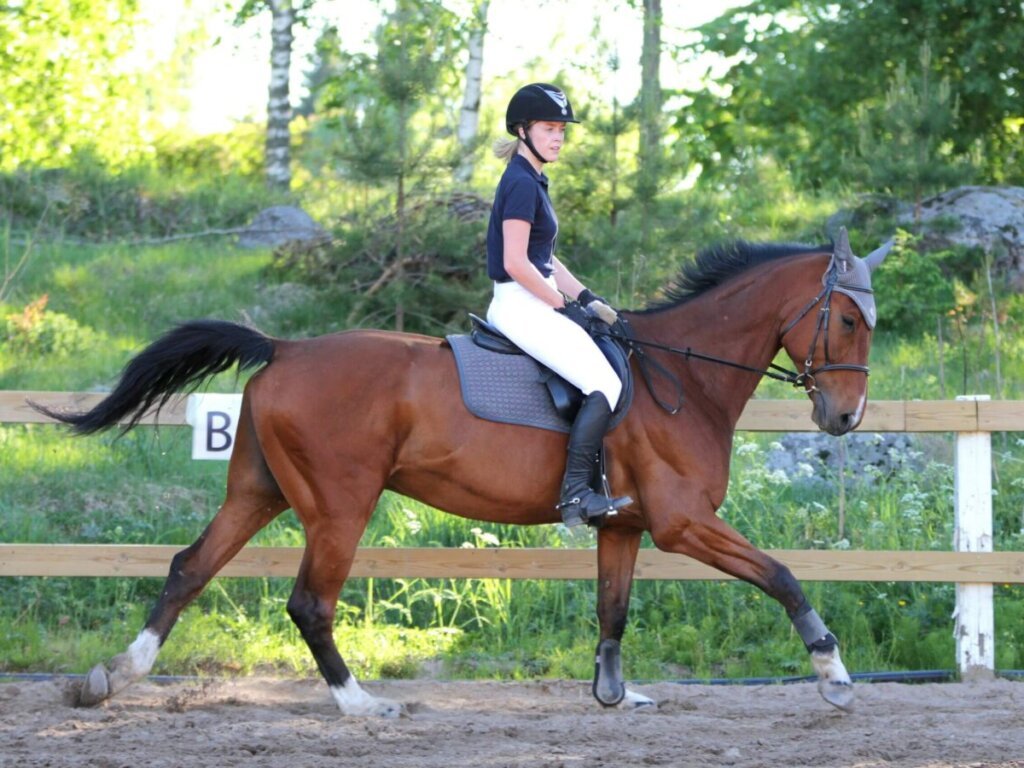
Yes, horse riding is a sport. Dressage, show jumping, and eventing are all part of the Olympic Games.
But I get why people ask. From the outside, it looks like the horse does all the work. Honestly, that’s the biggest myth about riding.
Here’s the truth. For your horse to move well, you have to ride well. Your muscles need to apply the right pressure at the right time. Otherwise, your horse just wanders around like a confused tourist.
The numbers back this up. Researchers measure exercise intensity in METs. A MET compares how hard your body works to how hard it works at rest. Anything between 3 and 6 METs counts as moderate-intensity exercise.
In the British Horse Society’s health benefits of riding report, riding averaged 3.7 METs. Trotting reached about 5.0. A smaller University of Brighton study of 16 female riders measured 5.3 METs during trotting and cantering. Riding without stirrups still came in at 4.2.
So yes, it’s a sport. And yes, it’s a real workout.
Physical Benefits of Horse Riding
Let’s start with the body. The benefits of horseback riding go way beyond looking cute in the saddle.
Cardio: Better Than You’d Expect
Horse riding is more of a cardio activity than a muscle-building one. In my experience, it’s genuinely great cardio. Your heart rate climbs, and you breathe harder.
The BHS report adds something interesting. Almost four in ten of the riders surveyed had done no other physical activity in the previous four weeks. For a lot of people, riding is the workout.
Horseback Riding Benefits for Your Muscles
Riders usually feel it in the lower back, core, glutes, thighs, and calves. Research backs up some of that.
- Core and lower back: a study of recreational and professional riders found that advanced riders engaged their core more.
- Inner thighs: an older Japanese study found the inner thigh muscle adductor magnus stepping in to steady novice riders at sitting trot.
- Glutes and calves: riders and instructors describe feeling these a lot. I couldn’t find a study that measured them directly. So I’ll call this experience.
One more honest note. Riding won’t replace strength training. It’s not a muscle-building workout.
Balance and Coordination
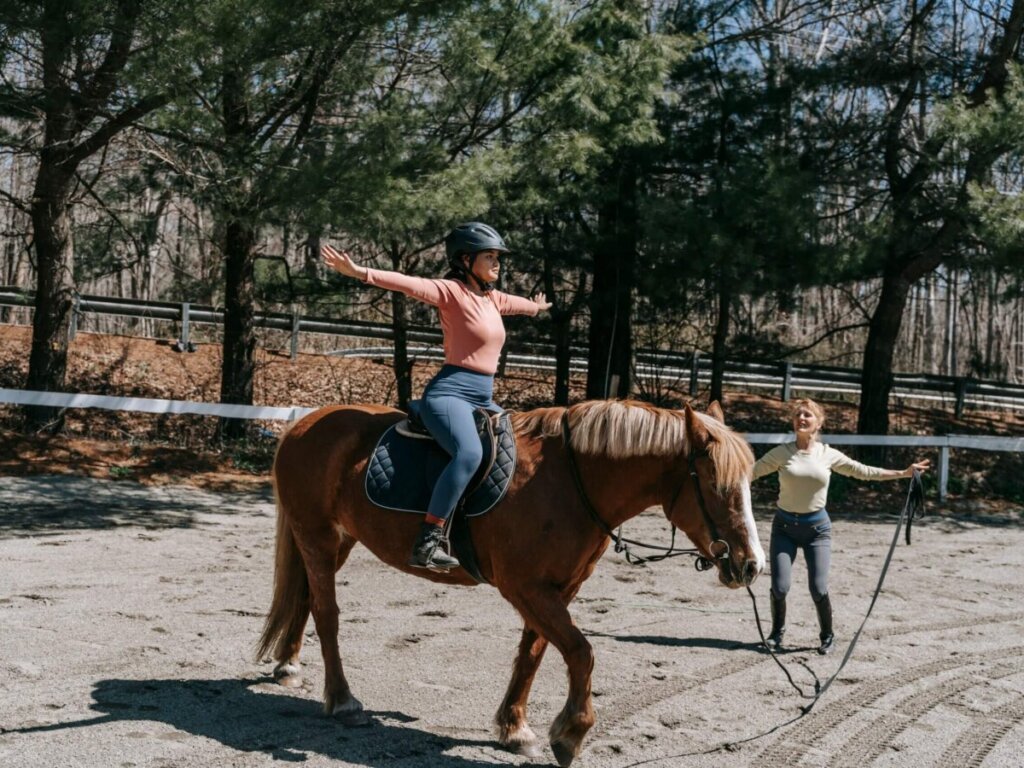
Riding trains your balance. You spend an hour staying upright on a moving animal, after all. Early research is promising, too. In one study of 32 older adults, a riding simulator improved balance and walking tests over eight weeks. It beat the comparison exercise.
Riding With Diabetes
I have type 1 diabetes. For me, riding lowers my blood sugar in the long term as well. Quick reality check, though. That’s my personal experience, not medical advice. Exercise can change blood sugar in different ways for different people.
If you live with any illness, don’t be afraid to start. Just tell your instructor and your doctor first. And you’re not alone. The BHS report found riders with a long-term illness or disability rode as often and as hard as others.
Mental Benefits of Horse Riding
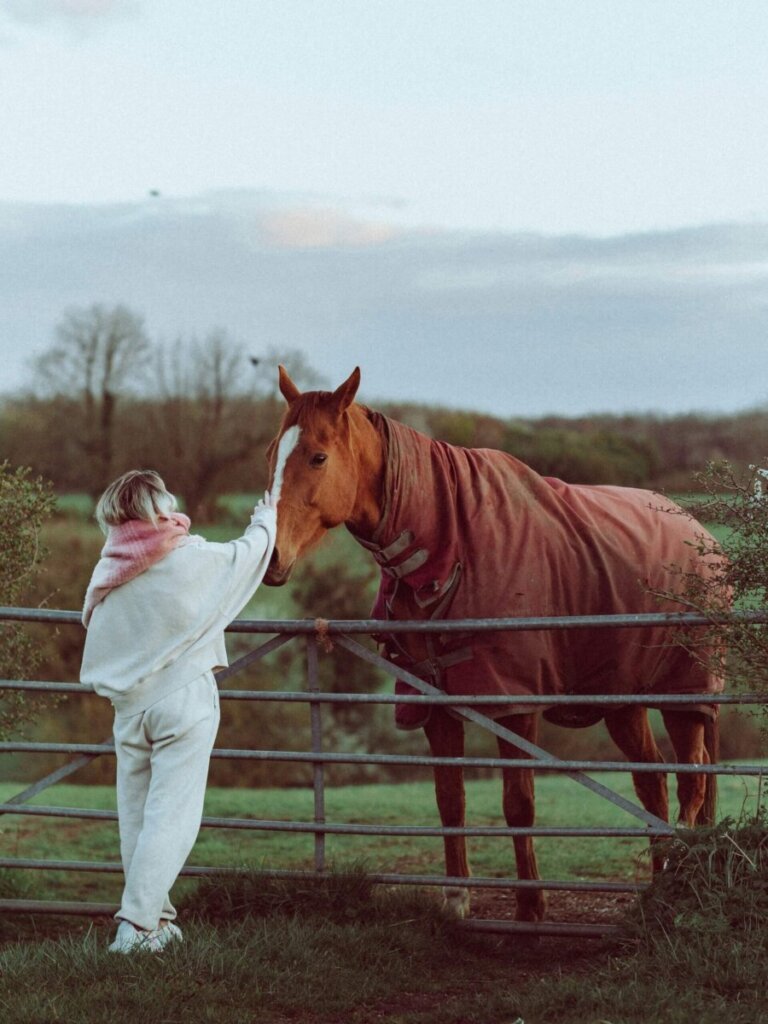
Riding Switches Your Brain Off (in a Good Way)
Riding can switch you off completely. Part of it is the animals and the fresh air. But there’s more. Riding tires you out physically and mentally.
You’re watching your horse, yourself, and the task, all at once. There’s no room left for work stress. No time to overthink how much you don’t want to go to school tomorrow.
And the feeling after? When I get off, I feel like I can do anything. I’m walking on air, buzzing for about two hours. It’s unreal.
Don’t expect this after your first lesson or two, though. It takes a few weeks for these effects to kick in.
So, what does the research say? A British Horse Society survey of 1,248 riders found mostly positive feelings. Riders also linked their wellbeing to time with horses. Reviews of equine-assisted programs for anxiety, PTSD, and mood look promising too.
Animals, Nature, and a Whole New Language
You spend time in nature with animals. And it’s not only horses at the barn. There’s usually a whole pack of cute animals: dogs, cats, chickens, cows, sheep. It charges your battery of cuteness.
But the real magic is the teamwork. When you ride, you’re a team with an animal. You learn a new language and a new perspective. Horses see the world differently, as I explain in my horse vision guide. They communicate differently, too.
They’re much bigger than us, yet so gentle. They pick up on a light pressure you don’t even notice. Honestly, how sensitive horses are surprised me the most.
They even read our faces. In my Do Horses Cry article, I cover a University of Sussex study showing that horses recognize human facial expressions.
No Space for Pets? The Barn Has You Covered
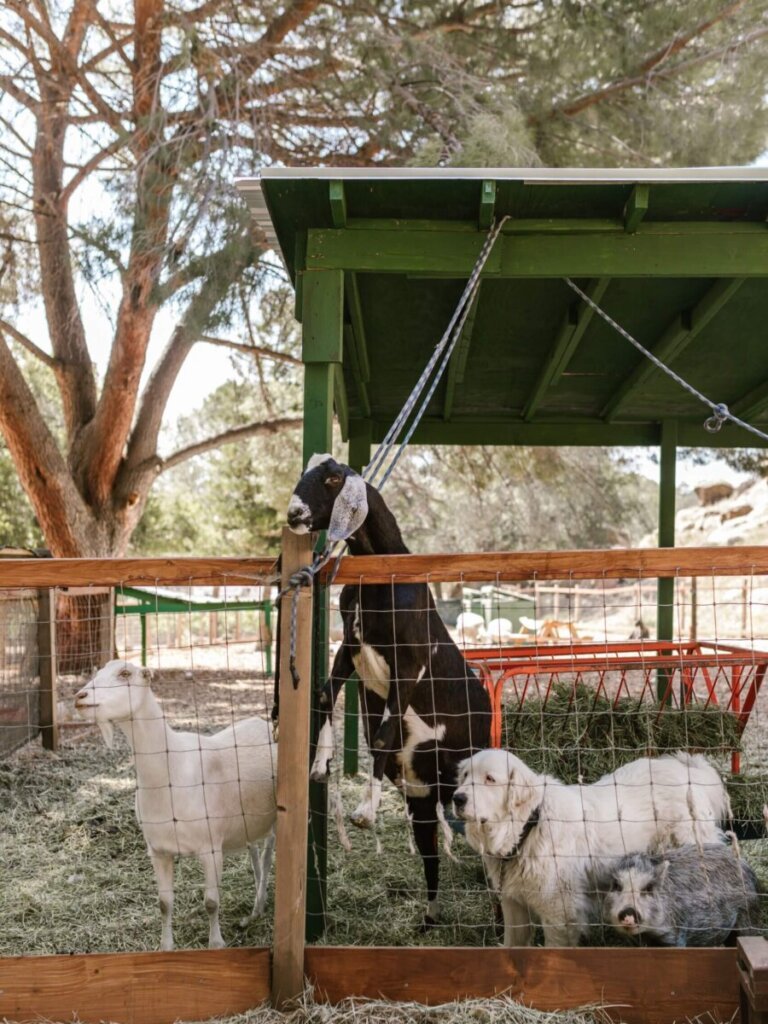
Love animals but can’t keep any right now? I get it. Maybe your landlord says no. Maybe your schedule says no. Maybe your budget says a very loud no.
Riding is a great workaround. For a few hours a week, you get time with horses. Many barns also have dogs, cats, chickens, and more. You get the cuddles and the barn smell, minus the full-time upkeep. You still pay for lessons. But you don’t pay for the hay or the vet.
Patience and Small Wins
Learning to ride takes a lifetime. It takes patience from you and for your horse. You’ll slow down a bit, because it’s all about small steps. Really tiny ones you hardly notice.
But trust me, you learn to notice them. And you learn to enjoy them. My first big small win? Cantering for the first time without holding on. I still remember it.
Tell me in the comments about your small win that made you happy this week; it doesn’t matter if you’re not riding anything- it can count.
Riding Is the Opposite of Doomscrolling
Let’s talk about our phones. Doomscrolling, endless short videos, and games hand us a tiny reward every few seconds. Swipe, laugh, swipe again. Your brain loves it. And it gets used to it fast.
Riding works the opposite way. You can’t swipe past a hard lesson. A smooth canter transition takes weeks of tiny practice. The reward comes late, and you have to earn it. Kids and adults both learn the same lesson: good results don’t arrive instantly.
Mindfulness and Goals
Riding makes you more mindful in everyday life. You start seeing the world a little differently. It also helps you set goals and actually reach them. That’s my experience. Every canter transition you finally nail started as something you couldn’t do yet.
Finding Friends Easier
You’ll be around people who share at least one interest with you: horses. That makes connecting easier, as an adult or as a kid. You never run out of things to talk about when horses are the topic.
It’s a Cool Sport (and You’ll Look Good Doing It)
Let’s be real for a second. Riding is just cool. It’s a fun sport, it looks good, and you feel good doing it. That confidence shows.
Next time you’re with a group of friends, casually mention that you ride. Watch what happens. Everyone’s head turns. Suddenly you’re one of the most interesting people in the room.
Horseback Riding Benefits for Kids
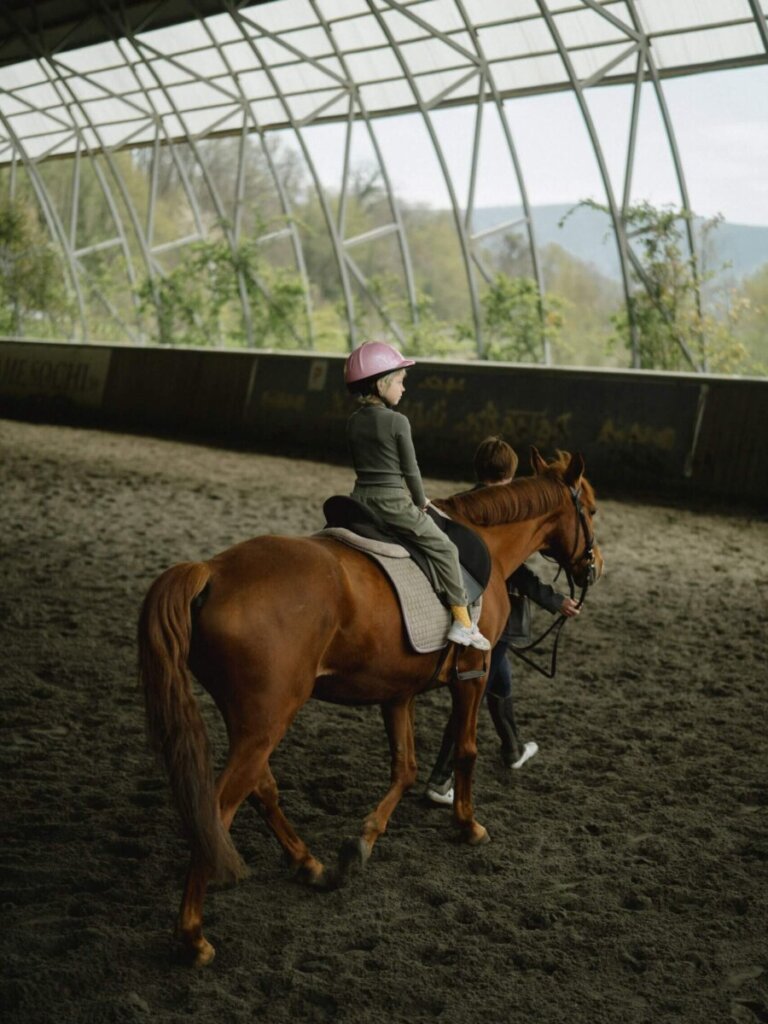
Riding is one of the best outdoor sports for kids. Here’s what they gain.
- Discipline and responsibility: horses need feeding, grooming, and tacking up, whether kids feel like it or not.
- Friends: kids bond fast over horses, just like adults.
- Fresh air: it’s an outdoor sport, and no screens are needed.
What Age Can Kids Start Riding?
There’s no official minimum age for horse riding. Most riding schools start lessons around age 5 or 6, and some from age 4. Some instructors say formal lessons work best around 6 or 7, when focus and balance are ready.
Every child is different, so the riding school is your best guide. Ask about the instructor.
How Often Should You Ride?
The minimum is once a week for about one hour if you want to feel the benefits constantly. Three times a week is ideal. The more you do it, the better you become, and you will enjoy it more. Give it a few weeks before you judge, because the good stuff takes time.
Here’s a fun twist. The BHS survey found the psychological benefits didn’t depend on how often riders rode. So even one lesson a week counts. And it’s never too late to start.
Is Horse Riding for Everyone? An Honest Take
Let’s keep it real. Riding isn’t perfect.
- It costs money: lessons, gear, and especially owning a horse add up.
- Falls happen: a helmet is not optional, and a good instructor matters.
- Progress is slow: remember the tiny wins? They’re the whole deal.
If you have a health condition, talk to your doctor and your instructor first. Then go for it.
Ready to Try Horse Riding?
Book a beginner lesson and ask if the school lends helmets. Wear comfy pants and sturdy boots with a small heel. Need more outfit ideas? Check out my horse riding clothes guides.
Show up early if you can. Grooming is a great way to bond. My horse grooming kit guide covers what each brush does.
Know someone who’d love this? A first riding lesson makes a wonderful present. You’ll find more ideas in my horse lover gift ideas.
Let’s Walk Off
The benefits of horse riding go way beyond the saddle. It’s real exercise for your heart, core, and legs. It’s a mental reset that leaves you buzzing. And it teaches patience, goals, and responsibility along the way.
Kids and adults both get something out of it. It’s never too late to start. Just begin with one lesson, and see how you feel.
FAQs
Is horse riding good exercise, or does the horse do all the work?
It’s real exercise, and honestly, the horse can’t do your part. For your horse to move well, your muscles need to apply the right pressure. If you want a workout that doesn’t feel like one, this is it.
Which muscles does horse riding work?
Mostly your core, lower back, glutes, thighs, and calves. Research clearly supports the trunk and inner thigh muscles, while glutes and calves are more rider-dependent for now. Don’t expect big muscle gains from riding alone.
Can you lose weight with horse riding?
Honestly, yes, like with any sport. It doesn’t replace proper eating or strength training, though. Results depend on how hard and how long you ride.
Does horse riding help with anxiety and stress?
For me, yes, and honestly, it’s one of my favorite parts. Research on equine-assisted programs looks promising but isn’t conclusive yet.
Is it too late to start horse riding as an adult?
Never. It’s never too late to start. Pick a patient instructor, go at your own pace, and mention any health issues.
What age is best for kids to start riding?
There’s no official minimum age. Most riding schools start lessons around 5 or 6, and some at 4. Every child is different, so ask the school.
How often should I ride to feel the benefits?
Once a week for about an hour is the minimum. Three times a week is ideal. Give it a few weeks before you judge, because the effects take time.
Is horse riding a sport?
Yes. Dressage, show jumping, and eventing are Olympic disciplines. And the intensity research shows riding is a real workout, so it’s not just sitting on a horse.


Leave a Reply