Disclosure: This post contains affiliate links. If you purchase through these links, I may earn a small commission at no extra cost to you.
Images used in this post are for illustrative purposes only and do not represent the exact products mentioned.
You show up for your first lesson.
Someone says: wear something comfortable.
That’s it. That’s the whole briefing.
Comfortable to you might mean flip-flops and gym shorts.
Comfortable near a 1,200-pound animal means something very different.
So let’s actually break down horse riding clothes properly. What you need. What you can skip.
Quick Answer: What Horse Riding Clothes Do You Actually Need?
If you only read one section, make it this one.
- A certified horse riding helmet, never a bike helmet
- Horse riding pants like breeches or riding tights, not jeans or leggings
- Horse riding boots with a clearly defined heel
- A fitted horse riding shirt in a breathable, moisture-wicking fabric
- Horse riding gloves for grip and blister protection
- Horse riding socks that are thin, tall, and moisture-wicking
- A belt, only if your pants have loops and your top doesn’t already cover the waistband
That’s the whole list. Now let’s go through each piece properly.
What Actually Counts as Horse Riding Clothes?
Not everything in your closet works here.
Horse riding clothes exist for one reason: safety and function. Anything that can snag on tack, trap you in the saddle, or leave your skin exposed to friction is a problem. No matter how good it looks in the mirror.
Fabric, fit, and small details like zippers and loose hems matter more than the label on the tag. You want gear that moves with you, breathes with you, and gets out of your way the moment you need to dismount fast.
Horse Riding Helmet: The One Piece You Don’t Skip
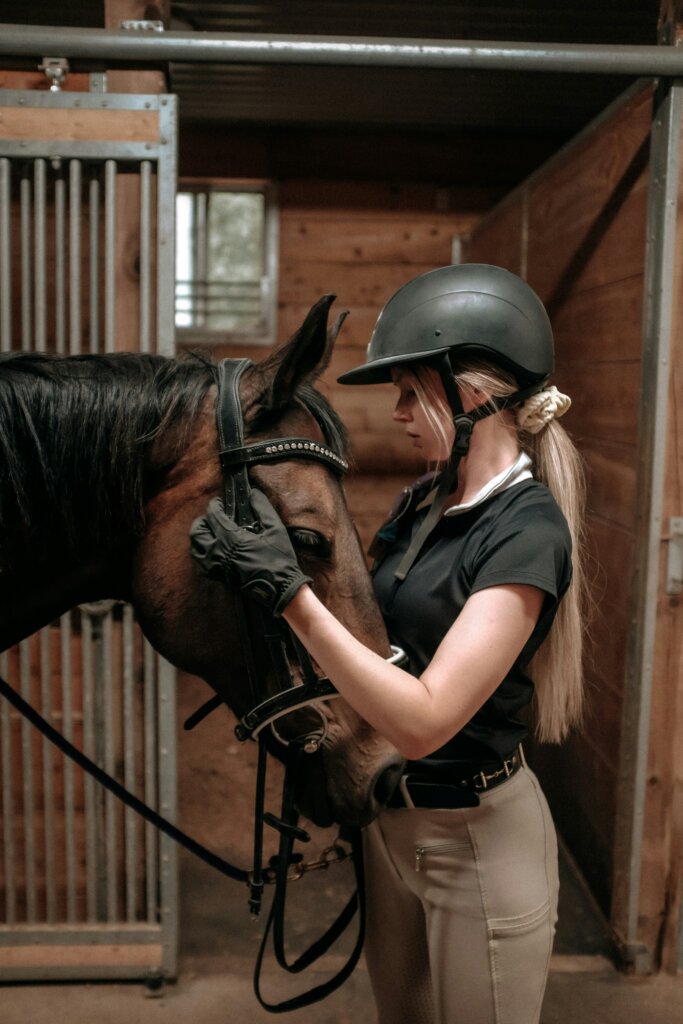
Buy an actual riding helmet. Not a bike helmet, not a skate helmet. It has to be made for falls off a horse.
Replace it every 5 years, even if it looks perfectly fine. The inside foam quietly wears out over time, and you can’t see that from the outside.
I know, babe, I know. You don’t want to replace a piece of cloth just because it “expired” and doesn’t have a single scratch on it. But this isn’t a piece of cloth. It’s a HELMET.
Never buy a used helmet. You cannot tell if it already took a hit.
And don’t toss it around. Every hard knock weakens it, even if nothing looks broken.
What Is MIPS?
Most falls happen at an angle, not straight down. MIPS is a thin layer inside the helmet that lets it shift slightly on impact, so your brain takes less of a twisting hit. Not required, but a solid upgrade if you can get it. Shocking right? I thought every helmet was built like that, but sadly no.
Why Ventilation Matters
More vents means a cooler head and a lighter helmet, which actually helps you focus. The tradeoff: too many vents can mean slightly less protection. A good helmet balances both.
Wide Brim Sun Helmets
Same certified helmet, just with a brim for sun protection. Mostly for trail riders out for hours at a time. One thing to check: make sure the brim itself is tested with the helmet, not just clipped on after.
Safety note: no helmet protects against every type of impact. Depending on the type and severity of a fall, a helmet can reduce injury risk, but it can’t guarantee full protection every time. Always ride within your skill level and follow your trainer’s safety guidance.
| Helmet Type | Best For | Amazon Link |
| Everyday schooling helmet | Lessons, hacking, daily riding | View on Amazon |
| MIPS helmet | Riders who want extra rotational impact protection | View on Amazon |
| Vented helmet | Hot climates, long rides | View on Amazon |
| Wide brim sun helmet | Trail riding, sun exposure | View on Amazon |
We went deeper into helmet ventilation and sun protection in our What to Wear Horseback Riding in the Summer guide. Worth a read if you ride somewhere hot.
Horse Riding Shirts: Fit Over Fashion
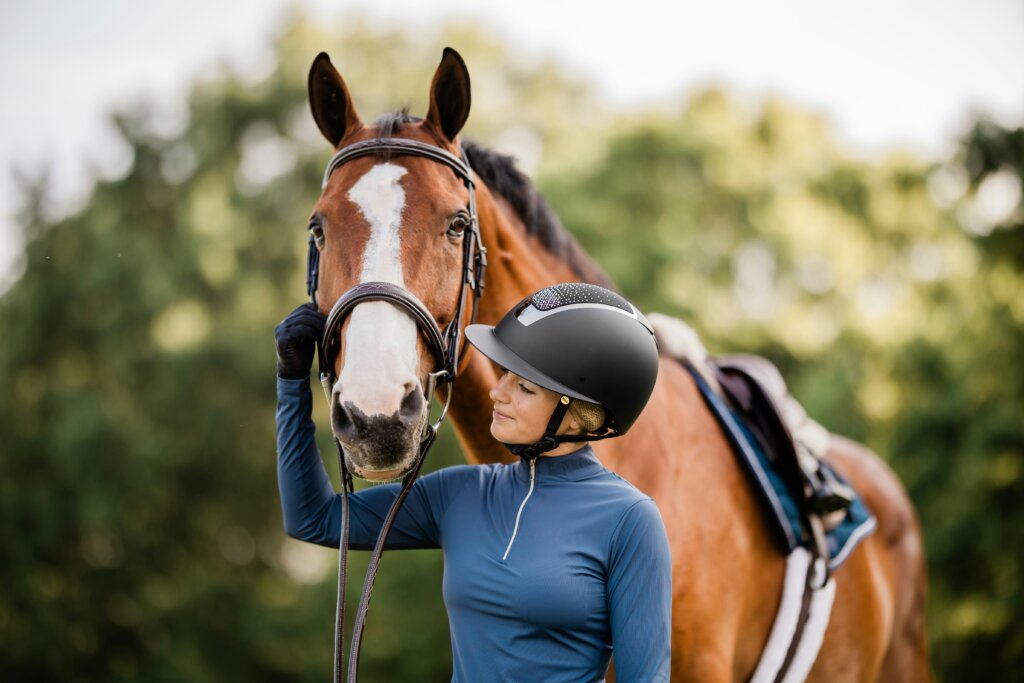
Horse riding shirts don’t need a fancy label. They do need to fit right.
Loose, flowy tops can catch on the saddle, the buckles, or your own reins mid-ride. Not cute. Not safe.
Go for something fitted through the body, made from a moisture-wicking blend rather than plain cotton. Cotton feels soft until you sweat, then it turns into a heavy, clingy mess.
Long-sleeve horse riding shirts with UPF protection are worth having even in summer. They genuinely feel cooler than bare skin in direct sun.
| Shirt Type | Best For | Amazon Link |
| Fitted moisture-wicking tee | Everyday riding | View on Amazon |
| Long sleeve sun shirt (UPF) | Summer rides | View on Amazon |
| Sleeveless Shirt | Summer rides | View on Amazon |
| Base layer top | Winter riding | View on Amazon |
Real talk though, you don’t need to buy a fancy top just for this. If you’ve got something you don’t mind getting a little horse slobber or sweat on, that works fine to ride in.
Even if it’s baggy, tuck it into your pants, and you’re good to go. Between the helmet, which isn’t optional, and everything else on this list, your wallet’s going to take enough of a hit already.
Horse Riding Pants: Breeches, Tights, or Jeans?
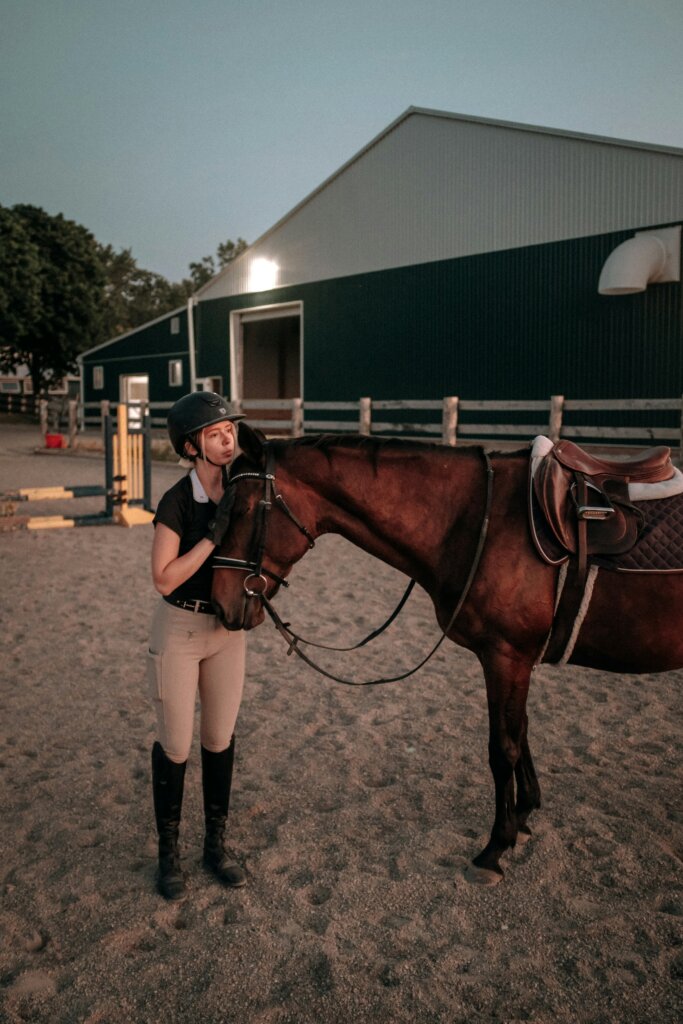
If there’s one category of horse-riding clothes that gets debated most, it’s pants.
Jeans feel familiar, but most aren’t built with the stretch or flat seams a saddle actually needs. Riding breeches and riding tights are cut specifically for the movement of posting, two-point, and mounting, without bunching or rubbing.
Horse riding pants generally come in two shapes: more athletic riding tights with a leggings cut, and more structured breeches with a defined waistband. Full seat grip adds stability; knee patch grip gives more freedom.
We wrote an entire honest breakdown of this exact topic, covering fit, grip, pockets, and twelve solid pairs, in our Honest Guide To Horse Riding Pants.
| Pant Type | Best For | Amazon Link |
| Riding tights/leggings | Everyday riding, summer | View on Amazon |
| Full seat breeches, hip pockets | Riders who want max stability | View on Amazon |
| Full seat breeches, thigh pockets | Riders who want max stability | View on Amazon |
Horse Riding Gloves: Small Piece, Big Difference
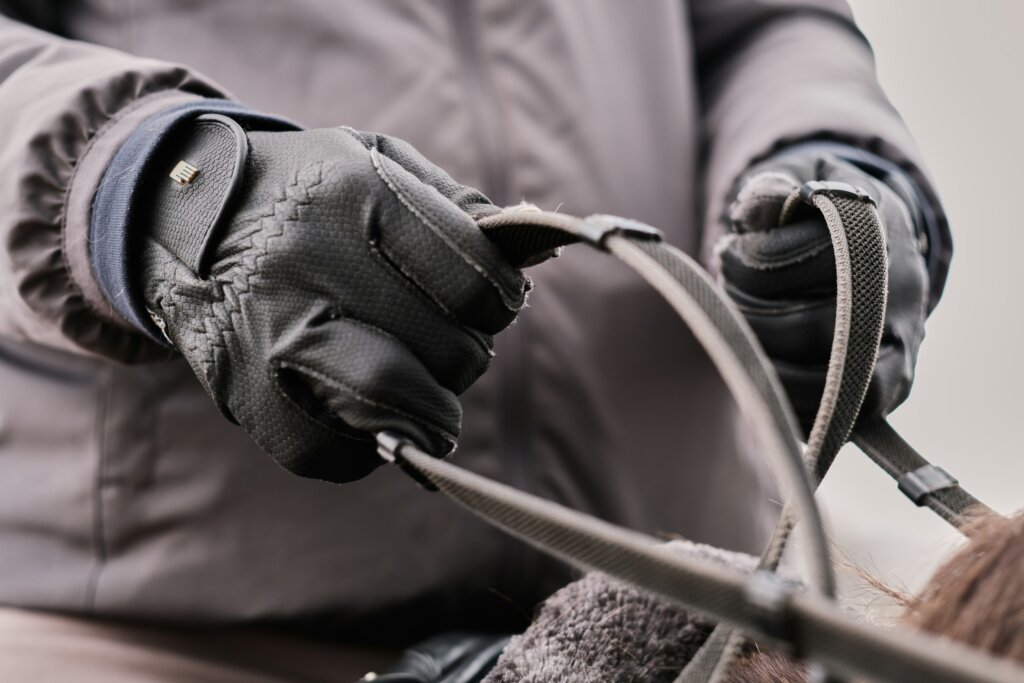
Horse riding gloves are easy to skip. Until your reins get sweaty or wet and suddenly you have zero grip.
A regular pair of gloves from your winter drawer will not do the job. They’re too slippery on leather reins.
Look for horse riding gloves made from leather, synthetic grip material, or a breathable mesh blend for summer. Reinforced palms last longer.
| Glove Type | Best For | Amazon Link |
| Leather riding gloves | Everyday riding, all seasons | View on Amazon |
| Mesh / breathable gloves | Summer riding | View on Amazon |
| Winter gloves | Winter riding | View on Amazon |
| Synthetic Leather gloves | Everyday riding, all seasons | View on Amazon |
From what I’ve seen, gloves are genuinely useful, but you don’t need to rush out and buy them in your first few months. If you’re mostly on the lunge line and still in the learning phase, your grip needs are pretty low. This is one you can pick up later, once you’re actually holding contact and riding more independently.
Horse Riding Boots: Tall, Paddock, or Half Chaps
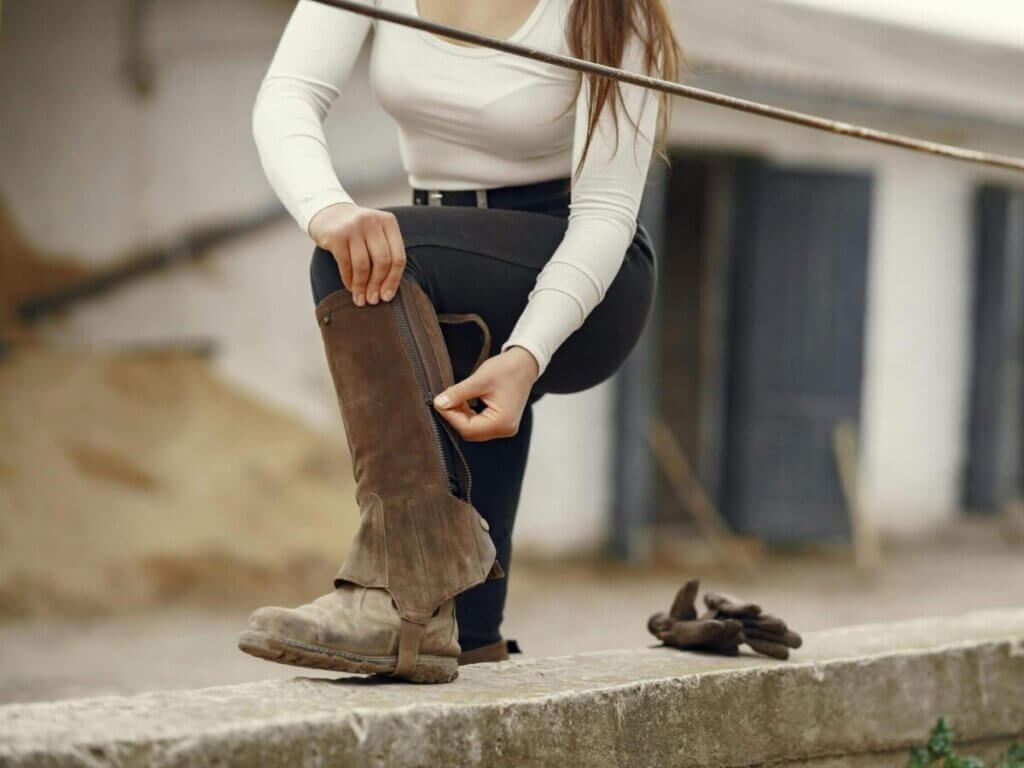
Horse riding boots need one thing above everything else: a clearly defined heel.
Without it, your foot can slide straight through the stirrup. That’s a genuinely dangerous way to fall.
Tall boots give full leg protection and a classic silhouette. They’re the go-to for shows. Paddock boots paired with half chaps are shorter, lighter, and a lot more practical for everyday lessons and hot weather, since you can pull them off right after riding and let your legs breathe.
| Boot Type | Best For | Amazon Link |
| Synthetic Tall boots | Budget option, easy care | View on Amazon |
| Paddock boots | Everyday riding, hot weather | View on Amazon |
| Half chaps | Pairing with paddock boots | View on Amazon |
Horse Riding Socks: The Most Skipped Piece
Thin, moisture-wicking socks that reach above your boot line stop your skin from rubbing directly against stiff leather or synthetic material.
Cotton socks hold sweat and bunch up inside a boot fast. Go for a synthetic performance sock instead, and always keep a spare pair in your bag. Trust me on this one.
| Sock Type | Best For | Amazon Link |
| Moisture-wicking riding Socks | All-season riding | View on Amazon |
| Polycotton riding socks | All-season riding | View on Amazon |
| Cotton riding socks | All-season riding | View on Amazon |
FAQs for Horse Riding Clothes
What should I wear for my first horseback riding lesson?
A certified horse riding helmet, fitted breeches or riding tights, boots with a defined heel, and a breathable top cover the basics. Skip jeans, shorts, and anything open-toed.
Can I wear jeans horseback riding?
Some bootcut jeans work in a pinch, but most lack the stretch and flat seams that proper horse riding pants are built with. For regular lessons, breeches or riding tights hold up better long term.
Do I need special gloves, or will any pair work?
Regular winter or work gloves are too slippery on leather reins. Horse riding gloves have a grip built into the palm specifically for rein contact, and that difference matters more than people expect.
What socks should I wear with riding boots?
Thin, moisture-wicking horse riding socks that sit above your boot line. Thick cotton socks bunch up and cause blisters on longer rides.
Do horse riding pants need a belt?
Not always. Horse riding belts are only necessary if your pants have loops and your top doesn’t already cover the waistband. Keep it slim if you do wear one.
What is the difference between paddock boots and tall boots?
Both count as proper horse riding boots; the difference is mainly length and use. Tall boots cover the full leg and suit shows; paddock boots are shorter, pair with half chaps, and work well for everyday lessons and hot weather.
Is a bike helmet okay for horseback riding?
No. A horse riding helmet is built for the height and angle of a fall from a horse, which is completely different from a bike fall. Always use one certified to ASTM/SEI standards.
Let’s Walk Off
Protect your head. Protect your legs. Let your body move the way riding actually requires.
Everything past that, the colors, the brand names, the extra accessories, is just personal taste.
Start with the pieces that matter for safety first: your helmet, your boots, your pants. Then build out the rest: gloves, shirts, socks, maybe a belt if your pants call for one.
And once you’re kitted out properly? Half the mental clutter of riding disappears. You stop thinking about your outfit and start thinking about your horse. Which, let’s be honest, is the whole point.
Drop a comment below and tell me which piece of horse-riding clothing took you the longest to get right.

Leave a Reply