Disclosure: This post contains affiliate links. If you buy through them, we may earn a small commission at no extra cost to you.
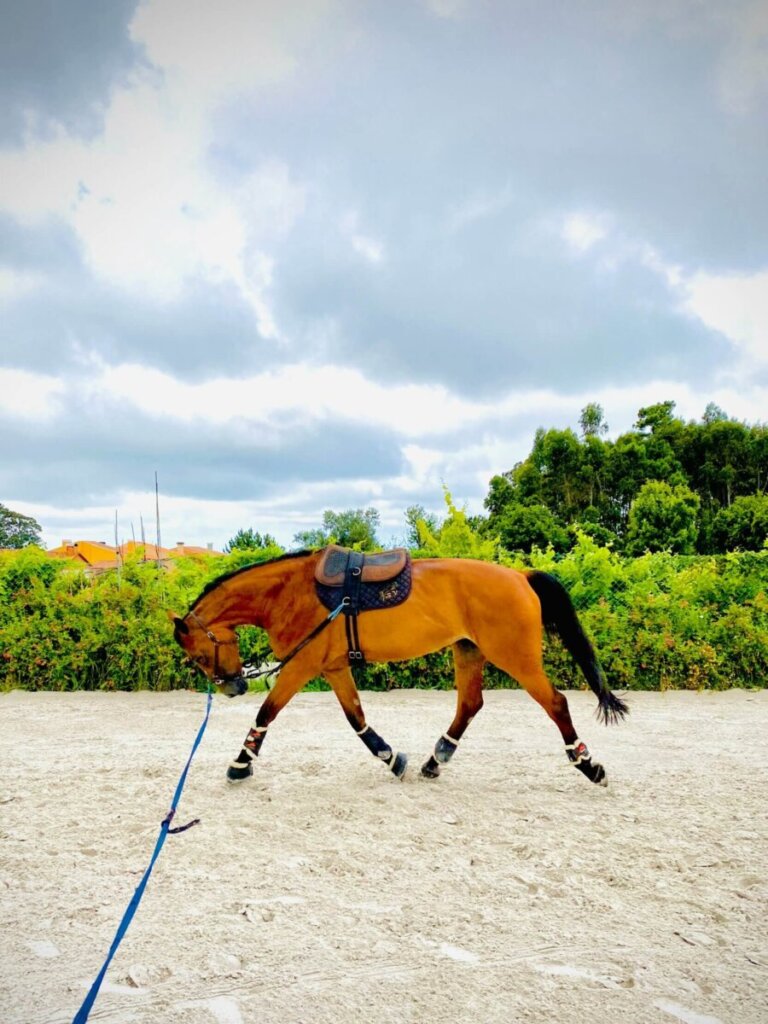
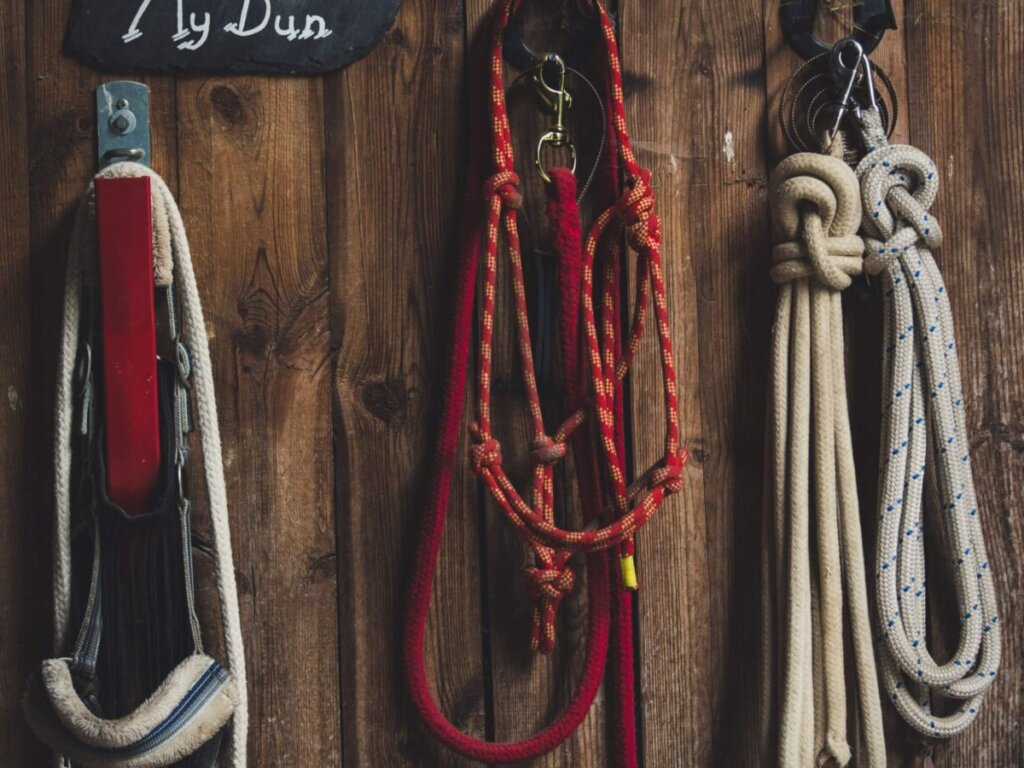
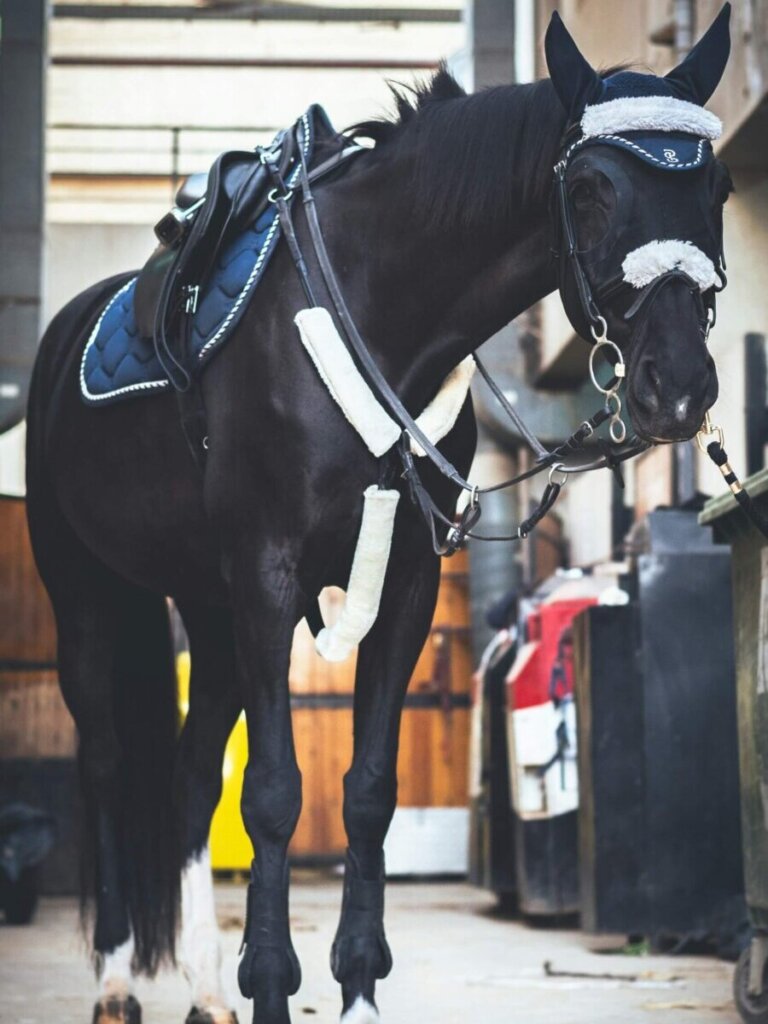
Images in this post are for illustration only. They do not depict the specific products linked or reviewed, and they are not meant to demonstrate correct training technique.
Quick note before we start: this guide helps you shop smart. It’s not a replacement for hands-on training. Got something specific to your horse? Check with a trainer first.
A whip on a nail. A mystery stick in the corner. A halter someone talked you into, and used twice.
Sound like your tack room? This guide is for you.
Before any of that gear matters, you need to catch your horse. Our How to Catch a Horse guide has you covered.
This guide breaks down what each piece of horse training equipment actually does and why it works. When it doesn’t.
Decide with confidence, or jump to the quick links below if you already know what you need.
We cover halters, whip versus stick, training flags, and auxiliary reins. Plus the training systems and pole gear.
In This Article
Want the short version? Here it is.
- A knotted rope halter or lunging cavesson, for groundwork and lungeing. A flat halter is fine for everyday handling, not training.
- A lunge line, at least 25 to 30 feet, cotton or flat webbing.
- A lunge whip, used as a driving aid during lungeing, never as punishment.
- A horse training whip or stick, for example in-hand cues like lateral steps and early piaffe work.
- A training flag for horses, to build confidence around movement and unpredictable objects.
Auxiliary reins are situational: side reins, draw reins, martingales, and similar. They’re not part of a beginner’s starter kit. Even experienced riders disagree on how and when to use them. More on that below.
Quick Shop: Horse Training Equipment
| Item | Best For | Rating | Check Price |
| Knotted Rope Halter | Lungeing and groundwork, concentrates pressure at the poll and nose | 4.8 | View on Amazon |
| Lunging Cavesson | Lungeing without pressure on the mouth | 4.6 | View on Amazon |
| 25ft Lunge Line | Groundwork and lungeing sessions | 4.8 | View on Amazon |
| Lunge Whip | Forward cues during lungeing | 4.7 | View on Amazon |
| Lunging Surcingle | Padded roller for lungeing, provides attachment rings for auxiliary reins | 4.5 | View on Amazon |
| Horse Training Whip / Stick | In-hand cues, lateral steps, riding | 4.2 | View on Amazon |
| Training Flag for Horses | Desensitizing to movement and sound | 4.6 | View on Amazon |
| Equine Band System (resistance/core bands) | Core strength and topline conditioning during groundwork, lungeing, or ridden work | 5.0 | View on Amazon |
| Bending Poles | Gymnastic pole work, rhythm, straightness, and agility patterns | 4.5 | View on Amazon |
What Goes on Your Horse’s Head for Groundwork
Before you touch a whip, a stick, or a flag, you need a way to communicate at the head. This one decision shapes everything else in your setup.
A plain flat halter, the everyday nylon or leather one, isn’t a great fit for lungeing. A few reasons why:
- It’s built for standing still, not moving in a circle, so it tends to twist and slide around the nose.
- The padding spreads pressure out evenly, which makes it harder for a horse to feel a clear release.
- Repeated tension from lungeing wears on the stitching and hardware faster than everyday handling does.
- There’s no single, precise contact point, so your cues come through less consistently.
Because of that, most riders reach for one of three alternatives instead. None of them is the “correct” answer; it comes down to preference and what your horse is used to.
Knotted Rope Halter
A single length of rope, with knots across the nose, poll, and chin, instead of padding. The knots concentrate pressure into small, precise points. Many riders like this because the horse gets a clearer signal, and a more distinct release the instant you soften your hand.
Bridle and Bit
Some riders skip a halter setup entirely, and just clip the lunge line onto the bit ring of a regular bridle. It keeps the same contact point as riding, which some find useful for a young horse getting used to a bit. Others avoid it, since a bit ring wasn’t really designed to take sideways pull from a lunge line.
Lunging Cavesson
A padded noseband with rings, worn on its own or over a halter or bridle. It keeps all the pressure off the mouth, which is why it often comes up for green horses or ones sensitive about the bit. The rings give a direct contact point, similar in feel to the knotted halter.
Whichever one you pick, all three do the same basic job: giving you a stable, communicative point of control on the ground.
The Lunge Line
A 25 to 30-foot lunge line is the other non-negotiable. Cotton or flat webbing both work. Webbing is lighter and lies flatter in your hand than rope. Avoid anything with stretch or elastic. That line is your rein while the horse circles you.
The Lunge Whip
The lunge whip is the long, light whip you use only while lungeing. It’s one of the most misunderstood tools out there. It is not there to punish.
Used correctly, it works like the rider’s leg aid. It cues forward movement, asks for a bigger circle, or signals a transition. A light touch and consistent timing matter more than length or stiffness.
Lunging Surcingle
Lunging surcingle: a padded roller worn without a saddle, with rings at several heights. This is where auxiliary reins can attach.
Horse Training Whip and Horse Training Stick
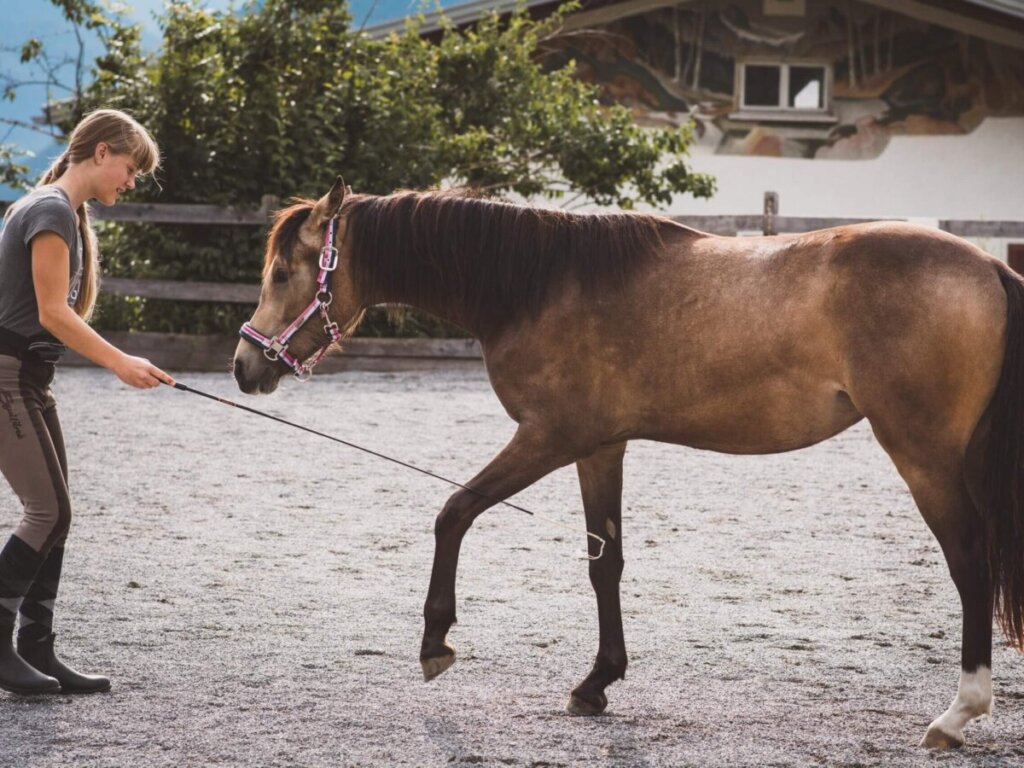
This is different from the lunge whip. Both terms describe the shorter, closer-range tool for in-hand cueing. Think lateral steps and early piaffe work.
You’ll see both words used for similar tools. What matters is how it’s built, not what a seller calls it.
A whip has a more flexible shaft, so it keeps moving slightly after your hand stops. A stick is usually stiffer, so the motion stops the instant your hand does.
That stiffness makes a precise, controlled tap easier. It also works well for rubbing a horse to keep it relaxed around the tool. That’s why it suits close-range groundwork: backing up, moving the shoulders or hips. Later on, it works for ridden lateral moves too, like leg yields and early piaffe. Or use it in the saddle.
A shorter stick suits close-range fine-tuning. A medium length works for general confidence building. A longer one cues a horse from further away. Whichever length you choose, treat it as a communication tool.
Training Flag for Horses
A training flag for horses is a piece of light fabric or plastic, tied to a stick or whip. Some are purpose-built and sold as a flag.
The purpose is desensitizing. A horse that’s never learned to process a flapping object is far more likely to bolt at a bag or a tarp.
That reaction makes more sense once you understand how horses actually see motion. Our Horse Vision guide breaks that down.
Used deliberately, at a pace the horse can process, a training flag teaches something important: movement and noise near them isn’t danger. That’s foundational work for trail horses, parade horses, and honestly any horse you’ll ride outside or inside an arena.
The method that works comes down to timing, in both natural horsemanship and classical training. Start at a distance the horse can tolerate, often near the hindquarters rather than the head first.
Wave the flag with a light, non-aggressive rhythm. The moment the horse relaxes- a lowered head, a soft eye, a chewing motion- stop. Let that be the reward. Repeat closer, but only once the horse settles consistently at the current distance.
A training flag only does its job when the horse has a way to succeed, and pressure releases the instant it tries.
Auxiliary Reins: The Tool That Divides Riders
Auxiliary Reins: Quick Shop
| Item | Best For | Rating | Check Price |
| Side Reins | Encouraging a rounder frame during lungeing, builds topline over time | 4.8 | View on Amazon |
| Vienna Reins | Sliding side rein alternative, gentler give during lungeing | 4.3 | View on Amazon |
| De Gogue | Self-adjusting rein that encourages stretch and roundness during lungeing | 4.3 | View on Amazon |
| Chambon | Encourages lowering and rounding of the neck during lungeing | 4.5 | View on Amazon |
| Training System (e.g. Pessoa style) | Pulley system for consistent contact during lungeing, builds topline | 4.3 | View on Amazon |
| Double Lunge Line (long lines) | Independent left/right contact, first step toward long reining or ground driving | 4.5 | View on Amazon |
| Draw Reins | Added flexion cues in ridden work, more severe if misused | 4.6 | View on Amazon |
| Running Martingale | Keeps rein angle steady if the head goes above contact, ridden work | 4.4 | View on Amazon |
| Standing Martingale / Tie-Down | Limits how high the horse can raise its head, ridden work | 4.3 | View on Amazon |
No other category splits opinion quite like this one. Some riders would never lunge without auxiliary reins. Others avoid them completely. Both sides have a point.
Auxiliary reins split into two groups, depending on when you use them. Some only belong in the saddle. Others only belong on the lunge line.
Used While Riding, in the Saddle
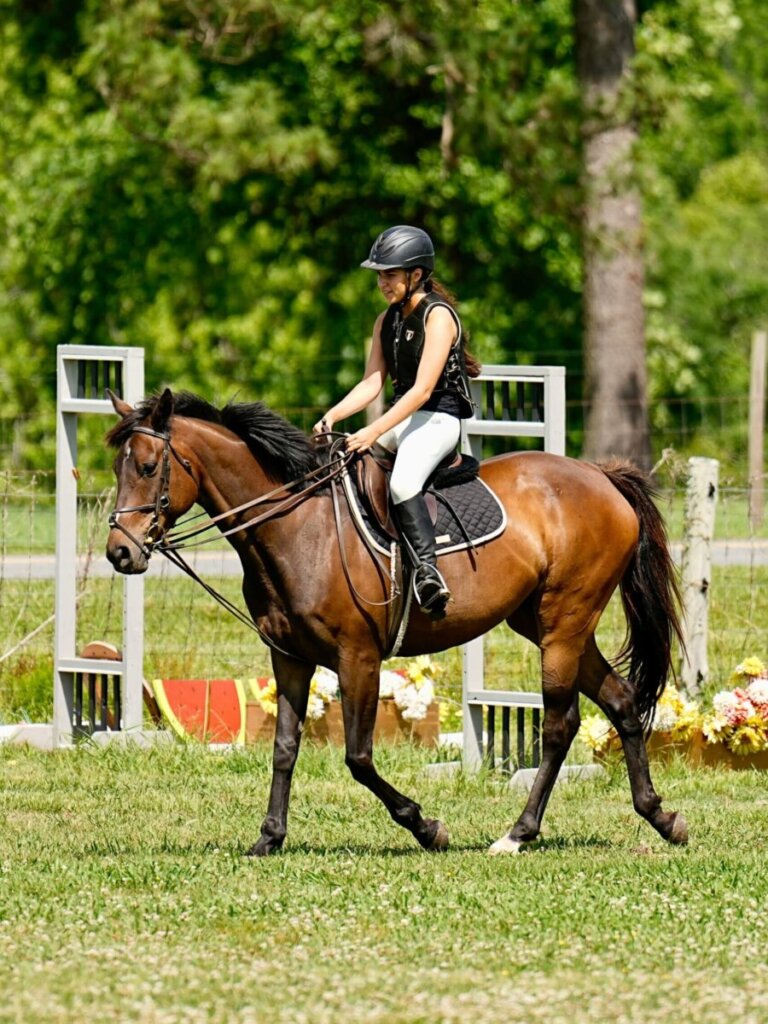
- Draw Reins: run from the girth, through the bit rings, to the rider’s hands, giving extra flexion cues under saddle. More severe than side reins if misused, since the rider controls the pressure directly.
- Running Martingale: attaches to the girth and splits to each rein. Keeps the rein angle steady if the horse throws its head up.
- Standing Martingale (Tie-Down): runs from the girth to the noseband, limiting how high the horse can raise its head. Read more: Running vs. standing martingale
- Side Reins
- De Gogue
Used While Lungeing, Groundwork
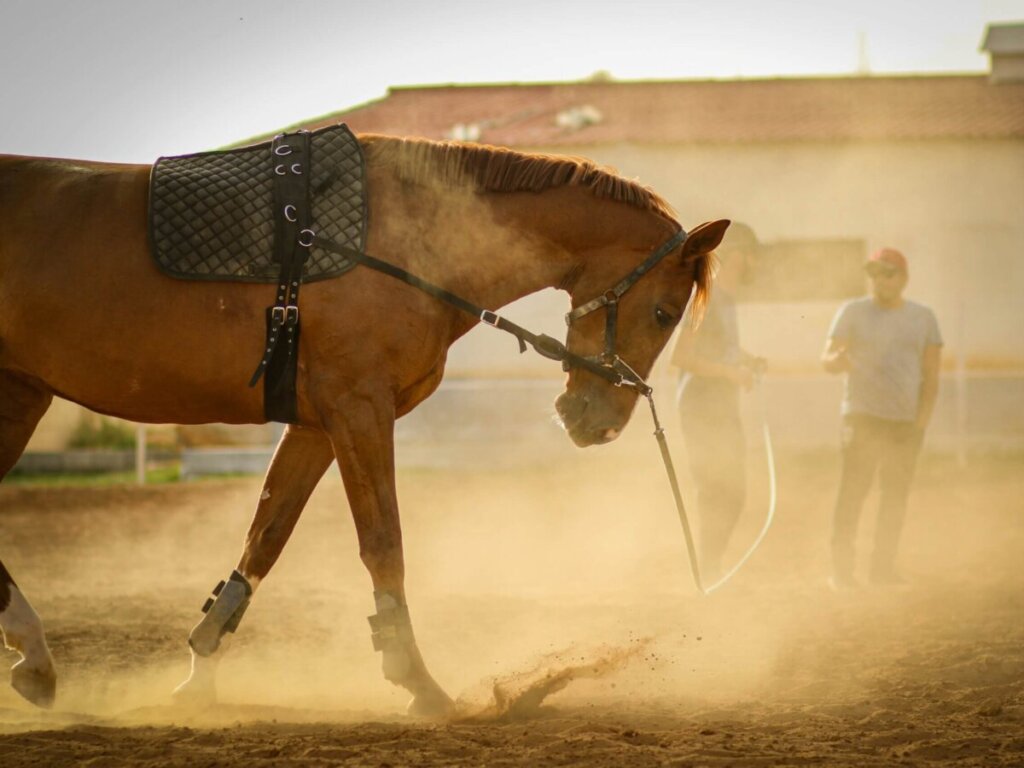
- Side Reins: attach from the girth to the bit. Used mainly during lungeing, they encourage a steadier, rounder frame and build topline over time.
- Vienna Reins: a sliding version of side reins, often used during lungeing as a gentler alternative that allows a bit more give. Read more
- De Gogue (often sold as a rubber or elastic version): runs from the girth, up through rings near the poll, down to the bit. It self-adjusts as the horse raises or lowers its head, encouraging it to round and stretch instead of holding one fixed position. Same rule as side reins: short, supervised sessions only.
- Chambon
- Training System (e.g. Pessoa style): a set of pulleys and lines running from the surcingle to the bit and back, so contact shifts with the horse’s stride instead of staying fixed. Start with a few minutes per side, since overuse can make a horse sore or teach the wrong posture. Here’s a fitting guide if you want the step-by-step.
- Double Lunge Line (long lines): two lines run from the bit or cavesson instead of one, for independent left and right contact. This is the standard first step toward long reining or ground driving, used before a horse is backed.
Here’s the part worth knowing: riders often overtighten these tools. It can restrict a horse’s breathing, often without realizing it. You can read more about it here.
None of this means auxiliary reins are automatically harmful. Used briefly, fitted correctly, with a clear purpose, they’re a legitimate short-term tool. A focused lungeing session aimed at one muscle group, for example.
They’re not a substitute for the horse learning to carry itself. Relying on them every session, with no plan to phase them out? That’s usually a sign to bring in a trainer’s eye, not add more gear.
When Auxiliary Reins Do More Harm Than Good
Here’s the uncomfortable truth. Auxiliary reins are supposed to encourage a rounder frame. Too often, they force it instead.
There’s a real difference between a horse choosing to round up and a horse having no other option. One builds a stronger topline over time. The other just teaches a horse to give up and go where the pressure sends it.
A few things worth keeping in mind before you reach for any of them:
- Know your goal before you clip anything on. “My horse looked cute like that” isn’t a goal.
- Consult a trainer or a professional, especially the first few times. What looks fine from the ground can feel very different to the horse.
- Used the wrong way for long enough, these tools can do more harm than good. Sore muscles, a locked jaw, a horse that shuts down instead of relaxing.
- Rethink the need every time you use them. Ask yourself if your horse still needs the help, or if you’re just reaching for the same gear out of habit.
Good equestrians don’t measure themselves by how much gear is in the trailer. They measure themselves by knowing what their horse actually needs, and being honest when the answer is less equipment, not more.
Also Worth Knowing: Core Conditioning Bands
An Equine Band System, sometimes called Equiband style, is a different kind of gear entirely. Instead of attaching to the bit, two resistance bands wrap around the horse’s belly and hindquarters. They clip into a saddle pad or a lunging surcingle.
The bands add gentle resistance as the horse moves. That encourages it to activate its core and hind end, and build topline over time. Vets and physios often recommend them for rehab, alongside groundwork, lungeing, or ridden pole work. Sessions usually start shorter than normal work, while the horse adjusts.
Do Poles and Cones Count as Horse Training Equipment?
Short answer: yes. They just live in a different corner of the tack room than a halter or a whip.
Ground poles build rhythm, straightness, and coordination. A horse has to think about where its feet land, instead of moving forward on autopilot. Pole bending poles and cones do the same job for pattern work: bend, turn, and listen at speed.
What Most People Buy That Doesn’t Earn Its Space
A few categories show up in almost every shopping list, and end up barely used in real barns:
- “Complete training kit” bundles: these usually pack in duplicate items, a low-quality whip, and a stick you’ll replace within a season.
- Multiple flags before mastering one: a single flag, used consistently, teaches more than three bought in a burst of enthusiasm.
- A second cavesson before the first wears out: this piece lasts years with basic care, and rarely needs replacing early.
- Auxiliary reins bought before you understand how they work: one of the most common, and most avoidable, purchases on the list.
Let’s Walk Off
Think a knotted rope halter or cavesson, a lunge line, and a lunge whip used as a leg aid, never a punishment. Add a training stick for the closer, finer work.
Add a training flag once you’re ready to build confidence around movement and noise. Everything after that, especially auxiliary reins, is a tool for a clear purpose. Not a shortcut, and not a permanent crutch.
Your tack room doesn’t need to be full to be effective. It needs the right handful of things, used with timing and intention, and a horse who trusts what shows up in your hand.
That kind of trust doesn’t happen overnight. Our How to Bond With Your Horse guide walks through how to build it.
FAQs
What is the most important piece of horse training equipment?
A knotted rope halter, lunging cavesson, or a bridle. A lunge line and a lunging whip for encouraging the horse forward.
Should I use a flat halter or a knotted rope halter for training?
A flat halter is fine for everyday handling. But it’s built to break under strong tension, a safety feature for tying. That becomes a liability during training if your horse pulls hard. A knotted rope halter won’t break, and concentrates pressure more precisely. That’s why most trainers prefer it for lungeing and groundwork.
What is the difference between a horse training whip and a horse training stick?
Both terms describe the shorter, closer-range tool for in-hand cueing. Think lateral steps and early piaffe work, unlike the long lunge whip used purely for lungeing. A whip has more flex in the shaft. A stick is stiffer, and stops moving the instant your hand does, for a more precise cue.
How do I use a training flag for horses without scaring them?
Start at a distance the horse can handle, often near the hindquarters rather than the head. Use a light, steady rhythm rather than sudden movement, and stop the moment the horse relaxes. Only move closer once that response is consistent. Rushing this, or continuing after the horse mentally shuts down, does more harm than good.
Are auxiliary reins bad for horses?
Not inherently. But riders often adjust them too tight, or use them longer than needed. That can restrict breathing, and in extreme cases add to stress. Short, correctly fitted use for a clear purpose is very different from a permanent fixture.
What horse training equipment do I actually need to start groundwork with a green or young horse?
Start with a knotted rope halter or lunging cavesson, a 25 to 30 foot lunge line, and a lunge whip. Add a training flag to build confidence early. A training stick and auxiliary reins can wait until the basics are solid. A trainer’s input is especially valuable at this early stage.

Leave a Reply