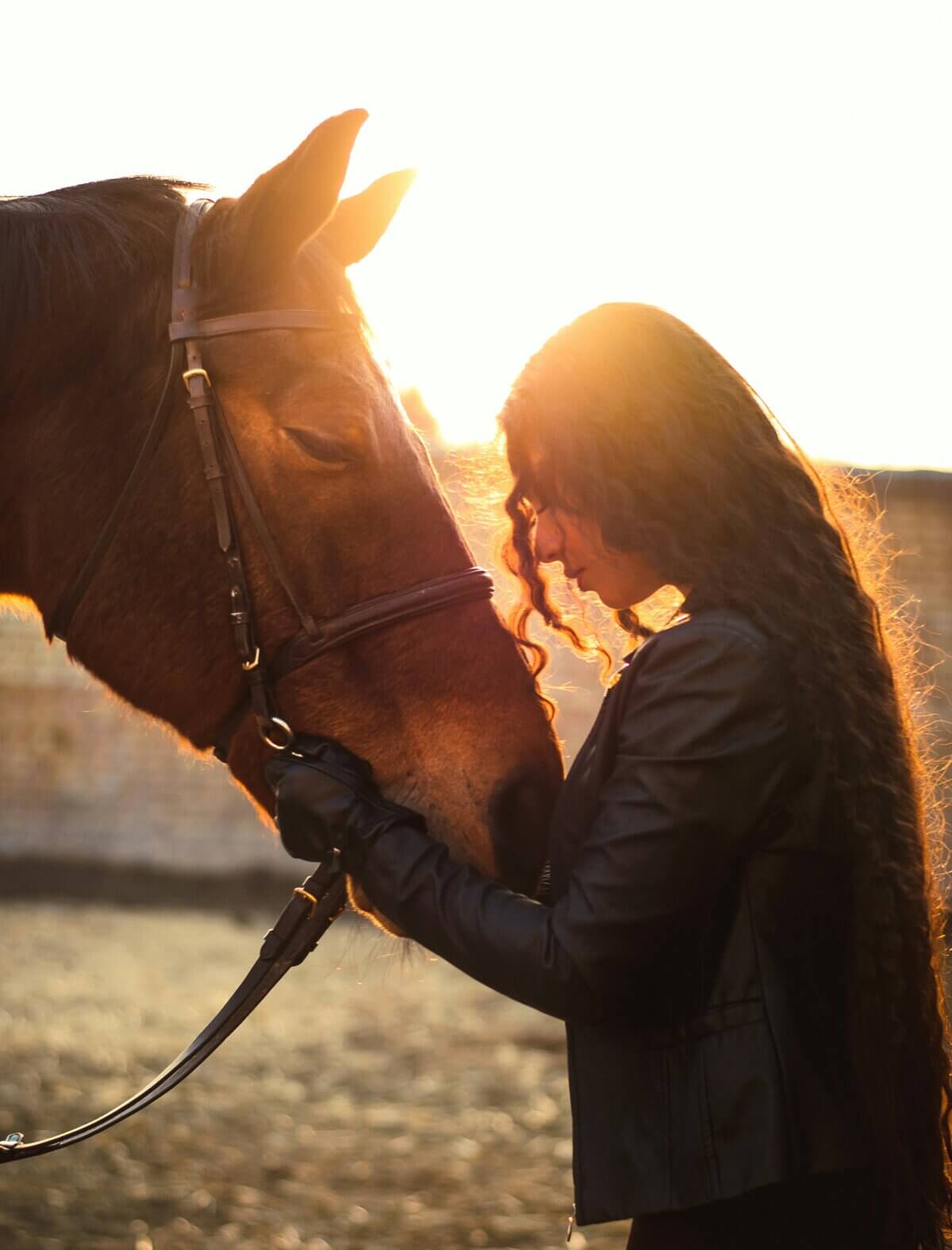
That magical scene where a girl and a horse lock eyes for the first time and suddenly understand each other completely? Bumm. Love at first sight.
That is for the movies. Real bonding with a horse is not instant, and it is not magic. It takes time, consistency, and a little bit of effort on your end. But here is the part that actually matters: it is worth it, and it is genuinely not that hard.
Whether this is your first question after bringing home your new equine friend, or you already have a solid relationship and just want it tighter, the process looks pretty similar. Let’s explore the real ways to bond with your horse.
In This Article:
- Bonding with your horse takes consistent time together, not one magic moment
- Grooming, massages, and bathing are easy daily ways to build trust
- Being a calm, clear leader matters more than being your horse’s best friend
- Groundwork and clear body language teach your horse what to expect from you
- Treats help, but they should never be the only reward your horse knows
- Trying new disciplines together like horse agility or working equitation deepens the bond
Spending Time With Your Horse

This one sounds almost too simple to matter, but it is the foundation of every horse bonding routine out there. Just go sit with your horse. Not to ride, not to train, not to ask for anything. Just exist near them.
Horses are herd animals, and your quiet presence in their space, with no agenda attached, teaches them that you are not always there to ask for work. Bring a book, scroll on your phone, or just watch them graze. Let your horse come to you on their own terms sometimes instead of always going to them.
This single habit does more for bonding with your horse than people expect, mostly because it removes pressure from the relationship entirely.
Why does this work? Because horses are constantly reading the energy around them. A person who only shows up to ride or train gets associated with work. A person who also just hangs around gets associated with safety. And safety is what trust is built on.
Horse Grooming
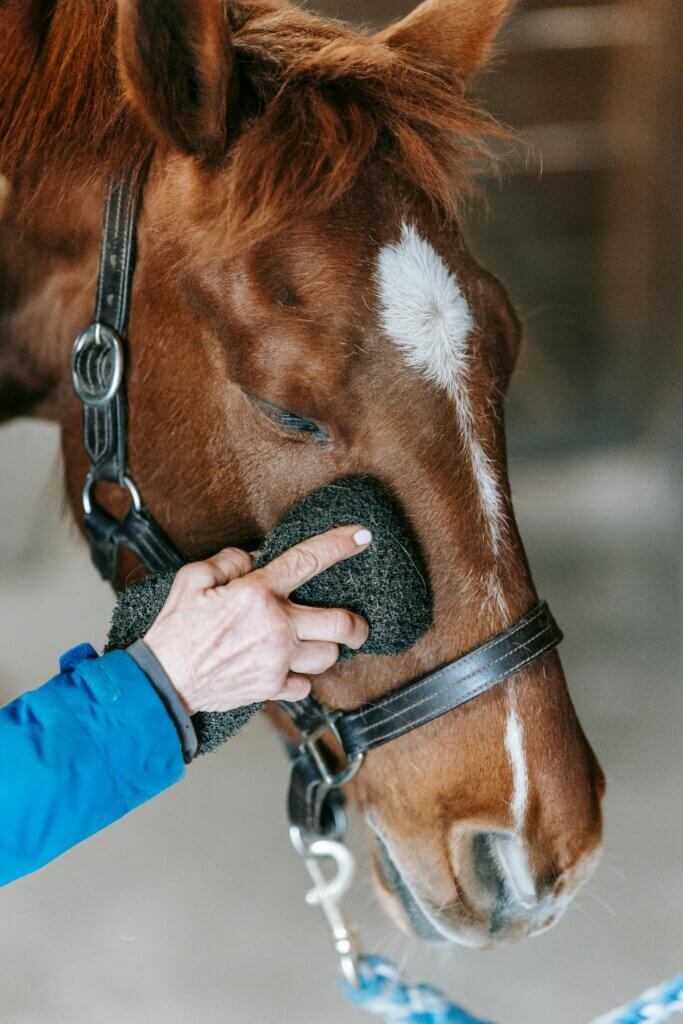
You already do this before every ride, so why not make it fun? This is one of the easiest horse bonding exercises because you are already doing the work; you just need to slow down and pay attention.
Scratch those sweet spots. Try every inch of your horse and actually explore where they like it. One of them is absolutely obsessed with neck scratches, another melts for scratches right behind the ears at the poll, and a third one goes soft the second you scratch under the jaw between the jawbones. Every horse has a spot like this; you might just not have found it yet.
How do you know when you found it?
- They stretch their neck out or tilt their head toward your hand
- Their upper lip starts wiggling, which is basically horse for “do not stop”
- They get visibly soft through the neck and back
- They stop moving and just stand there enjoying it
Go slow, watch the reactions, and take notes.
Check out the full Horse Grooming Kit Guide here
Horse Bathing
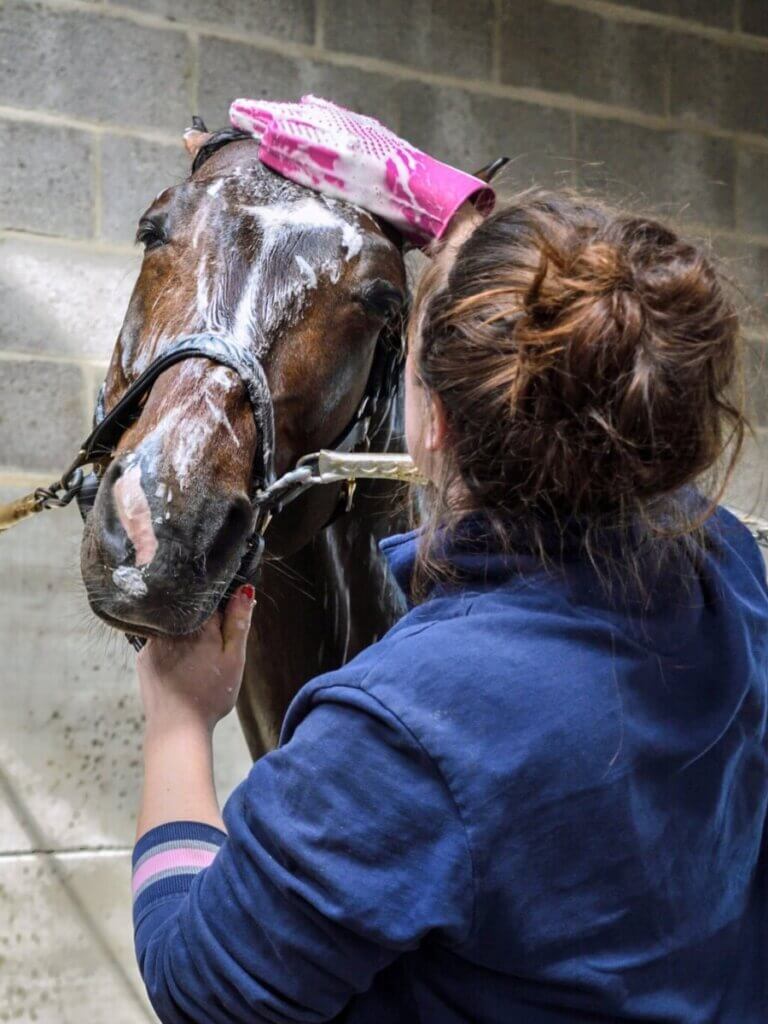
If your horse genuinely loves it, summer bath time can turn into a fun bonding session instead of a chore. Some horses love standing under the hose, splashing around, and getting a good scrub. Others tolerate it at best, and that is okay too.
The key is reading what your horse actually enjoys and not turning it into a battle. A relaxed bath where your horse feels comfortable is a bonding moment.
Check out the full Guide to a Safe and Fun Bath Time here
Horse Massages
You do not have to be a professional equine massage therapist to spoil your horse with this one. A few simple, gentle techniques are enough to make a real difference, and your horse will absolutely notice the effort.
Here are a few simple techniques to get you started:
Side note: if you do a quick massage before a ride, your horse can end up more relaxed and softer to work with. After a ride, it can help with muscle recovery, especially after a hard training session. Either way, it is good for your horse physically, and it is a quiet, calm activity that builds connection outside of training.
Being A Good Leader To Your Horse
Yep, I know that one is surprising. “My horse is my best friend, we are equal.” Nope, that is not really how it works. A solid bond between a rider and a horse only functions when your horse understands the rules. You have to be a leader. Not a boss, not someone who pushes them around, a real leader.
This matters because of how horses naturally organize themselves in a herd. They are constantly looking for someone calm and consistent to follow, and if that is not you, your horse will start making their own decisions, which usually is not great for either of you.
A good leader is:
- Consistent. The same rules apply every day, not just when you feel like enforcing them
- Calm. Horses mirror your energy whether you want them to or not
- Clear. They never have to guess what you want from them
- Fair. They know that pressure comes off when they do the right thing
That is the relationship horses are actually built for. Not equal partners with no structure, but a calm, trustworthy leader they can actually relax around.
Clarity
Good leadership starts with clarity. Your horse should never have to guess what you want from them. Mixed signals create anxious, confused horses, and confused horses do not trust easily. Think about it from your horse’s perspective: if the rules change depending on your mood, how are they supposed to feel safe? They can’t. Consistent, clear communication is the whole foundation.
Body Language
To be a good leader, you need to learn how to read horse body language so you can react appropriately in every situation. Pinned ears, a swishing tail, tension through the neck- these all mean something, and a horse that feels heard by you will bond with you faster.
Body language also goes the other way. Your horse is reading yours too, all the time. Tense shoulders, a held breath, or jerky movements all send a message. Learning to be deliberate and soft with your own body is part of becoming the kind of leader your horse actually wants to follow.
Groundwork With Your Horse

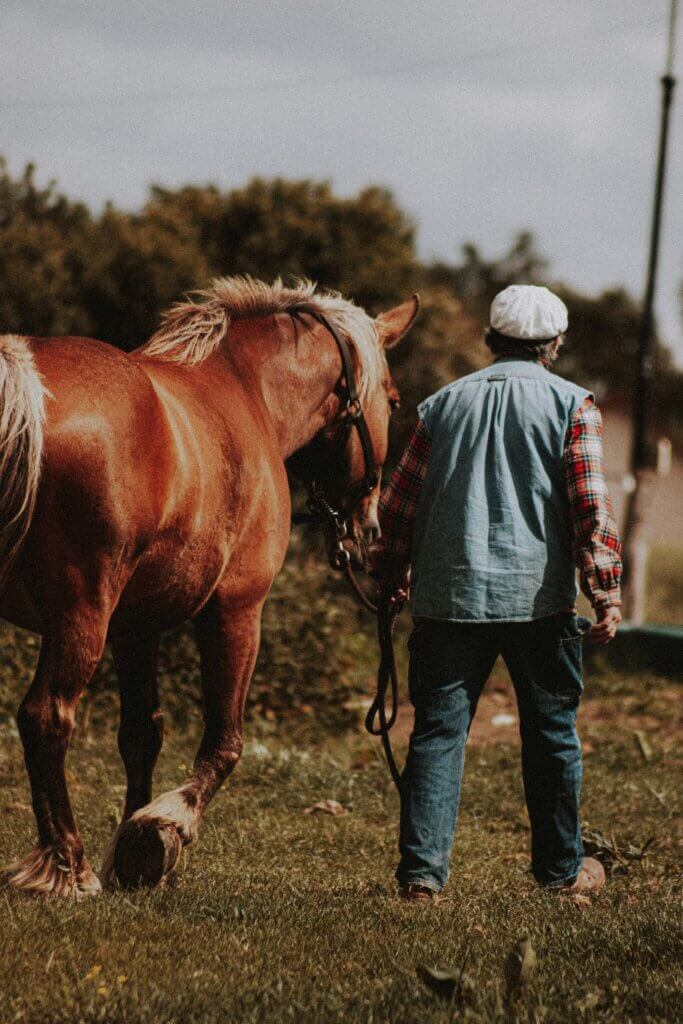
Groundwork is a huge part of horse training, and honestly, even something as simple as a walk counts. Leading your horse teaches them so much. How to walk beside you without being dragged and without dragging you back. You can add halts, you can add steps backward, and over time you refine it until you barely need to touch the lead rope at all. Your body stopping or turning becomes the cue, and your horse learns to read you instead of the rope.
One more thing that is easy to forget: when you take your horse out to graze, do not let them drag you over to the grass. You lead them there. It seems small, but it reinforces who is making the decisions, and that consistency builds real trust over time.
Walks
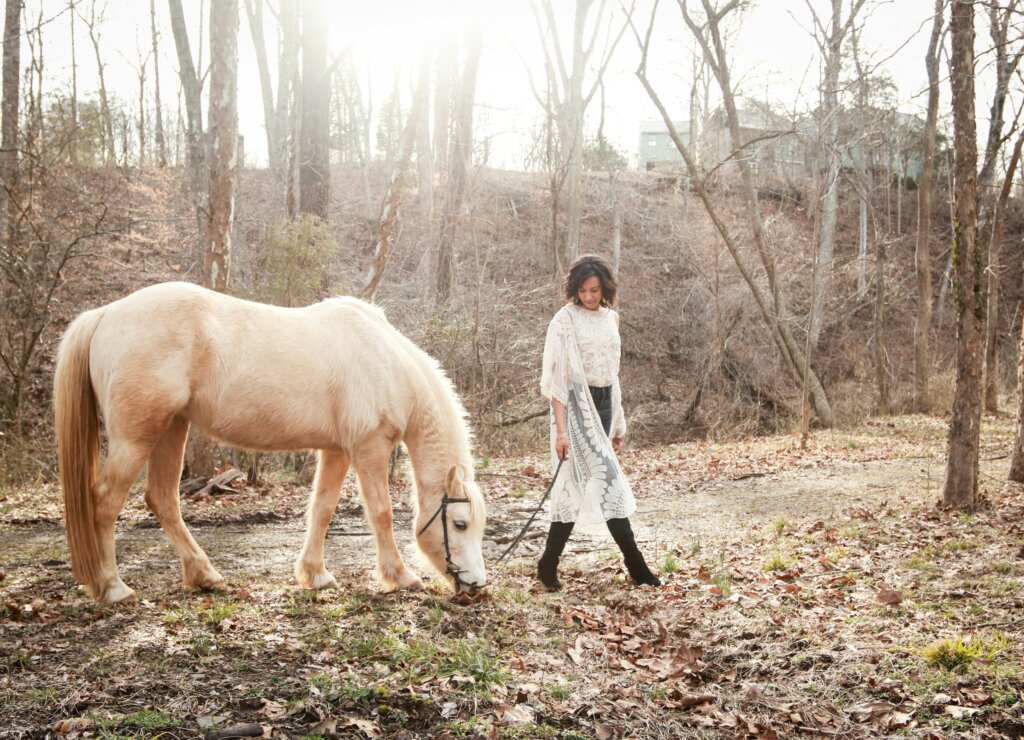
Simple hand walks outside the arena, around the property, or down a quiet trail give you a fun time. It is groundwork and bonding rolled into one relaxed activity.
Why do walks matter so much? Because they get your horse used to trusting your lead in real-world situations, not just in a controlled arena. You encounter puddles, plastic bags, dogs, cyclists, and all kinds of things that your horse has to decide how to feel about. Every calm walk you take together teaches your horse that the world is manageable when you are around.
Safety Note: If your horse tends to run away while leading, you should work in the arena first.
Join Up
If you want something magical, joining up is close to that. This is about using the horse’s natural herd instincts to create a voluntary connection. Instead of demanding your horse follow, you use body language and movement to let them choose to be with you. When it works, it is honestly one of the most satisfying things you will experience with a horse.
Horse Desensitizing
Desensitizing your horse to new objects, sounds, and situations is also a form of bonding, even though it does not always feel like it in the moment. Every time you calmly walk your horse up to something scary and let them figure out it is not a threat, you are proving to them that you are someone worth trusting in uncertain moments.
If your horse tends to spook at the same objects over and over, it usually is not about memory; it is about how horse vision works. A small change in light or position can make a familiar object look brand new to them again.
Learn more about how your horse actually sees the world here
Once you understand that your horse is not being dramatic on purpose, desensitizing becomes a lot less frustrating and a lot more bonding-focused.
A few desensitizing basics that actually help:
- Introduce new objects from a distance first; let your horse look before you get close
- Let them sniff, investigate, and breathe before you move on
- Stay calm in your own body, because your horse is reading you the whole time
- Reward even small steps of bravery; a sniff counts; they do not have to stand perfectly still immediately
- Never force it. Patience here pays off massively in the long run
Enjoyable Work Under Saddle
If you have nailed the basics above, you already have a strong foundation for good work together. Stay clear and communicate as honestly as you can in the saddle too, even though your own riding skill plays a big role here and nobody gets it perfect. And make it fun! Try new exercises, but don’t overdo it; let your horse’s confidence build up.
Side note: if you use a crop or spurs, that does not weaken your bond with your horse. Used correctly, with good timing and the right amount of pressure, these tools actually make your communication clearer for your horse, not harsher.
Trail Rides
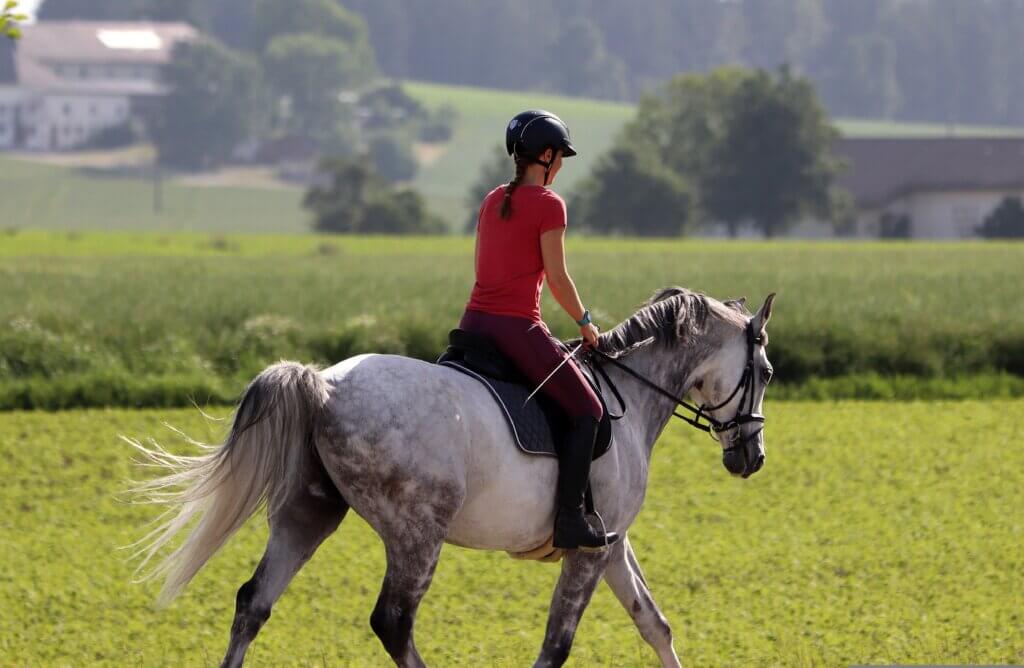
Getting off the arena footing and exploring somewhere new together is one of the best horse bonding exercises there is. New scenery, a relaxed pace, and just the two of you figuring things out as a team.
Trail rides matter for bonding because they put your horse in situations where they genuinely need to look to you for guidance. A spooky bridge, an unfamiliar sound in the woods, a new horse they have never met on the trail. Every time you handle those moments calmly and confidently, your horse files that away. This person has my back.
Safety Note: Don’t go alone until you know your horse enough.
Treats
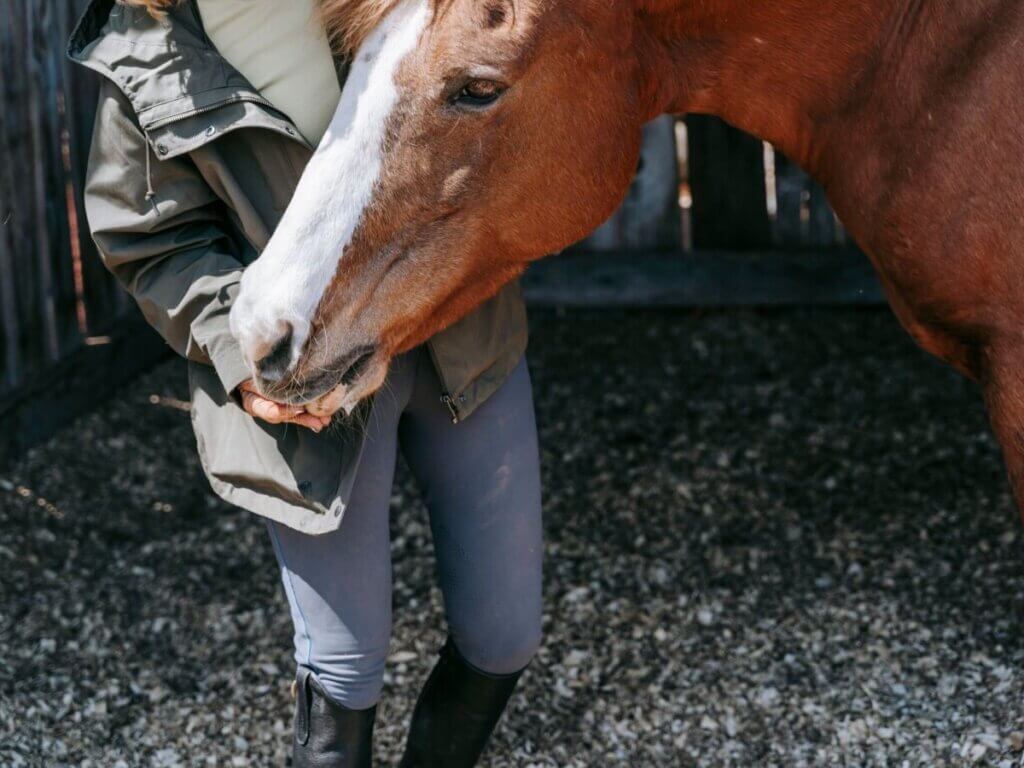
Yes, you can give your horse treats sometimes, and yes, it feels good for both of you. But treats should never be the only reward your horse knows, and you should never let your horse start demanding or nipping for them. A horse that respects you will appreciate a treat.
A few guidelines that actually work:
- Give treats at calm moments, not as a bribe mid-session
- Never hand feed when your horse is pushy or pawing; wait for them to settle first
- Use your voice and a release of pressure as your main rewards; treats are the bonus
- If your horse starts mugging you or getting aggressive around treats, pull back on them entirely for a while and re-establish the rules
Check out the Complete Peppermint Treats for Horses Guide with 5 Recipes here
Try New Disciplines Together
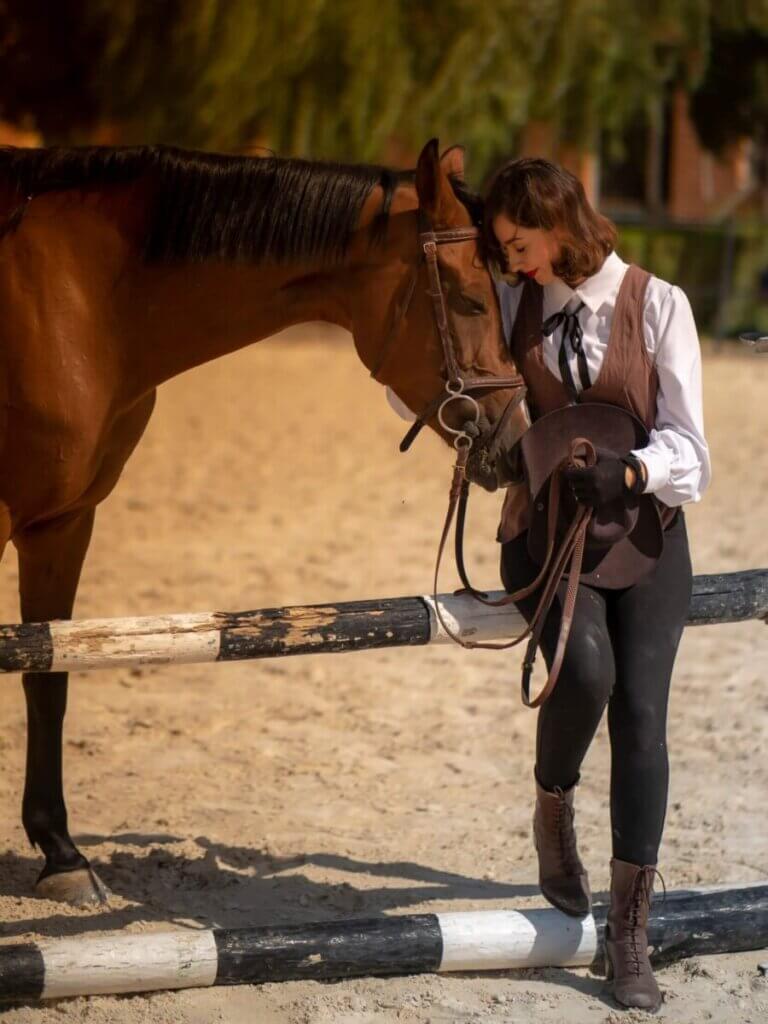
Stepping outside your usual routine is one of the most underrated ways to deepen your bond. When you try something new together, you are not just doing a different activity. You are putting yourselves in a situation where neither of you has a script, and that is exactly where real trust gets built.
Here is why it works: in your usual routine, your horse knows what to expect. The same warm-up, the same arena, the same exercises. That is great for training, but it does not push your communication. New disciplines do. They force you to listen to each other more carefully, be more creative with how you ask for things, and figure out problems together.
It also keeps things interesting. A bored horse and a bored rider do not bond well. A curious one does.
Horse Bonding Dos and Don’ts
Don’ts
- Do not babysit your horse. They are not a baby; they are a several hundred-pound animal. Letting them get away with everything and constantly handing out treats for no reason does not strengthen your bond; it just creates pushy, disrespectful behavior
- Do not skip leadership for the sake of being liked. A horse that does not respect your space will eventually test it, and that is not safe for either of you
- Do not force a scared horse toward something new. Encourage and guide instead; forcing creates panic, not trust
- Do not be inconsistent. If something is not allowed on Monday, it is not allowed on Friday just because you are in a good mood
- Do not take bad days out on your horse. If you are too tense or frustrated to work calmly, it is better to just spend quiet time together instead and come back to training tomorrow
- Do not confuse tolerance with trust. A horse that puts up with things is not the same as a horse that genuinely trusts you
Dos
- Do stay consistent. Horses bond fastest with predictable people
- Do learn your horse’s individual preferences; every horse is different
- Do mix things up sometimes; new disciplines, new trails, new routines all add value
- Do celebrate small wins. A good halt, a brave moment past something scary, a relaxed walk home. Notice them
- Do handle your horse on the ground regularly, not just in the saddle. A lot of trust gets built without riding
- Do pay attention to how your horse greets you. A horse that walks toward you in the pasture, that ears-forward look when they see you coming, that is the bond showing up in real time

Let’s Walk It Off
No version of horse bonding happens overnight, and honestly, that is part of what makes it so rewarding. It is not one big moment; it is hundreds of small ones. The scratch in the right spot. The walk where you did not have to pull on the lead rope once. The trail ride where your horse relaxed because they trusted you could handle a scary object.
Show up consistently, lead clearly, and let your horse get to know you the same way you are getting to know them. The bond builds itself from there.
FAQ
How long does it take to bond with a horse?
It varies a lot by horse and situation, but most riders notice a real shift somewhere between a few weeks and a few months of consistent, calm interaction.
Can you bond with a horse without riding?
Yes, absolutely. Grooming, groundwork, hand walks, and simply spending time together all build a strong bond without ever getting in the saddle.
Do horses actually love their owners?
Horses form real attachments to people they trust and feel safe around, even if it looks different from how we typically picture love.
Is it bad to give my horse too many treats?
Treats are fine in moderation, but relying on them too heavily can lead to pushy or demanding behavior, which actually works against your bond.
What is the fastest way to gain a horse’s trust?
Consistency and clear, calm leadership. Horses trust people who are predictable far more than people who are simply generous with treats.
Can you bond with a rescue horse or a horse with a difficult past?
Yes, and the process is the same: patience, consistency, and low-pressure time together. It might take longer, and you might hit setbacks, but horses are remarkably good at learning to trust again when the environment is safe and the person is calm.
Does your horse know you love them?
They might not understand the word, but they absolutely pick up on the energy and consistency you bring. A horse that is relaxed around you, that seeks you out, that softens when you are near, that is them responding to how you make them feel.

Leave a Reply