Disclosure: This post contains affiliate links. If you purchase through these links, I may earn a small commission at no extra cost to you.
Images used in this post are for illustrative purposes only and do not represent the exact products mentioned.
You open your horse grooming kit. Six brushes are staring back at you. And somehow, your horse still ends up looking dusty.
Sound familiar?
Here’s the thing.
It’s not about having more tools.
It’s about knowing which ones to use, when, and why.
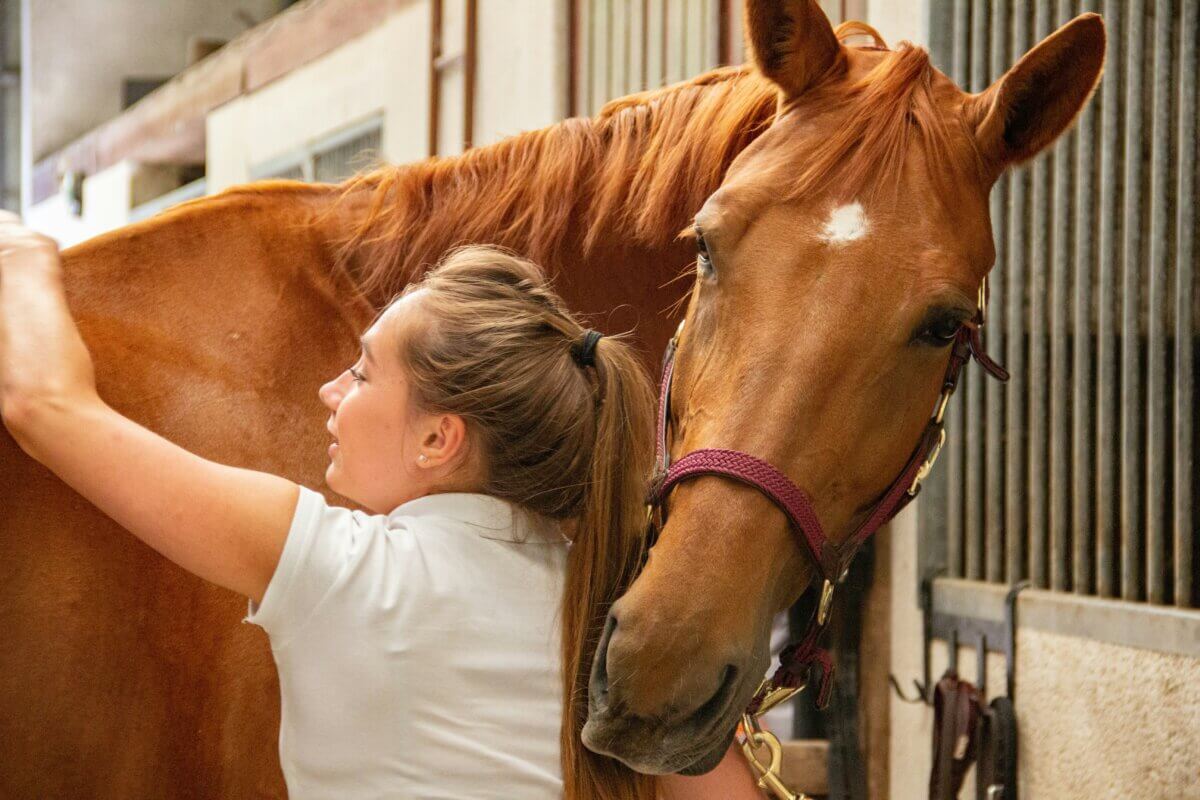
Because horse grooming isn’t just about making your horse look clean. It’s a full-body health check. A bonding ritual.
So let’s break it all down. What actually belongs in your kit, what each tool does, and in what order to use them.
Why Your Horse Grooming Set Matters More Than You Think
Before we talk tools, let’s talk purpose.
Grooming isn’t optional.
When you run your hands and brushes over your horse, you notice things. A small lump that wasn’t there yesterday. Heat in a leg. A patch of dry skin hiding under mud. These are things you’d completely miss from a distance.
On top of that, regular brushing improves circulation, distributes natural skin oils, and removes dead hair. Especially during shedding season, your stainless steel curry comb becomes your best friend.
And then there’s the bonding side.
Horses groom each other in the wild. They scratch, touch, and connect at the withers and along the neck. When you groom your horse, you’re speaking a language they already understand.
A proper horse grooming kit makes all of this smoother.
The Tools in Your Kit — What They Are and What They Do
Let’s go through the essentials. No fluff. Just what matters.
1. Basic Rubber Curry Comb
The curry comb — usually rubber or flexible plastic — digs into the coat with short, circular motions to loosen deeply embedded dirt, dried sweat, and dead hair. It also stimulates blood circulation and brings natural oils to the surface of the skin.
Use it first. Use it firmly. But avoid the bony areas, the lower legs, face, and spine.
During shedding season, the curry comb is the tool that saves your sanity.
2. Dandy Brush (Hard Brush)
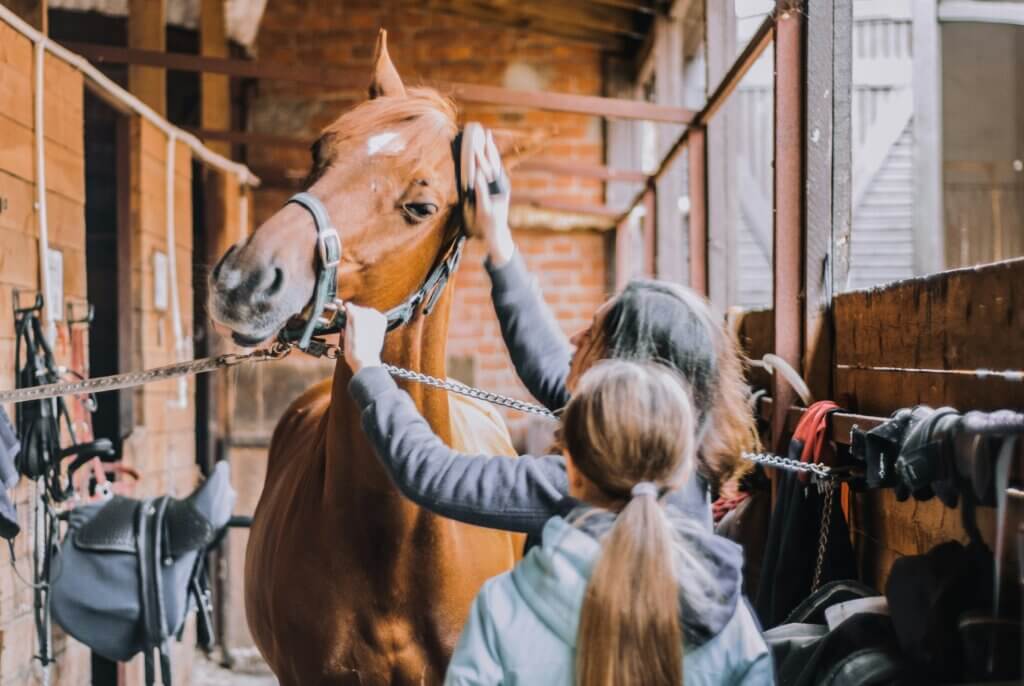
After the curry comb loosens everything, the dandy brush sweeps it away.
Its stiff bristles are made for exactly this: lifting coarse dirt, dried mud, and loose hair off the coat. Brush in the direction of the hair growth, always front to back. Clean the brush regularly against your curry comb while you work; you’re just moving dirt around. You can use it on the lower legs as well.
Skip the face with this one.
3. Soft Brush (Body Brush / Finishing Brush)
This is where the transformation happens.
The soft brush, also called a body brush or finishing brush, removes the fine dust the hard brush leaves behind. Its closely packed bristles smooth the coat, add shine, and bring out the natural oils. This is the brush you can safely use on the face and around the eyes.
Don’t skip this step. The difference between a dull coat and a gleaming one is usually just the soft brush.
4. Hoof Pick
The most important tool in your entire kit.
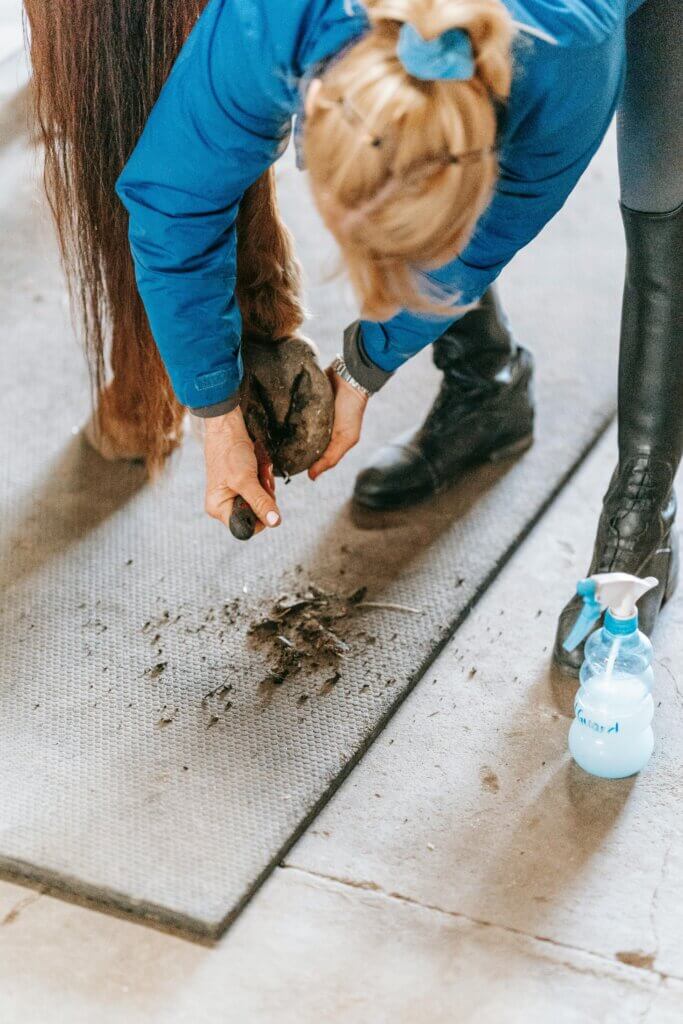
A single stone. That’s all it takes to turn a good ride into a bad one or worse, cause real pain and injury. The hoof pick removes packed dirt and stones.
Always clean from the heel toward the toe. Never dig into the center of the frog.
While you’re there, check everything. Any unusual smell could mean thrush. Soft spots, cracks, or heat are all early warning signs. This two-minute check before every ride can save you a vet call later.
Pro tip: get a hoof pick with a small brush on the other end. It clears away the loose debris after picking, with no need to grab a separate brush.
5. Mane and Tail Brush or Comb
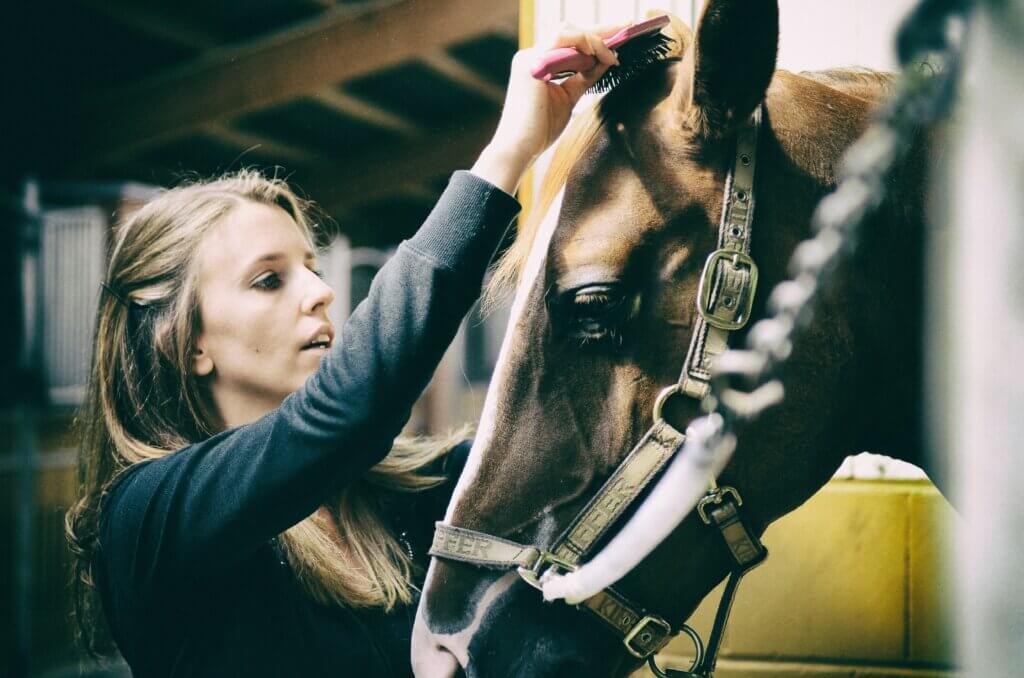
For the mane, work from the roots downward. For the tail, always start from the bottom and work upward. Hold the hair above where you’re brushing to prevent painful pulling and breakage. (Horses’ tail more sensitive than the mane; be careful, it grows slower as well.)
6. Sponge or Soft Cloth
The face is sensitive territory.
A small, soft face brush handles the forehead, cheeks, and ears gently. For around the eyes and nose, use a damp sponge or cloth, and use separate ones for each area.
Don’t skip the face. A lot of horses carry dried sweat and dust around their eyes that can irritate over time.
7. Shedding Blade (Seasonal)
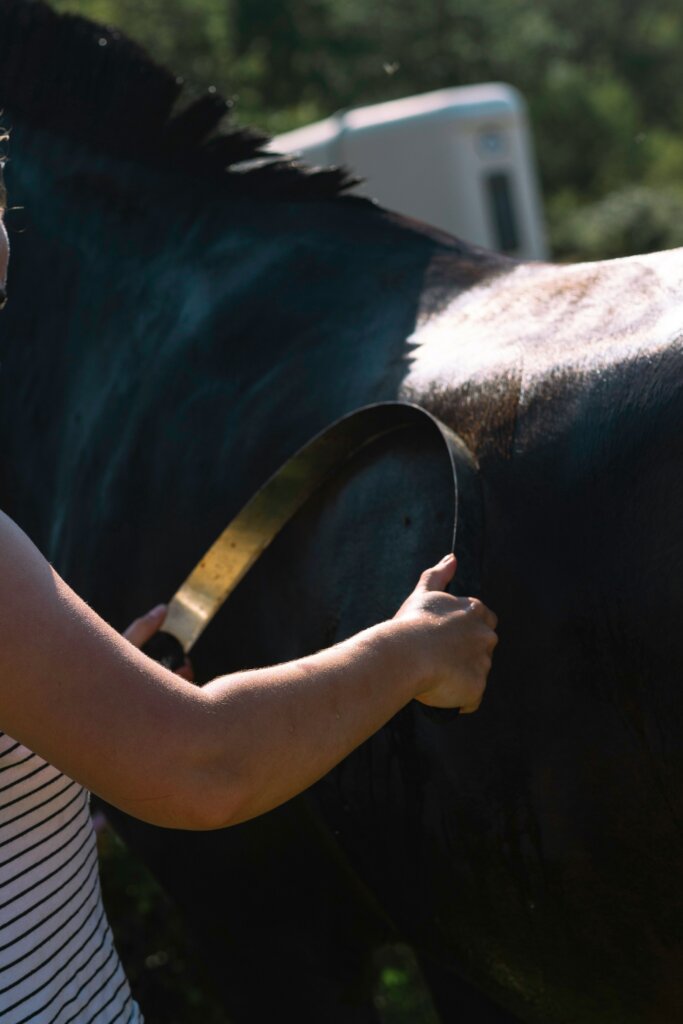
Spring arrives. Your horse turns into a hair factory.
A shedding blade has small serrated teeth on one side and a smooth edge on the other. The toothed side strips out enormous amounts of loose winter coat fast.
Use it only on the fleshy, muscled areas of the body. Never on bony prominences, the face, or legs.
Side Note: Some horses love it; it’s like a good scratch for them.
8. Sweat Scraper
After a bath or a sweaty ride, this tool earns its place.
The sweat scraper removes water and sweat from the coat quickly, helping the horse dry faster. Look for one with a rubber edge; it’s gentler than plastic or metal and can be used along the legs and sides without risk.
9. Grooming Gloves (Optional but Loved)
These are the secret weapons many experienced grooms swear by.
Grooming gloves have rubber nubs across the palm that work like a curry comb. But because they follow the contours of your hand, they’re ideal for sensitive areas like the face, belly, and legs. Many horses prefer the feel of gloves over a rigid tool, especially horses that are reactive or new to grooming.
Some grooms use two at once.
Grooming Tote or Box
A tote, bag, or box keeps everything organized and portable. Reaching for the wrong brush mid-groom is annoying. Losing your hoof pick in the bedding is worse. Find a storage solution you like and stick with it.
Top-rated Horse Grooming Kit from Amazon
How to Groom a Horse
Tools are only half the story.
Here’s a step-by-step guide:
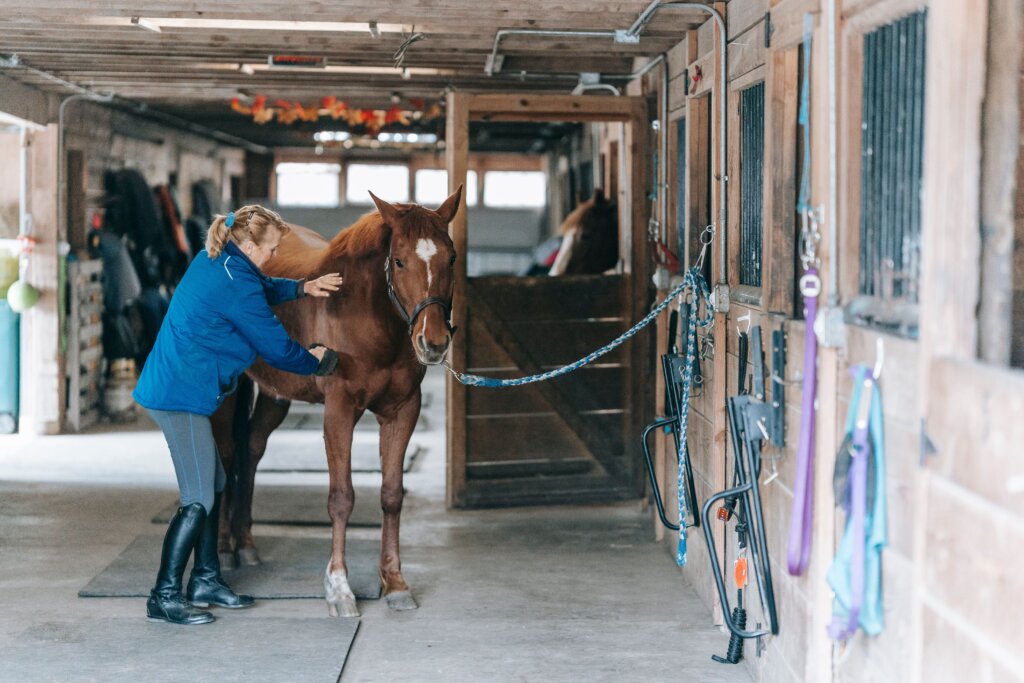
Step 0 — Safety first. Tie your horse securely before you begin.
Step 1 — Curry comb. Use circular motions to loosen deep dirt and hair. Clean the comb against the hard brush as you go.
Step 2 — Hard brush (dandy brush). Sweep away everything the curry comb loosened. Front to back, always.
Step 3 — Soft brush. Fine dust, sensitive areas, and the finishing touch.
Step 4 — Mane and tail. Detangle from the bottom up for the tail. Don’t rush.
Step 5 — Hooves. Pick out each hoof carefully. Inspect while you’re there.
Step 6 — Face and eyes. Soft brush, then a damp cloth or sponge. Separate the eyes and nose.
Step 7 — Final wipe. A slightly damp cloth or a sponge at the very end removes the last layer of fine dust.
Keep Your Tools Clean — Or You’re Just Spreading Dirt
Dirty brushes don’t clean horses.
They just redistribute the same dirt in a slightly different pattern.
Rinse brushes in warm, soapy water regularly and let them dry fully. Monthly disinfection helps prevent the spread of fungal infections or skin conditions between horses. Hoof picks should be cleaned after every muddy session and checked for rust or cracking.
After the Ride: Horse Grooming Doesn’t Stop When You Dismount
You’re tired. Your horse is, too.
But a quick post-ride routine makes a real difference.
If the weather is warm, rinse the legs and any sweaty areas. Remove sweat with a sweat scraper, then allow the horse to dry. A light brush-down over the girth area, saddle area, and face removes sweat residue that can cause irritation or skin issues if left overnight.
A few extra minutes here save you a lot of problems later.
Let’s Walk Off – So What Should Be In Your Horse Grooming Kit And How To Use Them?
Your horse grooming kit is more than a box of brushes.
You don’t need every tool on the market. You need the 6 tools essential for every grooming session. There are 3 nice-to-haves.
Essentials: Curry Comb (Rubber), Hard Brush, Soft Brush, Sponge or cloth, Hoof pick, Mane and tail brush.
Nice to have: Shedding blade, Sweat Scraper, Grooming gloves.
FAQ
What should be in a basic horse grooming kit?
At minimum: a curry comb, a hard brush, a soft brush, a hoof pick, a mane and tail brush, and a sponge or cloth. Add a shedding blade in spring, a sweat scraper after baths, and grooming gloves if you want to spice it up. That’s it. You don’t need twenty tools; you need the right ones.
What is a curry comb used for in horse grooming?
A curry comb loosens deep dirt, dried sweat, and dead hair from the coat. It also stimulates blood circulation and helps natural oils surface. Use it first, in circular motions.
How do I know how to groom a horse for the first time?
Follow the order: curry comb, hard brush, soft brush, mane and tail, hooves, face, and a final wipe. Always tie the horse securely first. Go slowly, pay attention to how the horse reacts, and adjust your pressure and tools based on their comfort.
How often should I groom my horse?
Before and after every ride, at a minimum. But grooming on non-riding days is just as valuable for bonding, health monitoring, and your horse’s general well-being. Many horses come to look forward to it.
Do horses enjoy being groomed?
Most do, especially when done well. Signs of enjoyment include a lowered head, relaxed lip, leaning into pressure, and a droopy lower lip. Some horses have sweet spots; try the withers, sides of the neck, and the base of the tail. When you find one, they’ll make it very clear.

Leave a Reply