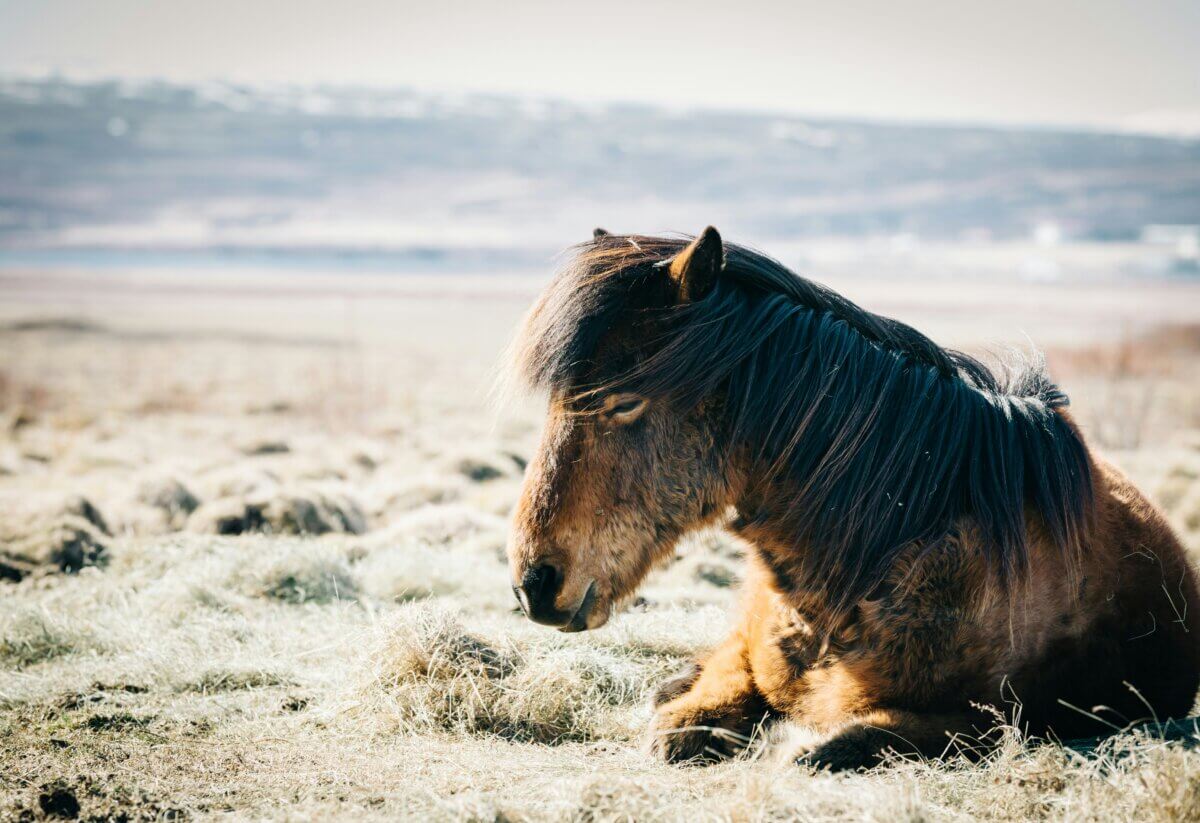
Do horses sleep with their eyes open? If you’ve ever walked past a horse in the stable and thought, “wait… is that horse dead or just vibing?” — you are not alone.
Horse sleep is genuinely one of the weirdest, coolest, most underrated topics in the equestrian world.
Let’s get into it.
1. Do Horses Sleep With Their Eyes Open?
Short answer: yes. And it’s creepy. But also completely normal.
Horses can and do sleep with their eyes partially or even fully open. This happens mostly during light sleep stages, the kind where they’re resting but still aware of their surroundings. Think of it as “standby mode.” The screen’s still on, but nobody’s really home.
This is a survival mechanism. Horses are prey animals. In the wild, being totally unconscious and completely unaware is basically a death sentence. So their brains evolved to allow rest while still keeping one eye on a potential predator.
The technical term for this kind of partial-awareness sleep is drowsing. It’s not deep sleep. The horse is resting but can still react quickly if something startles them.
So, if your horse is standing in the corner of the stable, looking glazed over with half-open eyes? Don’t panic. It is completely normal.
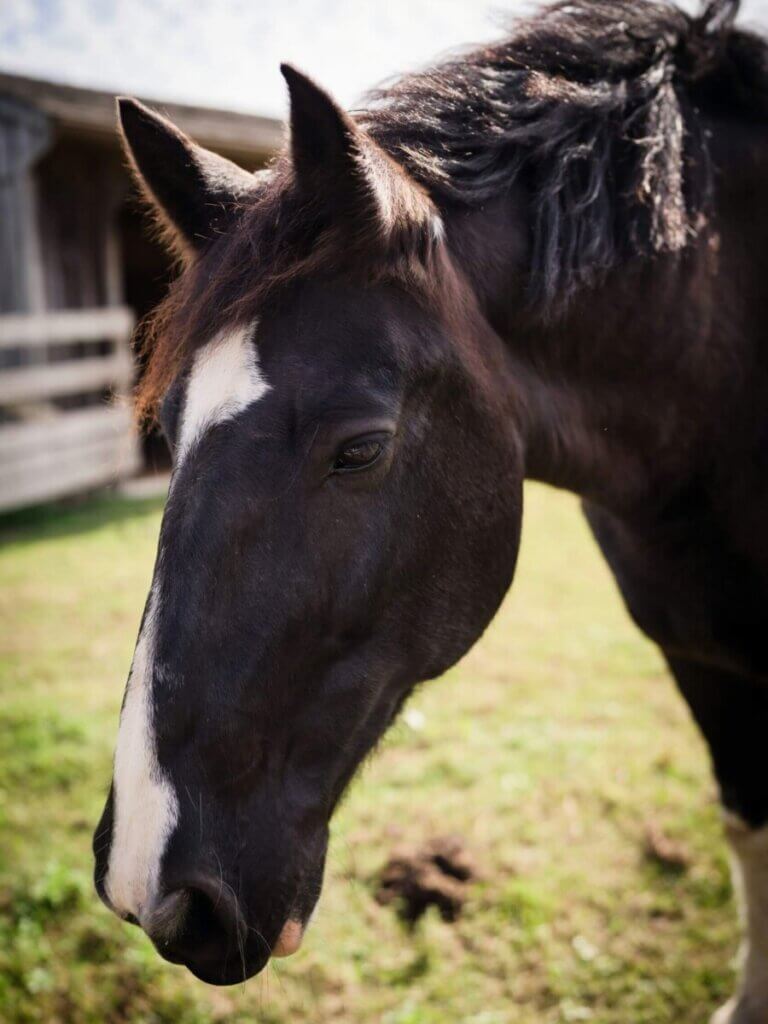
2. Do Horses Sleep Standing Up?
Yes, and this is maybe the most well-known horse sleep fact. But the why is really cool.
Horses can sleep standing up thanks to the passive stay apparatus, a unique anatomical feature that locks their legs into position with a system of tendons, ligaments, and muscles. It requires almost no effort to maintain, so the horse can fully relax without having to constantly engage their muscles to stay upright.
It’s like having a built-in kickstand.
In the wild, a horse lying on the ground is vulnerable. Getting up takes time, and in a predator situation, that time could be fatal. Being able to snooze upright means they can go from “asleep” to “bolting” in seconds.
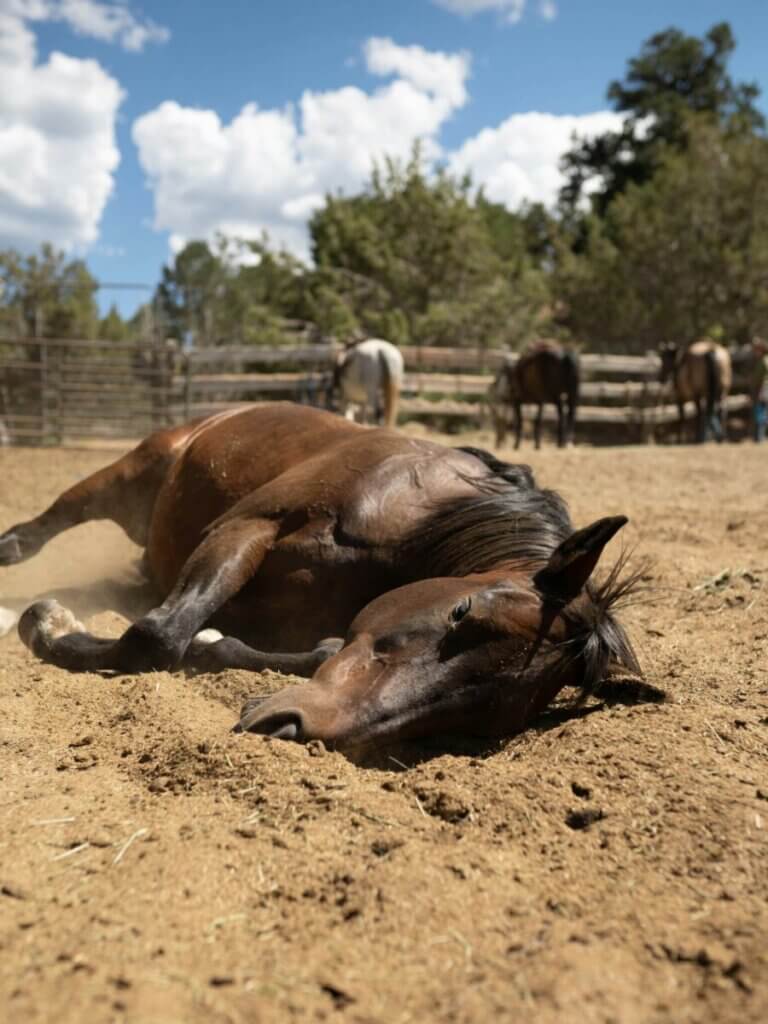
3. Do Horses Sleep Lying Down?
Horses lie down in two main positions:
- Sternal recumbency — lying on their chest/belly with legs tucked under them. This is the “sphinx” position. They can actually achieve some slow-wave sleep in this position.
- Lateral recumbency — completely flat on their side, legs stretched out. This is the position they need for REM sleep.
If you see your horse completely flat out and motionless, don’t immediately assume something’s wrong. Check for normal breathing, and if they’re breathing steadily and not distressed, they’re probably just deep in REM sleep. Let them be.
A healthy horse will only lie flat for short periods, usually 20–30 minutes at a time, and will typically not do it unless they feel safe. If your horse is happy to fully lie down in their stable, that’s actually a really good sign. It means they trust their environment.
If your horse never lies down or seems reluctant to, it could be:
- Pain (joint issues, laminitis, tying-up)
- Fear or anxiety about getting back up
- A stable that’s too small or not comfortable enough
- Herd dynamics in a field setting (only one horse might sleep at a time to keep watch)
Worth keeping an eye on and mentioning to your vet if it’s been going on a while.
4. How Much Do Horses Sleep?
On average, horses sleep between 2.5 and 3 hours per day in total. But they don’t do it in one go. Instead, they take multiple short naps scattered across the day and night. Some sources suggest horses can snooze in short bursts of just a few minutes at a time.
Out of that total sleep time, they only need about 30–60 minutes of actual REM sleep per day. But that REM sleep has to happen lying down, which is why it matters that your horse feels safe enough to get down on the ground.
If your horse never seems to lie down, or if you’re noticing them suddenly start falling asleep standing up and then jolting awake (they can lose muscle control during deep sleep and stumble), it might be worth chatting with your vet. That’s a sign they’re not getting the REM sleep they need.
5. When Do Horses Sleep?
Horses don’t have one set bedtime like us; they’re what’s called polyphasic sleepers, meaning they sleep in multiple short phases throughout the 24-hour cycle.
Most of their deeper sleep tends to happen at night, roughly between midnight and 4 am, when it’s quieter and darker. But they’ll also snooze during the day, especially after eating.
Pro tip for riders: if you know your horse tends to doze in the early afternoon, that’s probably not the best time to schedule a training session. Work with their rhythm, not against it.
So, How Do Horses Sleep?
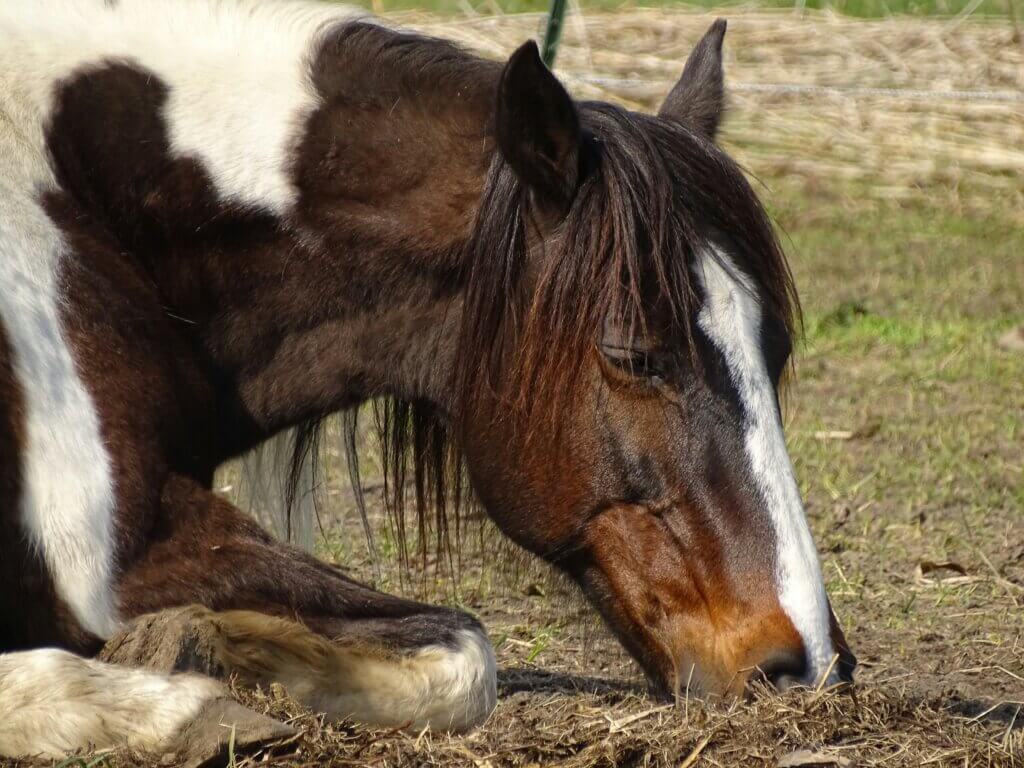
Horses sleep in a totally different way from us, and honestly, it’s kind of impressive.
They cycle through multiple sleep stages throughout the day, not just one long block at night like humans do. Here’s the breakdown:
Standing doze (drowsing): This is the most common type of rest you’ll see. The horse stands still, head drooping slightly, eyes half-closed or open. They’re in a light sleep and can wake up in seconds.
Slow-wave sleep (SWS): This is deeper. Horses can enter this stage while standing, but they may also lie down for it. Their muscles relax more, breathing slows, and they’re less responsive to their environment.
REM sleep (Rapid Eye Movement): This is the deepest sleep stage, and it is important. Horses cannot achieve REM sleep while standing. To get proper REM sleep, they must lie down. And REM sleep is the kind that actually restores the brain and body. Without it, horses can become sleep-deprived and develop serious health issues.
What About Foals?
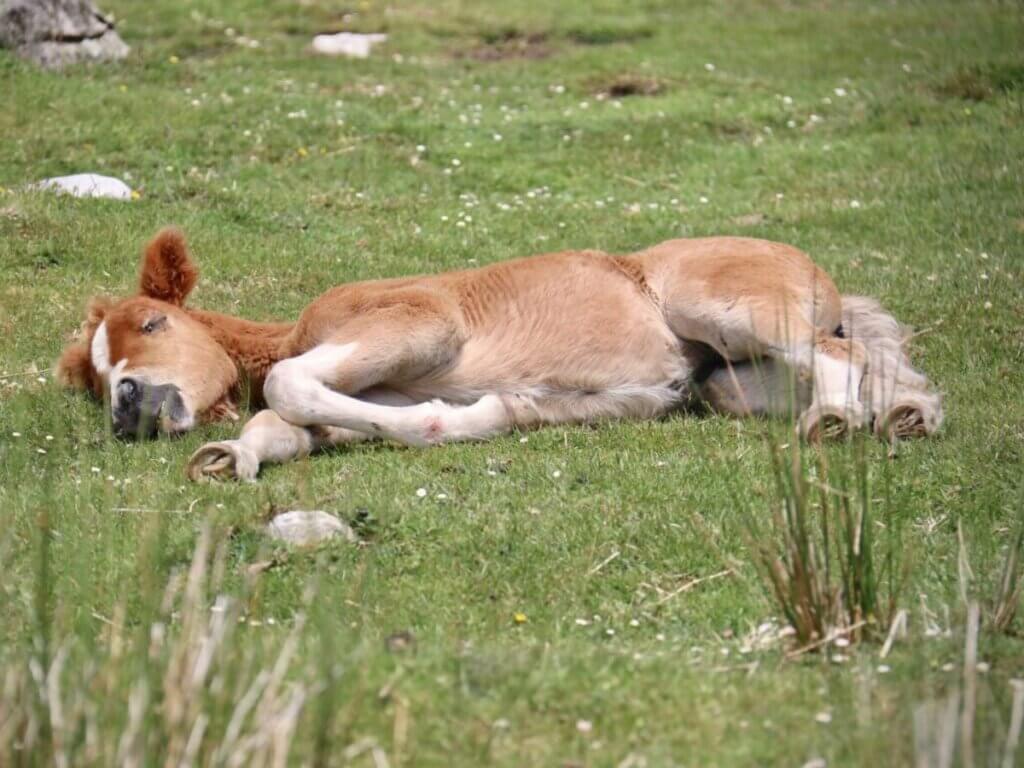
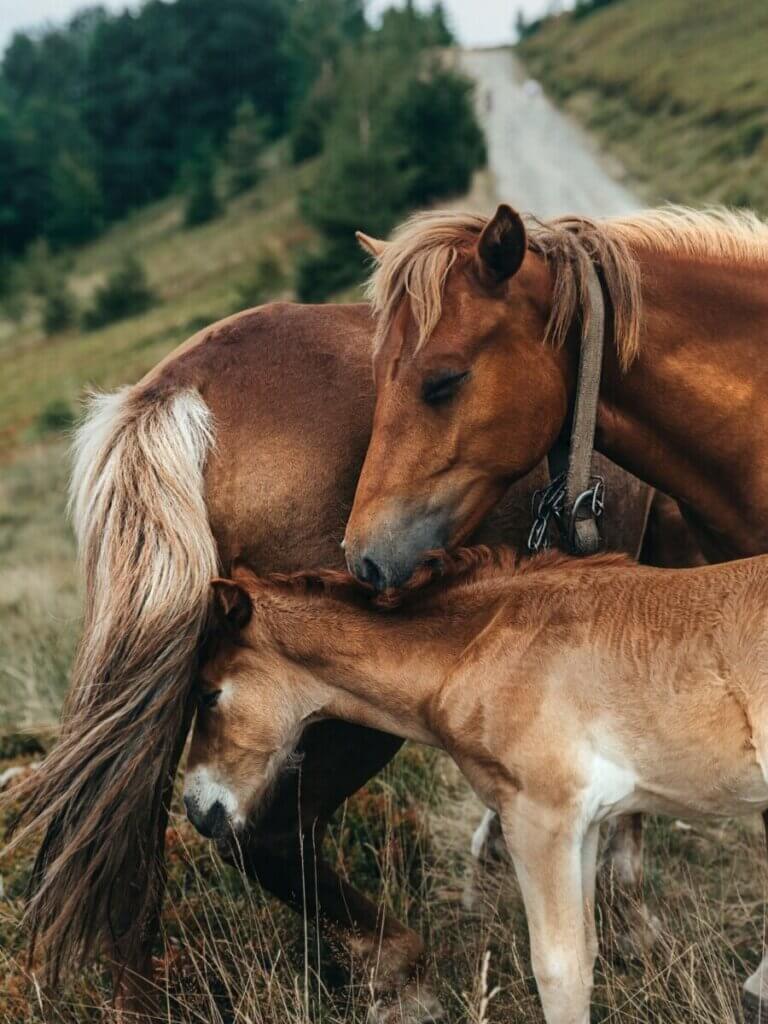
Foals sleep way more than adult horses, and they flop completely onto their sides far more often than their mums do.
This is totally normal: their little bodies haven’t built up the “always standing, always on guard” stamina yet, and their environment is (hopefully) safe because mum’s on watch.
So if you spot a foal sprawled out in the grass looking absolutely knocked out, don’t panic; they’re just sleeping with their whole heart. Honestly, one of the most heart-melting sights in horse keeping.
6. Do Horses Dream?
Okay, this is where things get genuinely adorable.
The short answer is: probably yes.
REM sleep is the stage associated with dreaming in humans and many animals. Since horses do experience REM sleep, there’s good reason to believe they dream too. And there’s some pretty compelling evidence to back this up.
You might notice during deep sleep that your horse twitches their legs, moves like they’re running, their lips flutter, and their ears flick. These involuntary muscle movements during REM sleep are considered consistent with dreaming behaviour seen in other mammals.
What do they dream about? Running through open fields, obviously. Or maybe that one plastic bag that scared them in 2019. We’ll never know for sure. But the idea of your horse having little horse dreams is very cute.
7. Do Horses Snore?
Yes, they do. And it’s as chaotic as it sounds.
Horses can produce some seriously impressive sounds while sleeping: deep rumbling snores, snuffling, and even what sounds like loud sighing. It tends to happen during deeper sleep stages when muscle tone drops and airflow through the upper airways vibrates.
For most horses, snoring is completely normal. Just like in humans, it tends to happen when they’re deeply relaxed and in that flat-out lateral position.
However, very loud or very frequent snoring could occasionally be a sign of something worth checking, like issues with airway structure or, in rare cases, a condition similar to sleep apnea. If the snoring is new, very loud, or comes with other symptoms like restless sleep or daytime fatigue, it’s worth a vet conversation.
Let’s Walk Off
Horse sleep is genuinely fascinating and a lot more complex than most people realise. They’re napping in shifts, dreaming about something, possibly snoring, and definitely sleeping with their eyes open at least part of the time.
Understanding how your horse sleeps helps you be a better horse owner. You’ll notice the signs of sleep deprivation faster, you’ll know when to leave them alone, and you’ll feel less panicked when you walk past the stable at midnight and your horse looks like a statue with their eyes half open.
FAQ: Quick Answers About Horse Sleep
Do horses sleep with their eyes open? Yes, especially during light “drowsing” sleep. It’s a normal way for them to rest while staying alert to their surroundings.
How many hours do horses sleep a day? Around 3 hours total, but split into many short naps rather than one long stretch.
Do horses sleep standing up? Yes, thanks to their stay apparatus, which lets their legs lock in place with almost no effort. This covers light sleep and slow-wave sleep, but not REM.
Do horses sleep lying down? Yes, and they need to. REM sleep, the deep restorative stage, can only happen lying down.
Do horses dream? Most likely yes. During REM sleep, they show twitching, ear flicks, and even “running” leg movements, which point to dream-like brain activity similar to other mammals.
Do horses snore? Yes, and it’s usually totally normal, a sign of deep, comfortable sleep. Only worth worrying about if it’s new, very loud, or paired with other symptoms.
What happens if a horse doesn’t lie down enough? After about 10 days without lying down, horses can become so REM-deprived that they start collapsing into REM sleep while standing, which is dangerous and a sign they need help getting comfortable enough to lie down.
When do horses sleep the most? Mostly at night, though they nap throughout the day too. Try to avoid training during your horse’s usual nap window; an interrupted nap means a grumpier, less focused ride.

Leave a Reply