Disclosure: This post contains affiliate links. If you purchase through these links, I may earn a small commission at no extra cost to you.
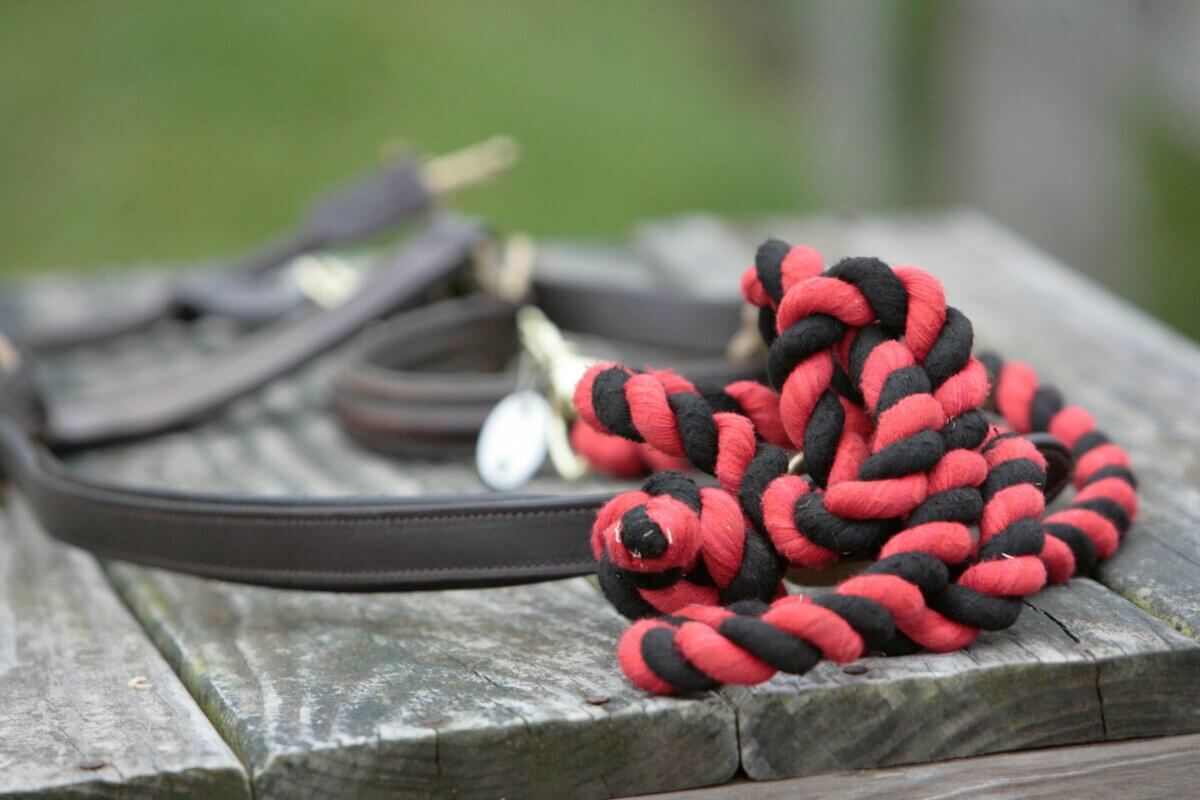
Images used in this post are for illustrative purposes only and do not represent the exact products mentioned.
A horse lead rope is something you need every single day, yet you can never find one when you need one. You use it constantly, and somehow the ground just swallows it whole between uses. When you finally track one down, it is tangled into a knot, and it is either three feet too short or dragging in the mud.
Let’s fix that. Which length and material to pick. How to tie a proper quick-release knot. How to lead a horse safely, wrap your rope, and clean it properly.
In This Article:
- What a horse lead rope is, and how it differs from a lead shank
- The right length and material for your horse and your riding style
- How to lead a horse safely, plus how to coil your rope so it never tangles
- How to clean and care for your lead rope depending on what it is made of
What Is a Horse Lead Rope?
A horse lead rope clips onto your horse’s halter. It lets you guide, walk, and tie your horse. A simple piece of horse equipment carries a huge amount of responsibility.
Here is where people get confused. A lead rope and a lead shank are not the same thing. A regular lead rope is rope with a snap on one end. A lead shank, also called a chain lead rope, has a length of chain between the rope and the snap.
What Length Should Your Lead Rope Be?
This feels like it should have one right answer. It does not. It depends on what you are actually doing with it.
| Length | Best For | Products |
|---|---|---|
| 6–8 ft | Everyday leading, tying, quick handling around the barn | View on Amazon |
| 8–10 ft | The most common all-purpose length for most riders and horses | View on Amazon |
| 10–12 ft | Extra room for groundwork or a nervous young horse | View on Amazon |
| 15–20+ ft | Groundwork, liberty work, or transitioning into lunging | View on Amazon |
If you only own one lead rope, 8 to 10 feet is the safe default. It gives you enough slack without extra rope to trip over.
Which Lead Rope Should You Actually Buy?
Every barn has an opinion here. Cotton, nylon, and leather are all good horse equipment. They are just good for different jobs.
| Option | Feel & Details | Best For | Products |
|---|---|---|---|
| Cotton | Soft, forgiving if a horse pulls back; wears faster in direct sun | Everyday handling, young horses learning manners | View on Amazon |
| Nylon / Poly | Slicker grip, holds color well, resists mud, very durable | Barn workhorse use, low-maintenance riders | View on Amazon |
| Leather | Buttery soft once conditioned, polished look, needs upkeep | Showring and in-hand classes | View on Amazon |
One safety note before you buy: slick materials can cause a nastier rope burn if a horse pulls back fast. Cotton tends to be more forgiving in that exact moment. But it is recommended to use gloves.
If your horse also needs a new halter to go with any of these, I break down the best options in my horse halter guide.
How to Lead a Horse Properly
Before any of this matters, you actually have to catch your horse first. If that part alone gives you grief, I cover it separately in my how to catch a horse guide.
Knowing how to lead a horse safely matters more than most riders think. Here is how I was taught to hold the rope, and it has never let me down.
- Hold the rope with your right hand, about 10 cm from the horse or the halter
- Thread it between your thumb and index finger, then again between your ring finger and pinky, the same way you would hold a rein
- Hold the tail end of the rope in your left hand, gathered in loose folds, never coiled around your hand or wrist
- Walk at your horse’s shoulder, not out front and not dragging behind
- Give enough slack for natural head movement, but not so much it drags
If your horse startles, let go of the slack first. Never hold on by wrapping the rope tighter around your hand. A rope wrapped around your hand is dangerous. If you want to understand why horses spook in the first place, my horse vision guide explains a lot.
A Barn-to-Barn Difference Worth Knowing
Here is something interesting: leading etiquette is not the same everywhere. At some barns, horses are taught to move only under constant contact. You keep steady pressure on the lead rope the whole time, or the horse simply stops.
At other barns, it works the opposite way. Horses are taught to move off a release of pressure, and constant contact actually makes them push back or resist. You can only lead them well with a loose rope. That is the version I prefer.
Neither approach is wrong, but mixing them up with an unfamiliar horse can confuse both of you fast. I would love to know what your barn does. Drop a comment and tell me your local leading etiquette.
How to Tie a Quick Release Knot for Horses
Whenever you tie your horse, the knot matters as much as the rope itself. A quick release knot for horses lets you free your horse in one pull, even if the rope is under full weight. A regular knot can jam tight in an emergency, and that split second matters.
How to Wrap a Lead Rope So It Never Tangles
Pulled your lead rope off the hook and found a mystery tangle? And here we go again: a tack room is a mess again. Let’s fix it!
How to Clean Your Lead Rope
A lead rope touches your hands, the ground, and your horse more times a day than you realize. Cleaning it regularly keeps it working longer and makes you feel better.
Cotton and nylon/poly ropes:
Leather lead ropes:
Leather needs a different routine. Water and soap alone will dry it out over time.
- Wipe down with a damp cloth to remove surface dirt
- Clean with a leather-specific cleaner, not dish soap
- Follow with a leather conditioner to keep it supple
- Let it dry away from direct heat before using or storing it
Lead Rope Dos and Don’ts
Don’ts
- Do not wrap the rope around your hand, wrist, or any body part
- Do not leave a lead rope on your horse unsupervised
- Do not keep a fraying rope; replace it before it fails
Dos
- Do learn to wrap lead ropes properly; your future self will thank you
- Do clean your rope on a regular schedule, not just when it looks dirty
- Do keep gloves on hand if you handle strong horses often
FAQ
How long should a horse lead rope be?
Most all-purpose lead ropes run 8 to 10 feet. Shorter ropes suit everyday tying. Longer ones, 15 feet or more, suit groundwork and training.
What is the difference between a lead rope and a lead shank?
A lead rope is just rope with a snap. A lead shank, or chain lead rope, adds a section of chain for a clearer signal on strong or pushy horses.
Is a chain lead rope only for stallions?
No. It is called a stud chain, but it works on any horse that needs a clearer cue. That includes geldings and mares too.
What is the best material for a horse lead rope?
There is no single best material. Cotton is soft and forgiving. Nylon and poly are durable and low-maintenance. Leather suits showring handling. The right pick depends on daily use.
How do I stop my lead rope from tangling?
Wrap it properly. This prevents the twist that causes tangles.
Let’s Wrap It Up
Your horse lead rope is not just an afterthought you clip on and toss back on the hook. The right length, the right material, and a few small habits make a real difference. Hold it properly. Learn to wrap it properly. Actually clean it.
Sources
- Safe Horse Handling — Penn State Extension
- Building From the Ground Up: Safe Ground Handling of Horses — Penn State Extension
- Safe Ground Handling — Extension Horses
- Basic Horse Safety — Mississippi State University Extension
- 18 Techniques for Safely Handling Horses (E-960) — Oklahoma State University Extension

Leave a Reply