Disclosure: This post contains affiliate links. If you purchase through these links, I may earn a small commission at no extra cost to you.
Images used in this post are for illustrative purposes only and do not represent the exact products mentioned.
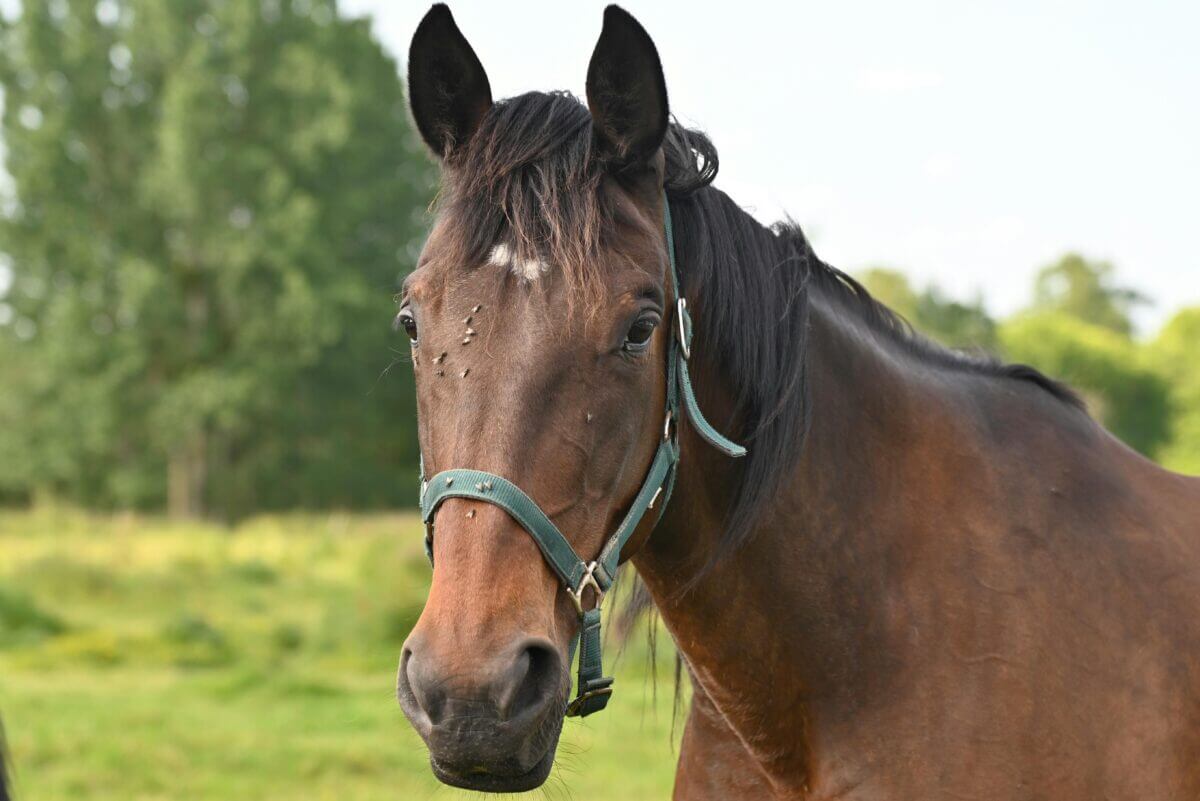
Fly control for horses could be annoying sometimes, but if you catch it early, it will save your summer. I know we survived the mud season. We survived the shedding. And now flies. Everywhere.
Your horse went from a calm and majestic creature to a stomping, head-shaking, tail-swishing drama queen. And you’re just standing there wondering what happened.
Here’s the thing: flies are not just annoying. They bite, cause skin irritation, and spread diseases. That constant stomping also loosens shoes, damages hooves, and stresses joints.
The good news? 7 hacks you can try this summer. Not one magic spray, a system. Let’s get into it.
Hack #1: Clean Barn Is The Foundation of Fly Control

This is the number one hack that sometimes gets forgotten. But skip it, and everything else is half as effective.
Flies breed in manure, wet bedding, spilled feed, and standing water. A single fly can produce up to 1,000 offspring in a month. Cut off the breeding ground, and you dramatically reduce the population.
What to do daily:
- Clean stalls at least once a day.
- Remove manure from pastures and paddocks weekly.
- Store manure far from the barn and turn the pile regularly. Heat from decomposition kills larvae.
- Clean feeders daily and keep grain in sealed containers.
- Eliminate standing water anywhere near the barn.
Hack #2: Layer Your Fly Spray and Apply It Properly
Fly spray is the first thing most people reach for. And it works when you use it right. But don’t forget you can use all the fly sprays in the world if the barn is still messy and full of manure that should be taken care of.
Is your horse afraid of sprays? Try to train them to get used to sprays.
Pro tip: until your horse learns how to deal with that monster, spray the brush instead and groom it in.
Here’s some fly spray you can try:
🛒 Pyranha Wipe N’ Spray — Pyrethrin-based, oil formula with lanolin for coat shine. Kills stable flies, horse flies, deer flies, mosquitoes, gnats, and more.
🛒 UltraShield EX — Water-based, sweat-resistant formula. Kills and repels 70+ insect species, including ticks, and stays effective for up to 17 days. Contains aloe and lanolin for coat conditioning. Safe for horses and dogs.
🛒 Farnam Repel-X pe — Concentrate you mix with water yourself. One quart makes 8 quarts of ready-to-use spray, making it one of the most budget-friendly options out there. Kills and repels five fly species, mosquitoes, gnats, and ticks.
| ✅ Pros | ❌ Cons |
|---|---|
| Fast to apply, works immediately | Needs daily or every few days reapplication |
| Covers almost every body surface | Wears off with sweat and rain |
| Wide range: 17-day formulas available | Avoid the eyes, mouth, and open wounds |
| Coat conditioning formulas are available | Some horses are sensitive to ingredients |
The Natural Alternative: DIY Fly Spray With Neem Oil
Not everyone wants to reach for a chemical spray every day. If you’re looking for something gentler, neem oil is the one ingredient worth knowing about. Not just as a repellent, but as something that actually works at the root of the problem.
What makes it different from every other natural option is that it doesn’t just repel flies; it disrupts their entire life cycle. It stops larvae from maturing, prevents adult insects from mating, and blocks their ability to feed. It also has antibacterial, antifungal, and anti-inflammatory properties, making it great for skin health too. And unlike most essential oils, neem oil is safe even if your horse licks it off.
The other two ingredients in this recipe are lavender oil, which has genuine research behind it as a calming and insect-repelling agent and is considered safe for horses, and aloe vera gel, which acts as a soothing carrier that helps the oils spread evenly without irritating the skin.
DIY Neem Fly Spray Recipe:
- 1 cup water
- 2 tablespoons neem oil
- 10 drops lavender essential oil
- 2 tablespoons aloe vera gel (acts as an emulsifier)
Mix well, shake before each use, and apply with a cloth or spray bottle. Reapply every 1–2 days or after rain. Always do a small patch test first.
Note: natural sprays won’t outperform chemical ones in heavy fly season. But for everyday use, sensitive horses, or owners who prefer to minimize chemical exposure, this is a solid option.
Hack #3: Use a Fly Mask
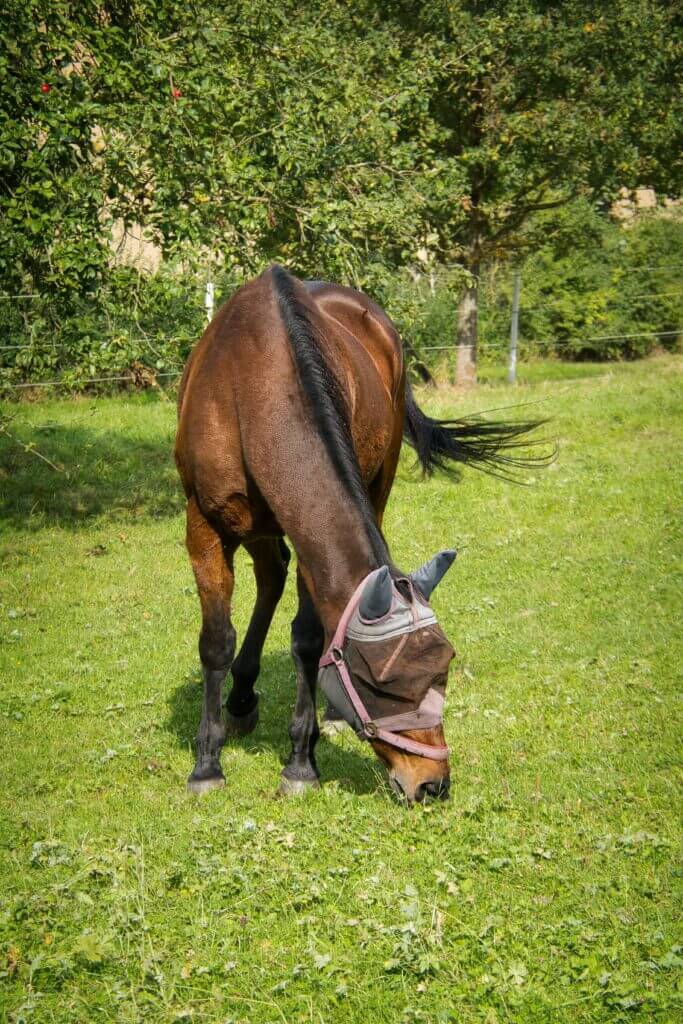
The fly mask could look strange at first, but some horses need it even for work. It’s a fine mesh cover that keeps flies away from the eyes, ears, and muzzle.
Why does it matter so much? Flies are drawn to the moisture around the eyes. They feed on tear secretions, causing irritation, inflammation, corneal damage, and eye infections. A fly mask creates a physical barrier that doesn’t wash off, doesn’t wear off, and works all day.
Good fly masks also provide UV protection crucial for horses with pink skin, light-colored faces, or conditions like uveitis (moon blindness).
Which type to choose:
- Standard mask (eyes + forehead): good for moderate fly pressure.
- Mask with ear covers: ideal if flies target the ears.
- Full mask (eyes + ears + nose): best for sensitive horses or those with uveitis.
Note: Always keep a spare mask, as they get lost in pasture, chewed on, or pulled off by other horses.
🛒 Cashel Crusader Standard Fly Mask — Available in multiple variants to fit every horse:
Sizes range from foal/mini up to warmblood and draft
Standard – no ears — classic coverage for face and eyes
Standard – with ears — adds soft, fine-mesh ear nets for gnat protection
Long nose – with ears — extends down to the muzzle, great for horses with pink noses prone to sunburn
| ✅ Pros | ❌ Cons |
| Physical barrier — doesn’t wash off | Other horses may pull it off in the pasture |
| UV protection for eyes and skin | Needs regular washing |
| Reduces head shaking and stress | Poor fit causes rubbing and sores |
| Can be worn all day during turnout | Can trap heat around the face in extreme heat |
Hack #4: Protect the Whole Body with a Fly Sheet
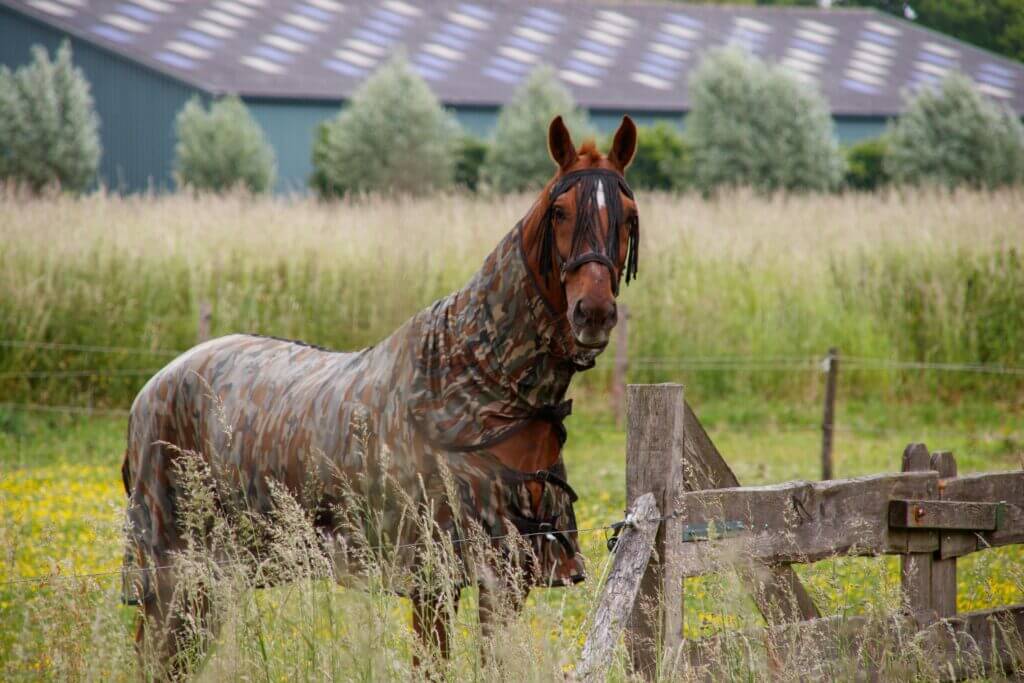
Flies don’t only target the face. The back, belly, and sides of the whole body are in danger, and if you’ve ever watched your horse spend an entire afternoon tail-swishing and stomping instead of grazing peacefully, you already know a fly sheet can be a useful outfit for your horse.
A good fly sheet needs to do two things: keep flies out and keep your horse cool. That means breathable mesh, a belly wrap so flies can’t sneak in from underneath, and a fit that stays put when your horse rolls, runs, or does whatever chaotic thing horses do in the field. UV protection is a bonus worth having, especially for grey, white, or pink-nosed horses who burn faster.
🛒 Horse Mesh Fly Sheet Standard Neck — Most of the reviewers note it fits more like a regular sheet than an oversized fly sheet, which actually makes it more comfortable for horses who tend to fidget with bulkier styles. Good for horses that don’t spend all day in the pasture.
🛒 Kensington Platinum SureFit Protective Sheet — The investment option, and owners say it earns it. Most of the reviewers describe this as a sheet that genuinely lasts — one owner replaced theirs after 9 years. The SureFit design keeps it in place without constant readjusting, and the feedback consistently calls it the best-fitting sheet they’ve owned. Available in multiple sizes and colors.
| ✅ Pros | ❌ Cons |
| Covers the entire body | Higher upfront cost |
| UV protection included | Can get damaged in the pasture |
| Reduces how often you need to spray | Needs regular washing and drying |
| Breathable models are comfortable in heat | Wrong size = rubbing and ineffective coverage |
Hack #5: Stop the Stomp with Fly Boots
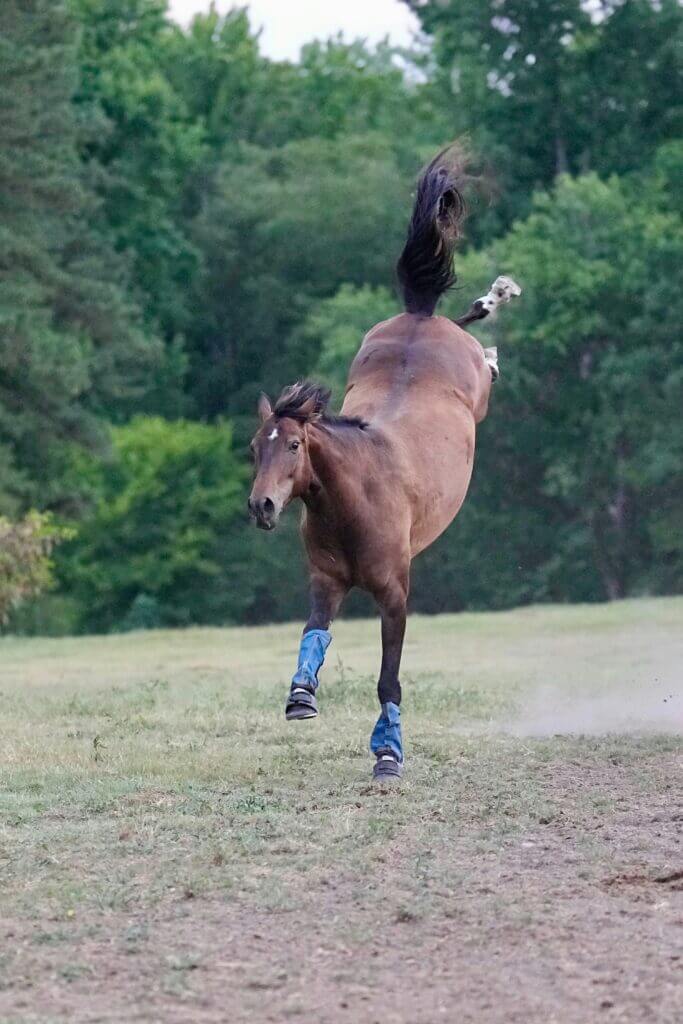
Fly boots are the most overlooked tool in the fly control kit. But for some horses that stomp constantly, they can make a huge difference.
Flies love legs. The only way your horse can respond is by stomping, which loosens shoes, chips hooves, and puts repeated stress on joints and tendons. Fly boots are breathable mesh barriers that stop flies from landing on the lower legs entirely. They also block bot flies from laying eggs on the legs important because those eggs get ingested during grooming and cause internal problems. For horses with light-colored legs, wounds, or scratches, they add an extra layer of protection against infection, too.
Fit matters a lot. Too loose and they spin or slide off, too tight, and they rub. Check after the first turnout to make sure there are no marks.
| ✅ Pros | ❌ Cons |
| Prevents bot fly egg-laying on legs | Doesn’t protect the face, body, or belly |
| Reduces stomping → less joint stress | Can be pulled off by other horses |
| Protects wounds and leg injuries | Poor fit causes rubbing |
| UV protection for sensitive skin | Needs regular checking and cleaning |
Hack #6: Fight Flies from the Inside with Feed-Through Supplements
This is the hack most people don’t think about, but it adds a powerful extra layer to your fly control for horses routine.
Feed-through supplements work in two ways. IGR-based products (Insect Growth Regulators) containing diflubenzuron or novaluron prevent fly larvae from developing in manure. Natural options like garlic and apple cider vinegar work differently: they change the horse’s scent from the inside, making them less attractive to flies in the first place.
Before you start: always check with your vet before adding any supplement to your horse’s diet. Even something that looks completely harmless can cause problems, especially if your horse has existing health issues or sensitivities. Every horse reacts differently, and that applies to natural formulas too.
IGR supplements only work if every horse on the property is on the same program. If one horse isn’t, flies will breed freely in that horse’s manure and repopulate the whole barn. Timing matters too: start before fly season begins in early spring and continue through fall. That’s when you’ll see the real difference.
| ✅ Pros | ❌ Cons |
| Works passively — no daily application | IGRs need the whole barn on board to be effective |
| Breaks the fly breeding cycle at the source | Natural deterrents have a milder effect |
| Natural options available for sensitive horses | In rare cases, it can cause digestive problems |
| Complements all other fly control methods | Always consult your vet before adding supplements |
Hack #7: Use Fly Traps and Biological Control to Cut the Population
When you’ve covered the horse, cover the environment. Fly traps and biological controls attack adult flies and developing larvae before they ever become a problem.
Fly traps use visual cues and bait odors to catch large numbers of adult flies daily. Consistent use near barns and manure piles, combined with good sanitation, significantly lowers overall fly pressure.
Note: the attractant bait has a strong smell, so place traps at least 20 feet away from living spaces and stalls.
Fly predators (parasitic wasps) are a chemical-free biological option. These tiny, non-stinging wasps lay their eggs inside fly pupae, destroying flies before they hatch. They target house flies and stable flies specifically. They do not affect horse flies or deer flies, so keep that in mind when building your strategy. Start releasing them in early spring, before fly populations peak. One important heads-up: fly spray should not be used in the area where they are released, since parasitic wasps are susceptible to the same pesticides that kill flies. You can spray your horse; just do it away from the manure area.
Pro tip: barn fans create airflow that weak-flying insects can’t fight against. Position them at stall level for maximum effect.
🛒 Outdoor Disposable Fly Trap Catches a wide range of common nuisance and filth flies, including house flies, blow flies, blue and green bottle flies, and flesh flies.
| ✅ Pros | ❌ Cons |
| Chemical-free options available | Traps need regular emptying and replacement |
| Reduces the adult fly population daily | Fly predators take time to show results |
| Fly predators are safe for horses and humans | Not effective as a standalone solution |
| Complements every other hack on this list | Requires consistent, preventative use |

Your 7-Hack Fly Control System for Horses
Let’s put it all together. One product is never enough. Flies are too persistent, too strategic, and too fast-breeding for that.
Here’s your complete system:
- Hack #1 — Clean the barn daily. Manure out, standing water gone, feeders washed.
- Hack #2 — Apply fly spray properly, every day, full coverage.
- Hack #3 — Fly mask for horses, if they need them.
- Hack #4 — A fly sheet can make a huge difference and protect your horse from the UV layers
- Hack #5 — Fly boots for horses on horses that stomp, have leg wounds, or light-colored legs.
- Hack #6 — Feed-through supplement as background defense starts before fly season peaks.
- Hack #7 — Fly traps + fly predators to hit the population at the source.
You don’t have to do it all at once. Start with the ones that matter most for your horse and stick with what works for you and your horse. And make this fly season enjoyable.
FAQs
Flies are everywhere at the barn. Where should I start fly control?
Keep the barn clean; do it daily. Don’t forget, manure is the best place for flies to double themselves. Don’t forget paddocks and pasture. Clean the feeders and everything in between.
What should I do if my horse is afraid of fly sprays?
You can apply with the brush or use a cloth. But eventually, you should train them to get used to sprays.
When should I start fly control?
In early spring, before fly populations peak. Fly predators especially need a head start.
Can my horse see through a fly mask?
Yes. The fine mesh allows clear vision and hearing. Some horses are annoyed by airflow during work it can help with that as well.
Won’t a fly sheet overheat my horse in summer?
A good summer mesh sheet actually helps by reflecting UV rays and preventing direct sun exposure.
Can fly boots stay on 24/7?
Yes, if they fit well. Check daily for rubbing marks and clean them regularly.
Are fly boots overheating my horse’s legs?
No. A good pair of fly boots shouldn’t do that.
Are natural fly sprays effective enough?
They work, but wear off faster. Great for sensitive horses, just reapply more often.

Leave a Reply