
Are horse bits cruel? I’m sure you’ve wondered, watching a horse chew on a bit, tossing their head, or refusing to open their mouth. Some say bits are completely harmless. Others say you’re an animal abuser the second you put metal in a horse’s mouth. Neither of them is right. Let’s see why.
The Horse’s Mouth: More Sensitive Than You Think
Before we argue about bits, we need to understand where they actually go.
The bit sits in a toothless gap between the front and back teeth called the bars, a section of the lower jaw covered in thin mucosa over bone, packed with nerve endings. This is where the term bar pressure comes from in horse bits, explained in guides and discussions about English horse bits.
The main contact points are:
- The bars: the most sensitive area, the bone with very thin tissue on top
- The tongue: large, muscular, highly innervated; often the first place discomfort shows
- The lips and lip corners: mobile and sensitive, easily irritated by poor fit or rough hands
- The palate: only contacted by high-ported bits
The bit doesn’t work through pain. It works through pressure. The goal is never ‘this hurts, so I’ll stop.’ It’s: I feel pressure, I respond, pressure goes away. That’s a release, and it’s the foundation of how horses learn to work with the bit.
So when your horse stops, it’s not because it hurts. They’ve learned to respond to pressure, and they know the release will follow.
Why Do We Even Use Bits?
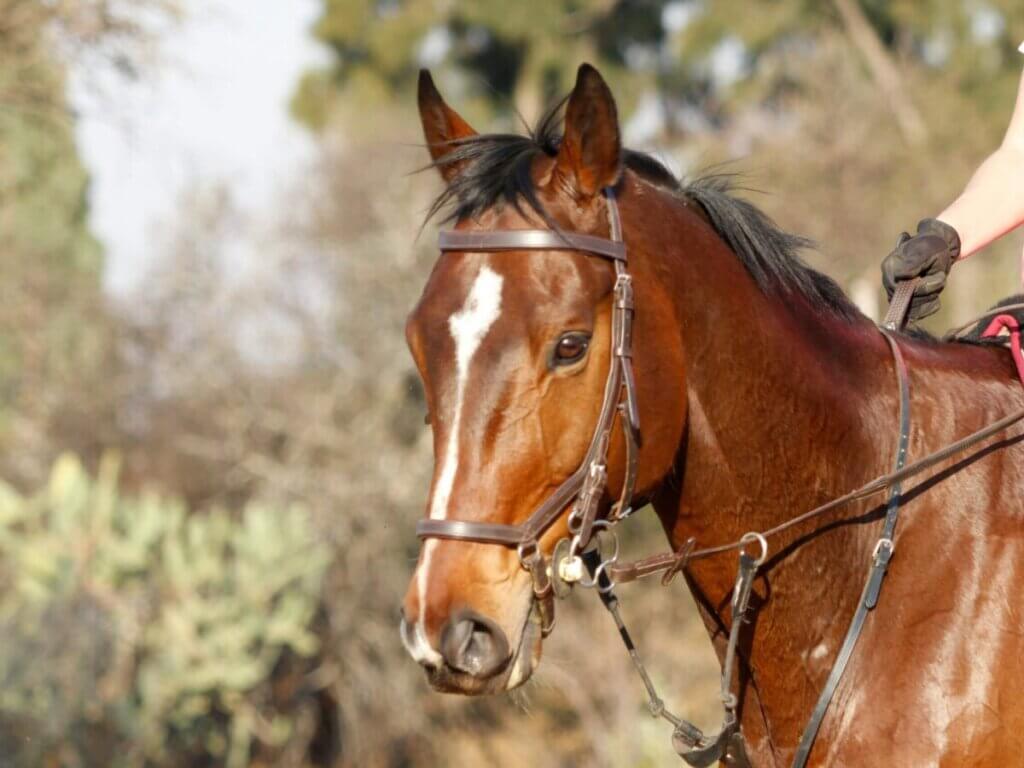
Control. But not in a dominate-your-horse kind of way. More like: let’s both get home safe.
Not every rider has perfect aids, and not every horse is perfectly trained. Bits help with direction, bending, speed, rhythm, and communication. For beginners, especially, they matter a lot.
Here’s where it gets interesting. You should never use the reins alone. It should be hand in hand with your seat, weight, and legs. The reins only refine and support what your body is already communicating. You’re not turning your horse by pulling a rein. You’re guiding with your body and using your hands to clarify.
If you rely only on your hands, even the most gentle horse bit becomes uncomfortable. The problem isn’t always the equipment. It’s often the rider.
When Can a Bit Hurt a Horse?

A bit can also be uncomfortable or painful depending on the type, how it fits, how it’s adjusted, and the rider’s hands. So instead of asking if horse bits are cruel, the better question is: are we using them correctly?
The main reasons a bit causes discomfort:
Wrong type or size. Every horse has a different mouth shape, tongue size, bar sensitivity, and palate height. A bit that works perfectly for one horse can be wrong for another. Many horse bits explained resources gloss over this: there’s no universal right bit.
Poor fit and adjustment. A bit sitting too low bangs against the teeth. Too high, pinches the corners constantly. The general rule: one or two light wrinkles at the lip corners, nothing more.
The rider’s hands. Unsteady, heavy, or inconsistent hands make even a simple snaffle uncomfortable. A relaxed horse with a soft mouth almost always reflects a soft, educated rider, not just a gentle horse bit.
Dental issues. Sharp enamel points, wolf teeth, or bone spurs on the bars can make any bit painful, regardless of how good the fit is. Regular dental checks are the best way to avoid problems.
Signs Your Horse Is Uncomfortable and Signs They Are Not
Your horse is always communicating. You have to know what to look for.
Signs something is wrong:
- Head tossing or carrying the head unusually high
- Opening the mouth or crossing the jaw
- Pulling against the reins or leaning heavily into contact
- Stiffness and tension through the neck and back
- Tongue over the bit or drawn back in the mouth
- Resistance when you pick up the reins
Signs things are going well:
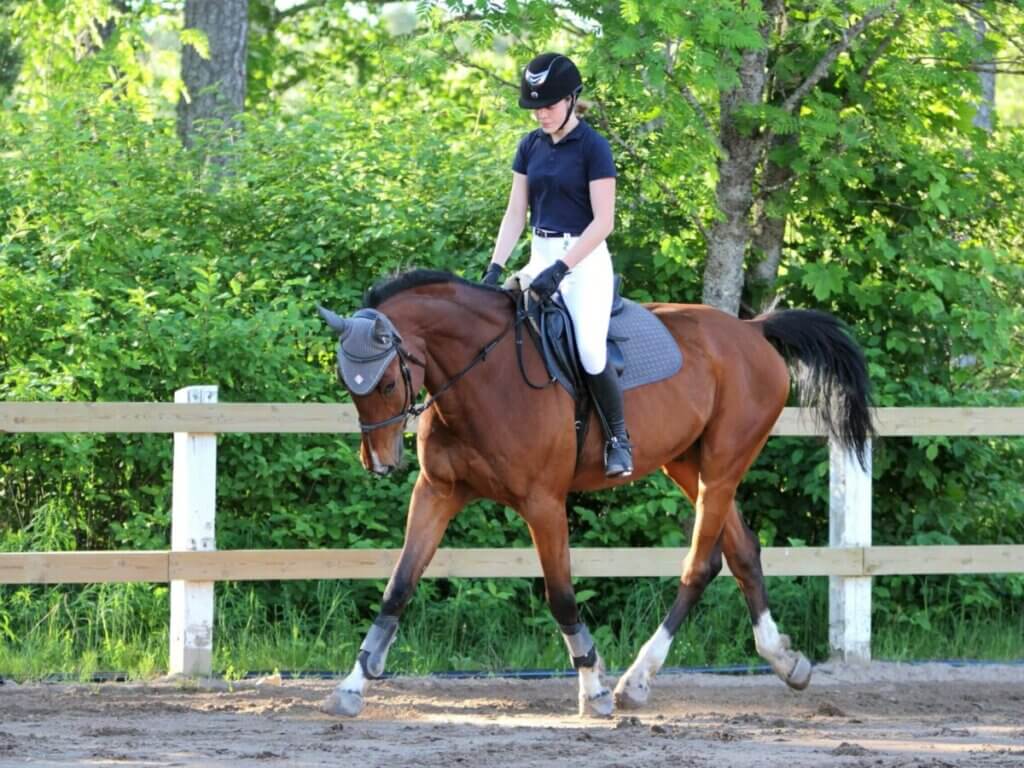
- Relaxed, slightly moist mouth
- Soft, rhythmic chewing
- Steady, light contact with the reins
- Willingness to take the bit at bridling
Young Horses and Bits: Start Slow, Start Simple
Young green horses are basically toddlers in a thousand-pound body. Everything is new, slightly overwhelming, and also interesting. That curiosity is your biggest advantage.
Introducing the bit should be patient, slow, and associated with something positive. Let them smell it, mouth it a little. The first experience sets the tone for everything that comes after.
Always start with a snaffle. It’s the most basic category across English horse bits: a direct-pressure bit with no leverage. One pound of rein pressure equals one pound of mouth pressure, nothing more. Their mouth is still sensitive and soft; you don’t need anything stronger, and honestly, you shouldn’t use it.
How to Put the Bit In Correctly
This sounds basic, but a lot of problems start right here.
- Stand on the horse’s left side, in line with their head.
- Hold the bridle with your left hand just above the bit. (I prefer this method)
- With your right hand, gently bring the bit to the mouth. If they don’t open, don’t force it. Slide your thumb or index finger into the corner of the mouth where there are no teeth. Light pressure there prompts most horses to open up.
- Slide the bit in calmly and lift the bridle over the ears.
Never bang the bit against their teeth. If they won’t open, go back to step 3, finger in the corner, patience. Repeatedly hitting metal against teeth is one of the fastest ways to create a horse that hates being bridled.
In winter, warm the bit first. Cold metal on a sensitive mouth is not a great way to start anyone’s morning.
Rinse the bit after every use.
This short video walks through a different technique, including what to do when the horse resists.
Let me know in the comments what bridling technique works best for you!
How Should a Bit Be Adjusted? Getting the Fit Right
A correctly fitted bit sits with one or two light wrinkles at the lip corners. Not pulling the mouth into a grimace, and not hanging so low that it clanks against the teeth.
Width matters too. A bit too narrow pinches the lips. Too wide and it slides around, losing clarity. For most horses, the right width is about half an inch (1 cm) wider than the mouth.
Material plays a role as well. Stainless steel is neutral and durable. Copper and sweet iron encourage salivation, which is a sign of relaxation. A moist mouth generally means a comfortable horse.
What Is the Right Bit? The Question with No Single Answer

Every horse is different: different mouth shape, tongue size, bar sensitivity, palate height, and training level. One bit that works for a schoolmaster might be completely wrong for a sensitive young horse.
If you’re unsure, ask a professional — a trainer, equine vet, or bit fitter.
Did you know? There’s a lot of bit-fitter business with professionals who help you and your horse choose the perfect bit. After a consultation, they help you choose the best one, and you can try it for a few days and then choose the perfect fit.
Bitless Riding: The Solution That Isn’t Always a Solution

The internet loves this one. ‘Just go bitless.’ It sounds kind, it feels progressive, and sometimes it genuinely is the right call. But let’s be honest about what bitless actually means.
Bitless bridles don’t remove pressure. They move it. Depending on the design, pressure goes to the nose, the jaw, the poll, or a combination. Nose pressure on a horse that isn’t used to it can be just as uncomfortable as a badly fitted bit. Sometimes more so.
Bitless works well when:
- The horse is well-trained and responsive to light aids
- The rider has a balanced, independent seat
- The horse has genuine sensitivity or a history that makes mouth contact problematic
Bitless is not automatically better when:
- The horse is young or untrained
- The rider is still developing their balance
- The situation requires precise communication and quick responses
Safety matters for both of you. A horse that isn’t responding clearly, paired with a rider without reliable brakes, may not be the best start for bitless riding.
So, Are Horse Bits Cruel?

No. But they can be.
A bit is a tool. Not automatically cruel and not automatically harmless. It depends on how it fits, how it’s used, and who is holding the reins. Choose the right bit, use soft and educated hands, focus on your body aids first, and actually listen to your horse. You’re not hurting them. You’re communicating.
The equipment matters less than people think. What matters more: the rider’s hands, their training, and whether they’re paying attention to what the horse is telling them.
FAQ
Are horse bits painful?
They can be if used incorrectly or if they don’t fit. When used properly, they work through pressure and release, not pain.
Do horses hate bits?
Some do, usually because of bad past experiences, poor fit, dental problems, or rough hands. Many horses accept and work happily in a bit for their whole career.
What is the most gentle horse bit?
Generally, a mullen mouth eggbutt snaffle: smooth, slightly curved mouthpiece with fixed rings that don’t pinch. It distributes pressure evenly without a nutcracker action.
Why does my horse refuse the bit?
Could be dental pain, a bad experience, the wrong bit type or size, cold metal in winter, inconsistent training, or a dominance issue. Start with a dental check, then look at fit and training history.
Can you ride without a bit?
Yes, but it requires solid training for both horse and rider. Bitless is not a shortcut. It’s a different tool that still requires proper technique to use fairly.

Leave a Reply