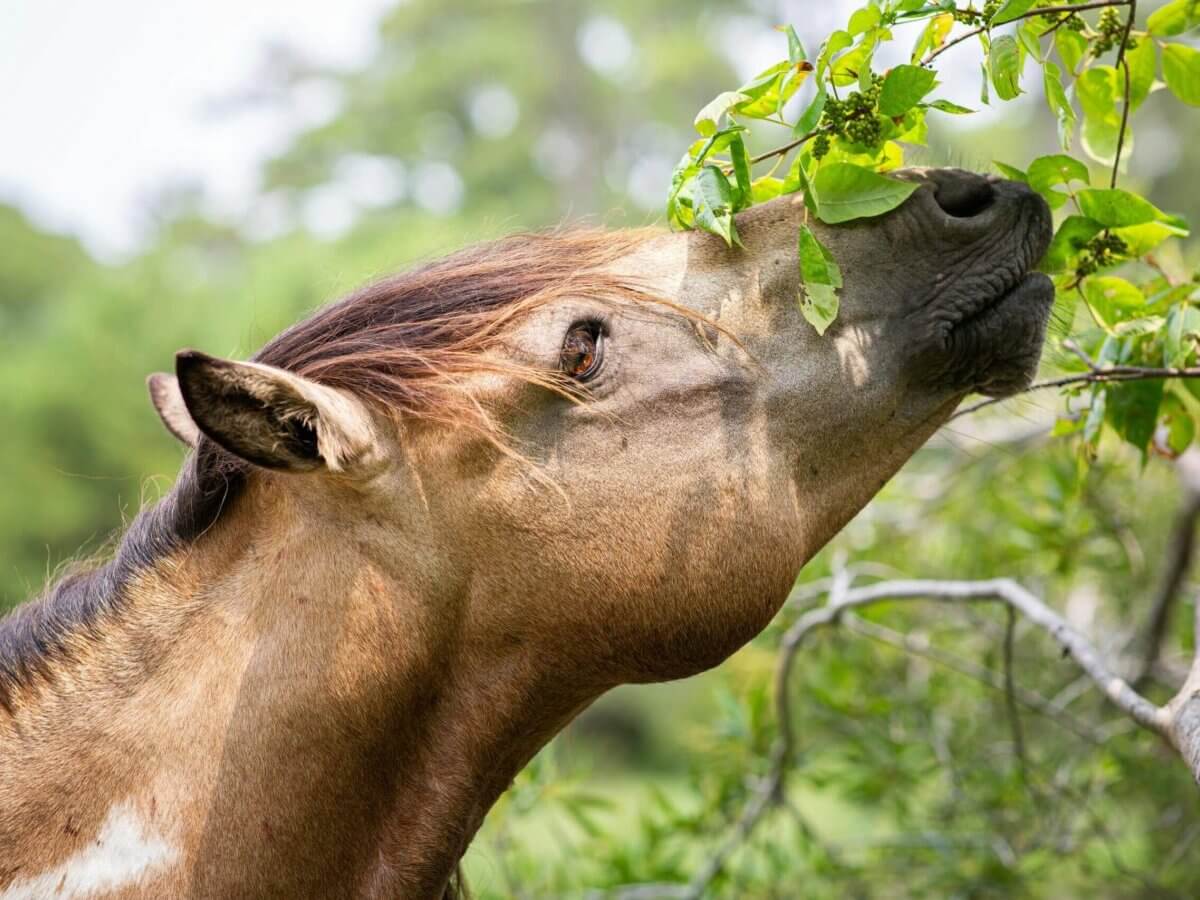
Disclaimer: Informational purposes only and does not constitute veterinary advice.
Can horses eat peaches?
Stone fruits are everywhere in summer. Peaches, apricots, and plums are sweet, ripe, and sitting right on the kitchen counter.
And if you are a horse owner, you have probably wondered at some point whether your horse can enjoy any of them.
The short answer is yes. But stone fruits come with one rule that is not negotiable, and getting it wrong can cause a serious problem.
So before we get into what fruit can horses eat from this category, let’s cover the one thing you must always do first.
The One Rule for Every Stone Fruit
All stone fruits belong to the Prunus family. This includes peaches, apricots, plums, cherries, and nectarines.
The flesh of every one of these fruits is safe for horses.
The pit is not.
Stone fruit pits contain cyanogenic glycoside compounds that release cyanide when chewed or digested. A single pit will not typically kill a horse, but it poses two serious risks. First, it is a significant choking hazard because of its size and hardness. Second, horses cannot vomit. If something gets stuck or causes a blockage, there is no easy way out. That makes a swallowed pit a genuine emergency.
The leaves and wood of Prunus trees also contain these compounds. If your pasture borders a wild plum, apricot, or peach tree, check regularly for fallen fruit and keep your horse away from access to the leaves and branches.
Before You Start: The Basics of Introducing Fruit Treats
These apply whether you are offering peaches, apricots, plums, or anything new.
Wash everything thoroughly.
Stone fruits are often heavily sprayed with pesticides. Wash the skin well under running water before cutting. This applies even to organic fruit.
Cut into small, manageable pieces.
Horses are not precise chewers. Large chunks of firm fruit can cause choking, especially in horses that eat quickly. Keep pieces small enough that they could not block the throat even if swallowed without chewing.
Introduce one fruit at a time.
Give your horse only one new treat at a time, with several days in between trying anything else new. If there is a reaction, you will know exactly what caused it.
Never give rotten or overripe fruit that smells fermented.
Fermented or moldy fruit can cause serious digestive upset. If it smells wrong, throw it out.
Know your horse’s health history before giving any sugary treat.
Stone fruits contain natural sugars. For horses with insulin resistance, laminitis, Cushing’s disease, equine metabolic syndrome, or HYPP, even a small amount of fruit can be problematic. Check with your vet if you are unsure.
Can Horses Eat Peaches? Yes. And They Usually Love Them.
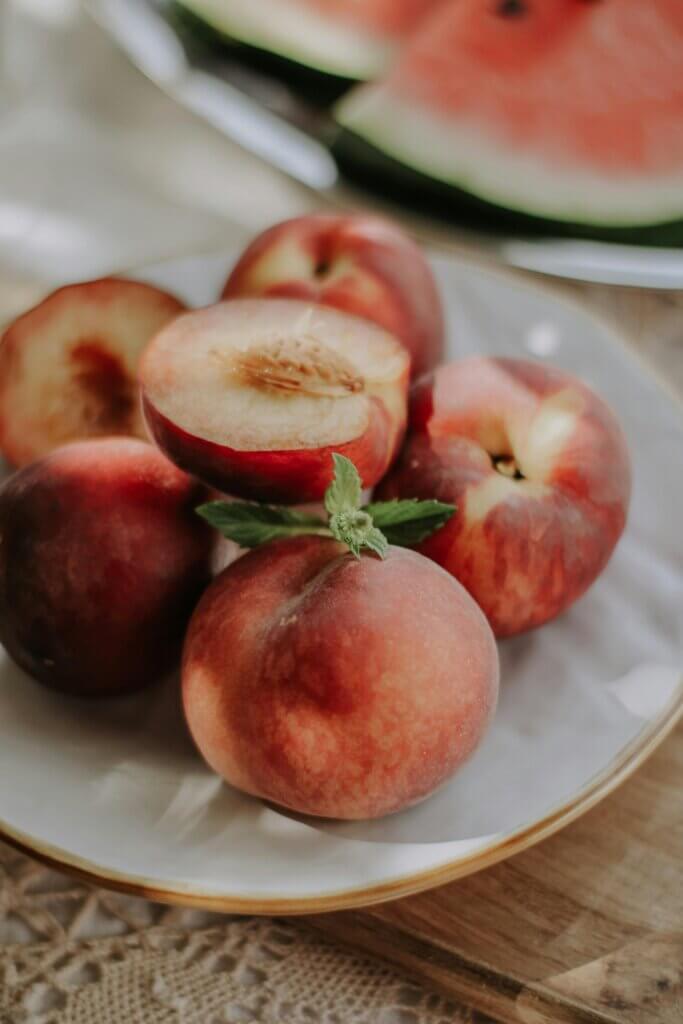
Can horses eat peaches? Yes, and peaches tend to be well-received.
The flesh is safe, soft, and easy to chew, which also makes peaches a reasonable option for older horses with some dental wear, as long as pieces are kept small. Nutritionally, peaches are a solid summer treat. They contain beta-carotene, which the body converts to vitamin A to support vision, skin, and immune function. They also provide potassium, vitamin C, omega-3 fatty acids, and antioxidants that support overall health.
Compared to some other stone fruits, peaches are also relatively lower in sugar and calories, which makes them a slightly more forgiving choice for horses that need to watch their intake.
Preparation:
Wash the skin well. Slice the peach in half, remove the pit completely, and cut the flesh into small pieces. Serve immediately or keep refrigerated and use within a day.
How much is okay?
A few slices as an occasional treat. Peaches are not something to give daily, but a small amount a few times a week during summer is perfectly appropriate for a healthy horse.
Important:
Watch out for peach trees in or near your pasture. Fallen peaches with pits still inside are a real risk if your horse has access to them. Horses will eat fruit off the ground, pit and all.
Can Horses Eat Apricots? Yes. Small, Soft, and Surprisingly Nutritious.
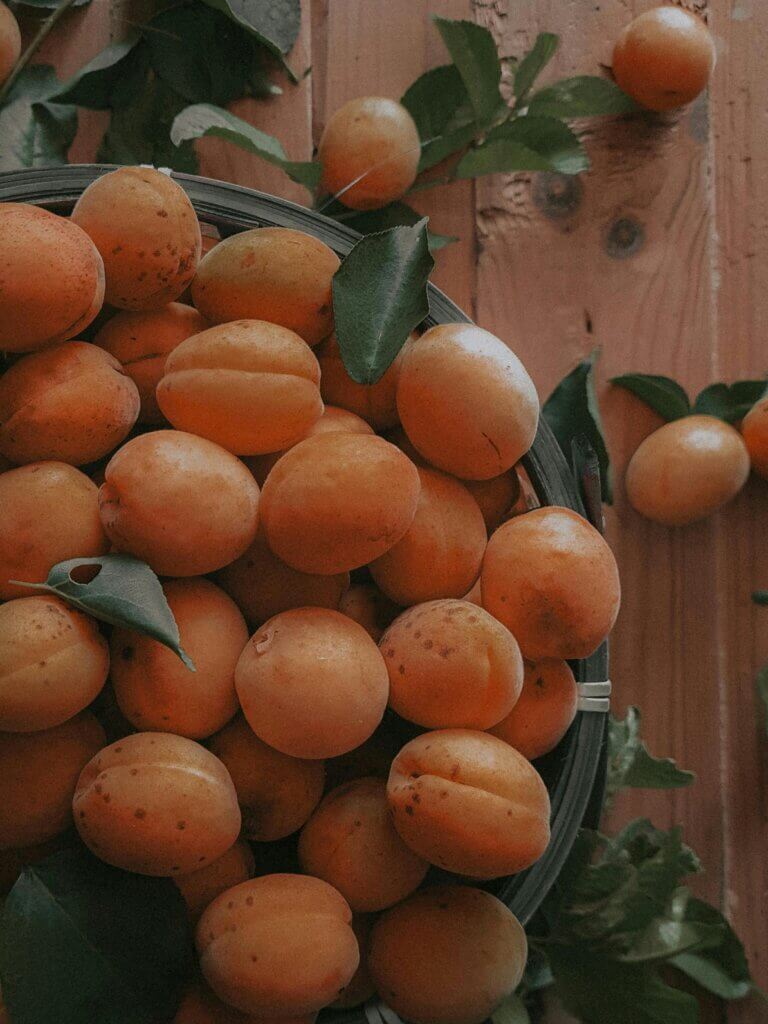
Can horses eat apricots? Absolutely, and many horses are enthusiastic about them.
Apricots are small, which makes portion control easier. Their soft flesh is gentle on the digestive system and easy to chew. And nutritionally, they punch above their weight.
Apricots contain vitamins A, C, and E, which support immune function, tissue repair, and healthy skin and coat. They are also rich in antioxidants that help neutralize free radicals, particularly useful for horses in active work. Their dietary fiber content supports healthy gut motility, which is always a plus for a digestive system as sensitive as a horse’s.
Preparation:
Wash the apricot well. Slice in half and remove the pit entirely. Cut each half into smaller pieces to prevent choking. The skin is fine to leave on.
How much is okay?
One or two apricots per serving is a sensible amount. They are small but sweet, and too many at once can cause loose stools or mild digestive upset. Think of them as a small reward rather than a generous serving.
One more thing:
If you have apricot trees near your property, check the ground regularly during harvest season. Fallen apricots with pits are exactly the kind of thing a horse will investigate and eat before you notice.
Can Horses Eat Plums? Yes. With the Same Rule and One Extra Consideration.
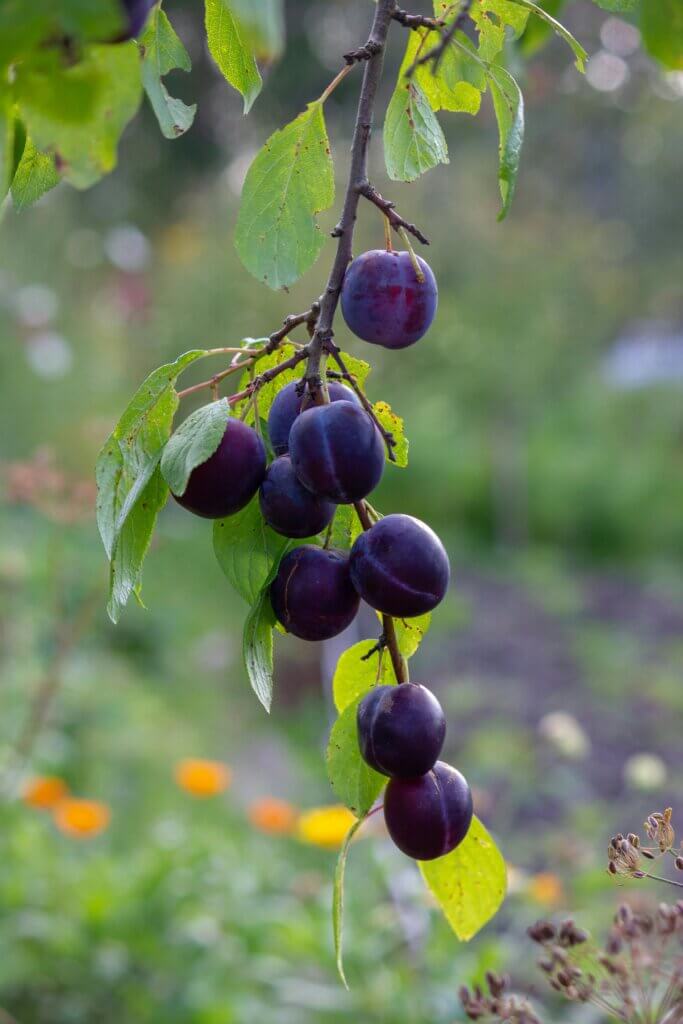
Can horses eat plums? They can, and many horses enjoy the sweet, slightly tart flesh.
Plums are a good source of vitamins A, C, and K, antioxidants, and fiber. The fiber content in particular supports digestive health and helps regulate gut movement, which is especially valuable for horses prone to mild constipation. Plums are sometimes described as superfoods for their antioxidant load, which can help reduce oxidative stress in horses in regular work.
Preparation:
Same process as peaches and apricots. Wash the skin, slice the plum in half, and remove the pit completely before serving. Cut into small pieces. The skin is fine to leave on.
The extra consideration: plums are higher in sugar than peaches or apricots.
This does not make them unsafe for healthy horses, but it does mean you should be a little more conservative with the amount. A couple of plum halves as a treat rather than a generous handful is the right approach.
How much is okay?
A few small pieces occasionally. Do not make plums a regular daily treat because of their higher sugar content. For horses already on a restricted diet, choose peaches or apricots instead.
A note on plum trees:
The leaves and bark of plum trees also contain cyanogenic compounds. If there are wild plum trees accessible from your pasture, keep your horse away from them and remove any fallen fruit from the ground promptly.
What about prunes?
Prunes are simply dried plums, and they are safe for horses in very small amounts. However, dried fruit is more concentrated in sugar, so give even less than you would a fresh plum. One or two prunes as an occasional treat is plenty.
Comparing the Three: A Quick Practical Guide
Peaches — Safe. Remove pit. Relatively lower in sugar. Good for older horses. Wash skin well.
Apricots — Safe. Remove pit. Small and easy to portion. High in vitamins A, C, and E.
Plums — Safe. Remove pit. Higher sugar than peaches/apricots. More conservative portions.
What Fruit Can Horses Eat Beyond Stone Fruits?

If you are building out a treat rotation for your horse, stone fruits are a great addition. But the list of safe options is longer than most people realize.
When Stone Fruits Are Off the Table
Even with the pit removed and the pieces cut small, some horses should not have stone fruits at all.
- Horses with laminitis, past or present
- Horses with insulin resistance or equine metabolic syndrome
- Horses with Cushing’s disease (PPID)
- Horses with hyperkalemic periodic paralysis (HYPP)
- Horses that are overweight or on a restricted diet
- Horses with active digestive issues or recovering from colic
If your horse has any of these conditions and you want to give them something sweet, talk to your vet first. There may be lower-sugar options that work better for their situation.
Let’s Walk Off
Can horses eat peaches, apricots, and plums?
Yes to all three. With one rule that applies every single time: remove the pit.
Get the pit out. Wash the skin. Cut it small. Keep portions sensible.
Do that, and stone fruits become one of the nicest things you can share with your horse on a warm afternoon.

FAQs
Can horses eat peaches with the skin on?
Yes. The skin of peaches is safe for horses. Just wash it thoroughly first to remove any pesticide residue before serving.
Can horses eat dried apricots or dried plums (prunes)?
In very small amounts, yes. Dried fruit is much more concentrated in sugar than fresh fruit, so give significantly less. One or two pieces as a rare treat, never as a regular snack. Make sure there are no added sugars or preservatives.
Are plums or peaches better for horses?
Both are safe, but peaches have a slightly lower sugar content, which makes them a marginally better choice for horses that need to watch their intake. Apricots are the most nutrient-dense of the three. For horses in good health, any of the three is fine in moderation.
Can horses eat nectarines?
Yes. Nectarines are essentially smooth-skinned peaches and follow the same rules. Remove the pit, wash the skin, and cut into small pieces. They are slightly higher in sugar than peaches, so keep portions conservative.
What fruit can horses eat if they have dental issues?
Soft fruits like ripe peaches, apricots, and watermelon flesh are good options for horses with some dental wear, since they require minimal chewing. Always cut into very small pieces and avoid anything with a hard texture or rind. Talk to your vet or equine dentist about what is appropriate for your specific horse.
How do I know if my horse is reacting badly to a new fruit?
Watch for loose or watery manure, pawing or looking at the belly (early colic signs), hives, swelling, unusual itching, or any change in behavior after eating. If you see any of these, stop the treat and call your vet. That is also why you introduce one new fruit at a time, so you always know what caused it.

Leave a Reply