
Disclaimer: For informational purposes only and does not constitute veterinary advice.
You are sitting outside with a slice of melon. The sun is warm. Your horse is watching you from the fence with those huge, hopeful eyes. And you start to wonder: Can horses eat cantaloupe?
We have heard it a hundred times. Horses have sensitive stomachs. Colic is always ready to cause trouble. And you are not about to ruin a perfectly good summer afternoon with a vet call.
But here is what most people get wrong. Fruit is not the enemy. The enemy does not know which ones are actually safe, which parts to remove, and how much is too much.
So let’s sort it out. Starting with the melon in your hand.
First: Understanding What Fruit Can Do to a Horse’s Gut

A horse’s digestive system is designed for one thing: slow, continuous grazing. Grass. Hay. Fibrous plants.
That system is long, complex, and surprisingly easy to upset. Too much sugar arriving at once can disrupt the bacterial balance in the hindgut. And when the hindgut is unhappy, colic is not far behind.
Colic is not a single condition. It is any form of abdominal pain, ranging from mild discomfort to a life-threatening emergency. It is the word every horse person dreads for good reason.
But here is the thing. A few cubes of fruit on a hot day are not going to tip that balance. So the rules are simple. Moderation. Preparation. And knowing your horse’s health history.
Now, let’s talk about what fruit horses can eat this summer.
The Rules Before You Start
These apply to every fruit on this list, every single time.
Wash everything first.
Pesticide residue is real. Rinse all fruit before serving, including anything with a rind or tough skin.
Cut it into small pieces.
Cut pieces small enough to swallow safely whole, or at a minimum, large enough that they’re forced to chew but comfortable enough to do so easily.
Introduce one new fruit at a time.
If something causes a reaction, you need to know what it was. Wait a few days between introducing new treats.
Never feed moldy or rotten fruit.
Mold can cause serious illness. If it looks or smells off, it goes in the bin, not the feed bucket.
Never feed someone else’s horse without asking.
That horse may have laminitis, insulin resistance, or another condition that makes even a small piece of fruit dangerous. Always check first.
Can Horses Eat Cantaloupe? Yes. And Here Is the Best Part.
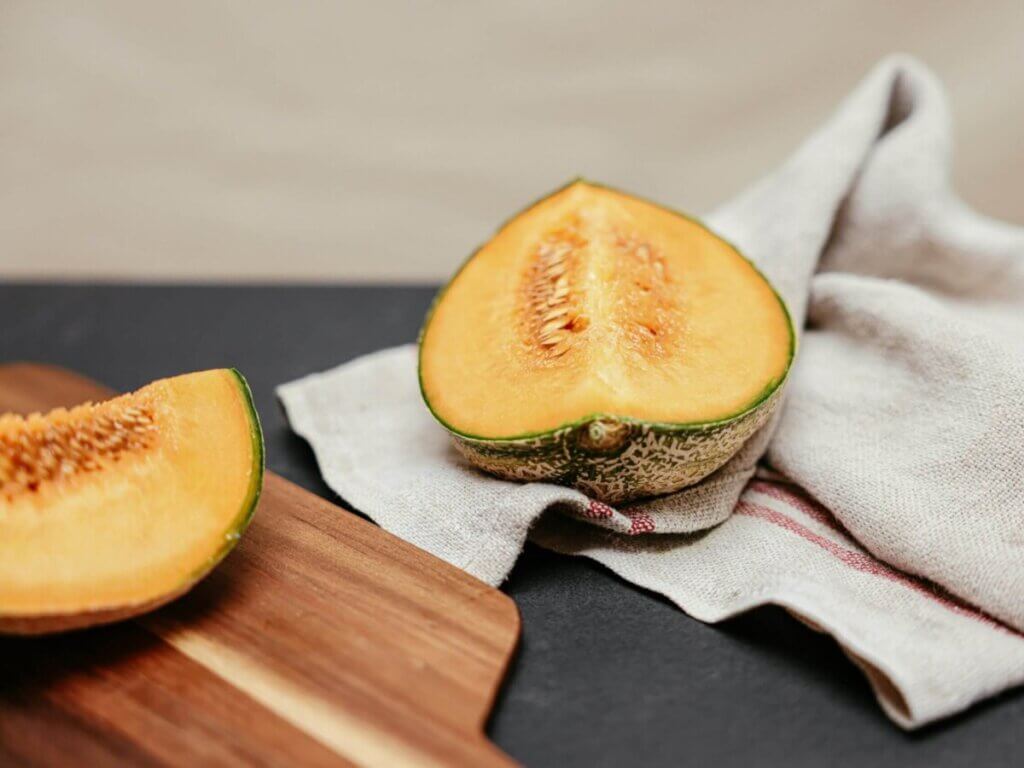
Can horses eat cantaloupe? They can, and most love it.
The orange flesh is safe, hydrating, and genuinely good for your horse on a hot day. Cantaloupe is high in water content, which helps with hydration during summer. It also contains potassium to support muscle function, as well as vitamin A, vitamin C, magnesium, and folate.
Think of it as a cold, sweet, hydrating reward after a warm ride.
What about the rind?
Skip it. The rind is not toxic, but it is fibrous, tough to digest, and hard to chew safely. More importantly, mold can grow on cantaloupe rind in ways you cannot see with the naked eye. Since horses cannot vomit if something goes wrong, it is not a risk worth taking.
What about the seeds?
Remove them. They are not toxic, but they are a minor choking risk and offer no nutritional value. Scoop them out before serving.
How much is okay?
A few cubes or a couple of slices as an occasional treat. Cantaloupe is naturally high in sugar, so horses with laminitis, insulin resistance, Cushing’s disease, equine metabolic syndrome, or HYPP should not have it at all. For healthy horses, keep it as a treat, not a daily snack.
Can Horses Eat Watermelon? The Whole Thing, Actually.
Watermelon might be the most summer-perfect treat on this list.
The flesh is safe, delicious, and nearly 92% water. That makes it one of the best hydration treats you can offer on a hot day. It contains vitamin A, vitamin B6, potassium, and lycopene, an antioxidant that supports blood vessel health and muscle recovery.
Can horses eat watermelon rind?
Yes, and unlike cantaloupe rind, watermelon rind is actually a good option. Most horses enjoy it, sometimes even more than the sweet pink flesh. The rind is high in fiber and contains citrulline, an amino acid that improves blood flow and aids muscle recovery after exercise.
Wash the outside of the rind thoroughly before cutting, since the surface can carry pesticide residue. Then cut into small pieces and serve.
What about the seeds?
Watermelon seeds are safe in small amounts. They are small, non-toxic, and most horses pass them without any issue. If your horse eats quickly or you want to be extra careful, seedless watermelon is an easy solution.
How much is okay?
A few slices a couple of times a week during the summer is plenty. Too much at once can cause loose stools in sensitive horses. And as always, skip it entirely for horses with metabolic conditions.
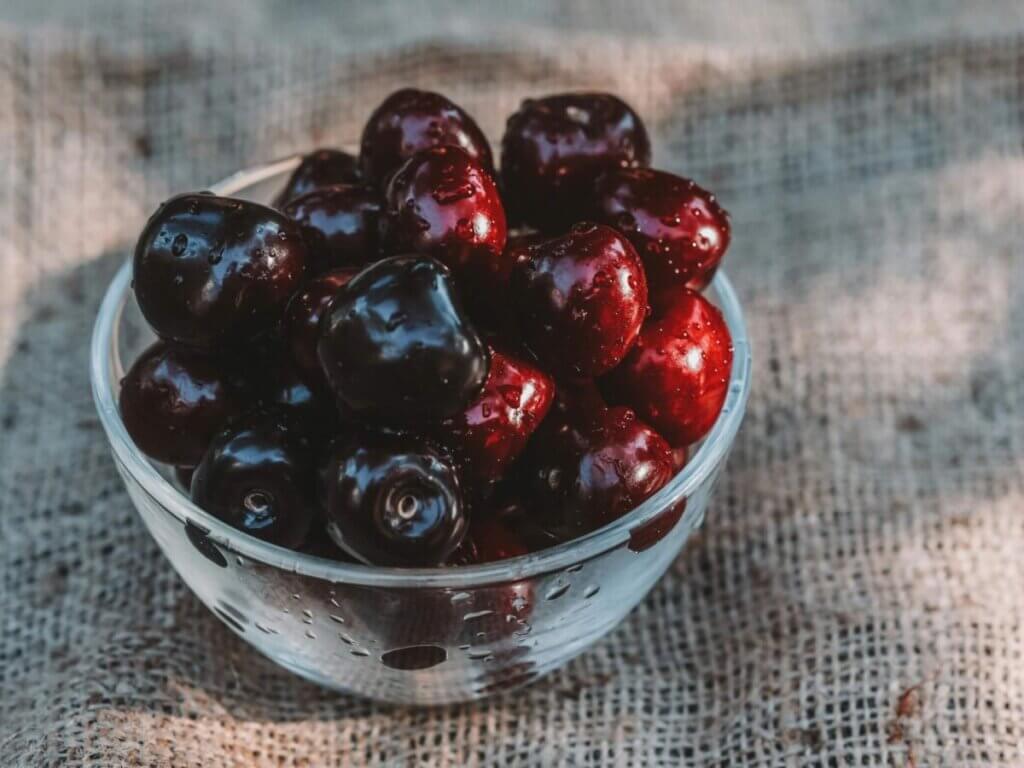
Can Horses Eat Cherries? Yes. But You Need to Do One Thing First.
Cherries are a good source of vitamin C, vitamin A, and calcium, which support strong bones and hooves. They also have natural anti-inflammatory properties that can help with recovery after exercise.
But cherries come with a rule you absolutely cannot skip.
Remove the pit, stem, and any leaves. Every single time.
Cherry pits contain cyanogenic glycosides, the same type of compounds found in all stone fruit pits. The stems and leaves of the cherry plant also contain them. All three need to go before your horse gets anywhere near the fruit.
The easiest method: cut each cherry in half, remove the pit, check again, then serve. The halved size also reduces choking risk.
How much is okay?
A small handful as an occasional treat. Cherries are small, which makes it easy to accidentally give too many. A few at a time is plenty.
One extra note: cherries fed after a harder training session may actually support recovery thanks to their anti-inflammatory content. Something to think about on those long summer riding days.
The Quick Summer Berry Detour
You might also be wondering about strawberries, blackberries, and blueberries.
Good news: all three are safe, and many horses love them.
But since there is a whole lot to say about summer berries specifically, including which ones are the lowest in sugar, how much to give, and why they are actually one of the best treat options for horses, that has its own dedicated guide.
Here’s your horse treat guide for berries
When No Fruit Is the Right Answer
Even the safest fruit on this list is not right for every horse. There are times to skip treats entirely.
Do not give fruit to horses with any of the following, unless your vet has specifically said it is okay:
- Laminitis, past or present
- Insulin resistance or equine metabolic syndrome (EMS)
- Cushing’s disease (PPID)
- Hyperkalemic periodic paralysis (HYPP)
- Obesity or horses on a restricted diet
- Active colic or ongoing digestive issues
- Foals under weaning age
Also, skip treats on any day your horse seems off, is not finishing their hay, or is showing any sign of digestive discomfort. New treats on an already-unhappy gut is a bad combination.
And if your horse loves vegetables as much as fruit, stay tuned; a full guide to what vegetables horses can eat, including cucumbers and tomatoes, is coming soon.
At a Glance: This Article’s Fruit List
Cantaloupe flesh — Safe. Remove seeds and rind. Occasional treat only.
Watermelon flesh + rind — Safe. Seeds fine in small amounts. Wash the rind well.
Cherries — Safe. Remove pit, stem, and leaves every time. Cut in half.

Let’s Walk It Off
So, can horses eat cantaloupe?
Yes. Along with watermelon and cherries. All three are summer-safe with the right preparation.
Wash it. Remove what needs removing. Cut it small. Keep portions reasonable.
That is the whole formula.
Now go share that cantaloupe. Your horse has been waiting long enough.
FAQs
Can horses eat cantaloupe rind?
It is better to skip it. The rind is not toxic, but it is tough, hard to digest, and can hide mold that is invisible to the eye. Stick to the orange flesh only.
Can horses eat watermelon seeds?
Yes, in small amounts. Watermelon seeds are non-toxic and generally pass without issue. If your horse eats fast, choose seedless to be safe.
What fruit can horses eat in general?
Many fruits are safe, including apples, pears, bananas, oranges, watermelon, cantaloupe, peaches, apricots, cherries, plums, mangoes, and most berries. Always remove pits from stone fruits, cut everything small, wash well, and feed in moderation.
Can a horse with laminitis eat cantaloupe?
No. Horses with laminitis, insulin resistance, Cushing’s disease, or equine metabolic syndrome should avoid sugary fruits. Even natural fruit sugars can trigger dangerous blood sugar spikes in metabolically sensitive horses. Always check with your vet first.
How often can I give my horse fruit?
A few times a week, as a treat, is a reasonable amount for healthy horses. Treats should not exceed around 10 percent of your horse’s daily caloric intake. Think of fruit as dessert, not a meal.

Leave a Reply